Keeping your motorcycle clean isn’t just about making it look good. Dirt, mud, road salt, and moisture can build up over time, which can lead to corrosion and make it harder to spot any damage.
Giving your bike a regular clean-down will help keep the paintwork, plastics and metal parts in good condition. And you don’t need to spend hours doing it or have a professional setup either.
In this guide, we’ll take you through the simple steps to get your bike to look clean and ready to ride.
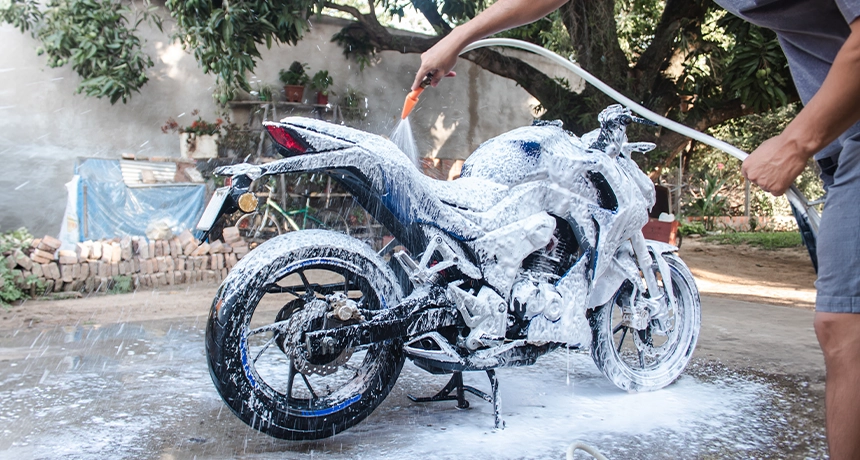
Quick Answer | What Is the Best Way to Clean a Motorcycle?
The best way to clean a motorcycle is simple: you should:
- Let the bike cool down first.
- Rinse off loose dirt and grime
- Apply a motorcycle-safe cleaner
- Wash from top to bottom
- Clean the wheels and chain separately
- Rinse thoroughly with clean water
- Dry the bike completely
- Apply protection where needed
- Re-lube the chain
You will also want to avoid using harsh cleaning products and high-pressure water, particularly on sensitive parts of the bike.
Why Is It Important to Clean Your Motorcycle Regularly?
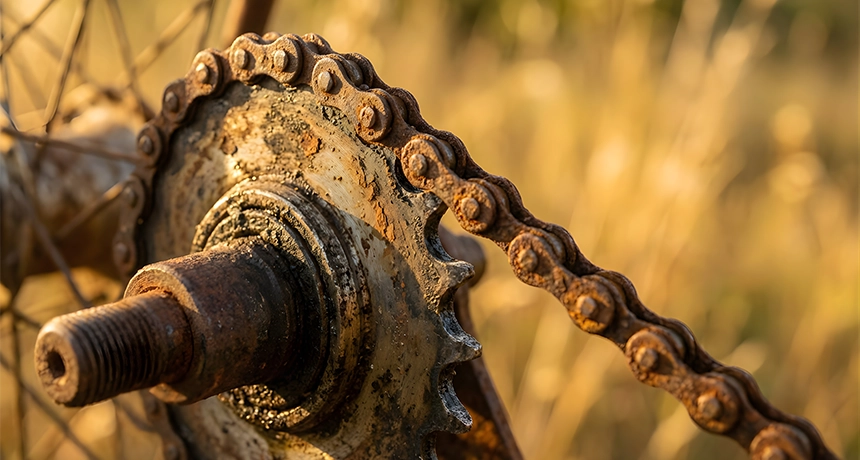
Regular cleaning helps remove road grime, salt, and moisture that can build up over time, while also making it easier to spot any issues before they become bigger problems.
Preventing corrosion & rust
Road salt, dirt, and moisture can build up on your bike and contribute to rust and corrosion. So regular cleaning helps remove these before they have a chance to cause damage, especially during the colder months.
Protecting the paintwork and finishes
Grit and dirt can scratch your paintwork if they're rubbed around with a sponge or cloth. Rinsing your bike first helps remove loose dirt, while using motorcycle-safe cleaning products can help keep the paintwork and other finishes looking their best.
Spotting any damage early
A clean bike makes it much easier to spot things you might otherwise miss. Once the dirt is gone, you can then check for scratches, corrosion, damaged plastics, or anything else that doesn't look quite right.
Maintaining the resale value
Looking after your motorcycle can help keep it in good condition over time. Regular cleaning won't stop normal wear and tear, but it can help to keep your bike looking cared for if you decide to sell it.
Why should commuters and delivery riders clean more frequently?
If you're riding every day, your bike is going to pick up a lot more dirt, rain, salt, and road grime than a weekend rider's.
Commuters and delivery riders should aim to clean their bikes regularly, particularly after riding in wet or salty conditions.
You don't need to give it a full clean every time. Even a quick rinse can help stop grime building up.
What Do You Need to Clean a Motorcycle Properly?
You don't need loads of specialist equipment to clean your bike properly. A few basic products and the right tools will do the job. Muc-Off is a popular brand when it comes to motorcycle-specific cleaning products; this might make things a little easier for you.
For a basic motorcycle wash, you'll need:
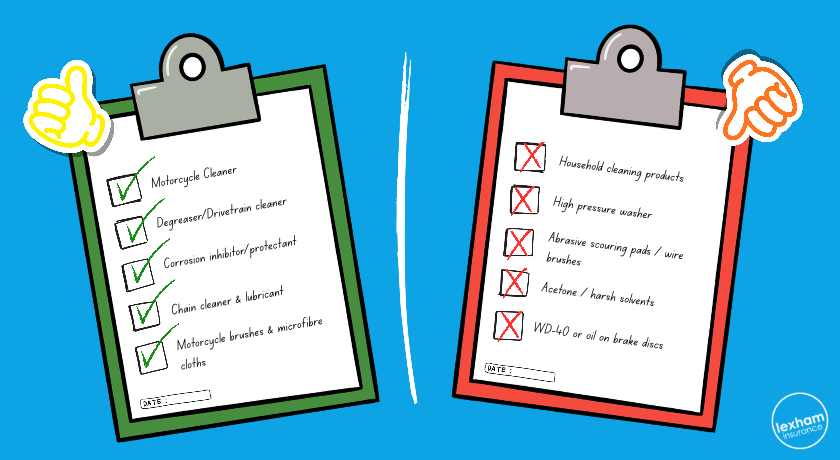
Essential cleaning products
- Motorcycle-safe shampoo or cleaner
- Degreaser / drivetrain cleaner
- Corrosion inhibitor/protectant
- Chain cleaner and lubricant, if needed
- Motorcycle-safe protection or polish
Some more that aren't essential but could be good to have:
Recommended brushes & cloths
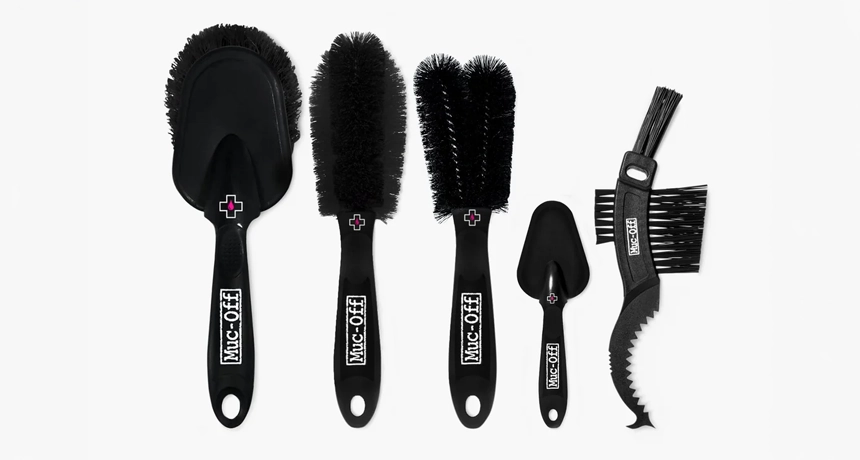
A few different brushes can make cleaning those awkward areas much easier. Use a soft brush for bodywork and a separate brush for dirtier areas such as the wheels and chain. As I said just a second ago, Muc-Off offers a wide range of cleaning products and brush sets for a reasonable price, just to point you in the right direction!
Recommendations:
Microfibre cloths are also ideal for drying and wiping down your bike, as they're soft and less likely to scratch the paintwork. Of course, Muc-Off has premium options, or you can just pick some motorcycle ones up in Halfords.
Also, a little tip from me, which is probably a given: it's worth keeping your cleaning cloths and brushes separate, as you don't want to pick up grit from your wheels and then wipe it across your tank.
Motorcycle-friendly cleaning products
The best motorcycle-friendly cleaning products are pH-balanced or water-based, biodegradable formulas are the best for cleaning road grime without stripping any paint. A popular recommendation is the Muc-Off Nano Tech Motorcycle cleaner.
What products should you avoid using on your bike?
Bear in mind that not every household cleaning product is suitable for motorcycles. You’ll need to avoid harsh chemicals and abrasive products because, as I’ve mentioned, they could damage your bike’s paintwork and other components.
How Do You Clean a Motorcycle? Step-by-Step
So here is a step-by-step guide on how you should clean your bike!
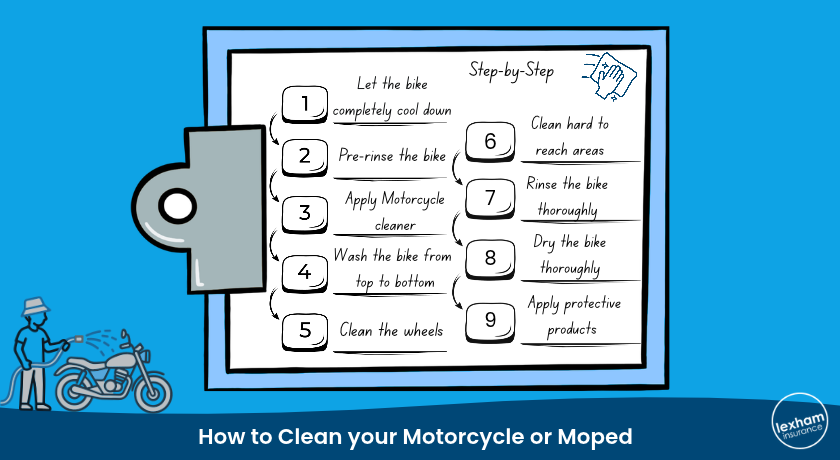
Step One: Let the bike completely cool down
Before you start cleaning, make sure to allow the engine, exhaust, and other hot components to cool down completely to prevent water from causing thermal shock or damage.
Step Two: Pre-rinse the bike
Use clean water to gently rinse the motorcycle, helping to loosen and remove loose dirt, mud, and road grime before you start washing.
Step Three: Apply motorcycle cleanser
Apply a motorcycle-specific cleaner according to the product instructions, making sure it is suitable for your bike’s paintwork, plastics, and other finishes.
Step Four: Wash the bike from top to bottom
Using a soft microfibre cloth or sponge, wash the bike from the cleanest areas at the top downwards to avoid spreading dirt over surfaces you have already cleaned.
Step Five: Clean the wheels
Give the wheels and other heavily soiled areas some extra attention, using a suitable wheel cleaner and a soft brush to remove built-up brake dust and road grime.
Step Six: Clean hard-to-reach areas
Use smaller, soft detailing brushes or cloths to clean awkward areas such as around the engine, suspension, frame, and other components that are difficult to reach.
Step Seven: Rinse the bike thoroughly
Rinse the motorcycle thoroughly with clean water, making sure you remove all traces of cleaner and loosened dirt from the bike.
Step Eight: Dry the motorbike thoroughly
Dry the motorcycle using clean microfibre towels or a suitable air dryer, paying particular attention to areas where water can collect.
Step Nine: Apply protective products
Once the bike is completely dry, apply suitable protective products such as wax, sealant, or corrosion protection to help preserve its finish and keep it looking its best.
How Do You Clean a Motorcycle Chain?
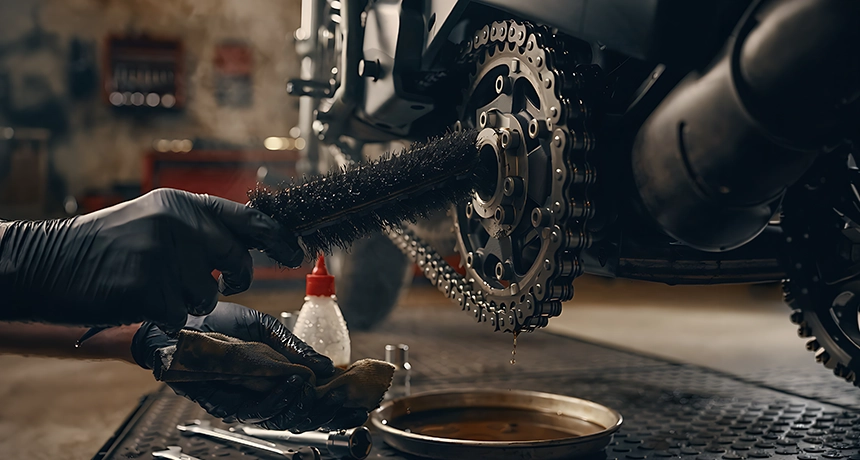
So how do you go about cleaning a motorcycle chain?
Cleaning safely
Before cleaning, switch off the engine and make sure the motorcycle is secure, then use a chain-specific cleaner and a suitable soft brush to work away built-up grime without damaging the chain or surrounding components.
Re-lubricating after cleaning
Once the chain is clean and completely dry, apply a suitable motorcycle chain lubricant evenly across the chain, allowing it to settle before riding. It’s also important to inspect the chain for any tension, corrosion and tight spots, as well as the hooked teeth on the sprockets while you’re there too.
Common mistakes riders make
A common mistake riders make when cleaning a motorcycle chain is using harsh chemicals like brake cleaner or acetone that can destroy the rubber O-rings or X rings.
Make sure to avoid using harsh solvents, abrasive brushes, or excessive water pressure on the chain, and don’t forget to remove excess lubricant, as too much can attract dirt and grime.
Also, make sure you are tightening the chain properly; here's our guide on how you can tighten a loose motorcycle chain.
How Do You Clean a Scooter or Moped?
Scooters and mopeds have more enclosed bodywork and plastic panels than most motorcycles, so you’ll need to take extra care when cleaning around panels, vents, electrical components, and storage compartments.
Key differences between scooters and motorcycles
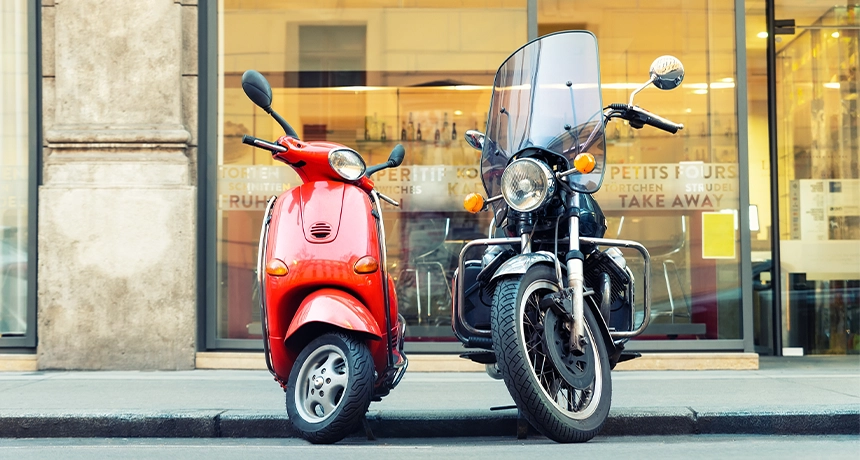
Some key differences between scooters and motorcycles are that motorcycles have exposed chains and engines, while scooters have enclosed body panels and a step-through frame.
The engine and automatic CVT transmission are usually located near the rear wheel and often protected by its body panels, whereas on a motorcycle the engine is centrally mounted and has an exposed drive chain, which will require dedicated cleaner, such as the Muc-Off chain cleaner with gentle cleaning and chain lubrication once dried.
Bodywork and plastics
- On a Scooter or Moped: The bodywork and plastics are more likely to get dusty and also scuff more easily, so they will need to be wiped down often. Avoid spraying or letting cleaner enter grilles, air vents, or cooling slots on the side casing.
- On a Motorcycle: Fairings and cowlings can be smaller than those found on many scooters, however this is not always the case[AW11.1], particularly on sports bikes. Instead, more attention may be needed around painted metal fuel tanks, forks, frames and other exposed finishes. You should also make sure you are preventing any chain lubricant or cleaner from getting onto tyres, brake components or other areas that could affect performance.
Areas riders often forget
- Floorboards: On a scooter or moped, you may not think about the floorboards, but these trap mud and grit, so keeping these covered with specialised rubber or plastic dressings rather than wax helps prevent a slippery surface and also invisible rust.
- Radiator / Oil cooler: Bugs and road debris can get stuck inside, so as long as you remember to rinse this, you will prevent any blockages which could then lead to the engine overheating. Be mindful not to use high pressure water when cleaning though as it can damage the fins.
- Wheel hubs, brake calipers and ABS sensors: Most riders probably wouldn’t think about brake dust and grit from roads collecting around the wheels. This risks corroded ABS sensors and sticky caliper pistons leading to reduced stopping power.
- Switchgear and ignition barrels: Your handlebar buttons are exposed to water when washing your bike, and you know water and electrics don’t go together. This can cause short circuits or a corroded ignition lock. Make sure you’re getting this water out with compressed air or moisture spray.
Cleaning delivery scooters
When cleaning a delivery scooter, the only difference is removing road grime and cleaning inside and around your food delivery box.
What Mistakes Should You Avoid When Washing a Motorcycle?
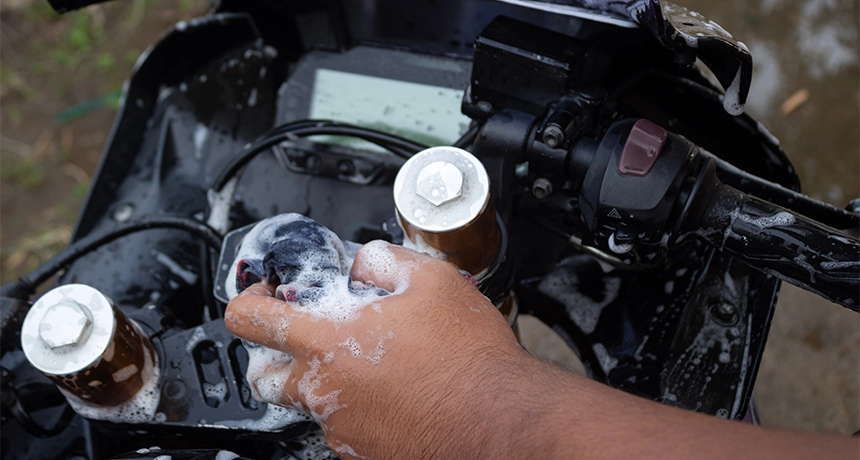
When you’re washing your motorcycle, make sure you’re avoiding these mistakes:
Using household cleaning products
Make sure you’re not using dish soap or other household detergents that include harsh chemicals on your bike. These may strip the paint, protective wax, and damage the plastic - you’re best off using a specialised motorcycle shampoo.
Washing a hot engine
It’s always advised that you wait for the engine and exhaust to cool down completely before you begin to wash your bike. Cold water on hot metal does not mix and can cause thermal shock, leading to cracks in parts and components.
Forgetting to dry the bike
If you’re not drying your bike at all or properly, this will mean running the risk of getting moisture trapped, which can result in rusting occurring. Make sure to dry your bike, and taking it for a quick spin can help blow off any excess water and warm components to dry.
Using dirty cloths and sponges
Avoiding dirty cloths and sponges is important, as trapped grit creates permanent swirl marks and scratches on the paintwork of your bike, and no one wants that!
Overusing pressure washers
The overuse of pressure/jet washers can force water past wheel bearings, fork seals and electrical components, leading to not only rusting but also electrical faults. You need to also be mindful of stripping paint or tearing seats.
Can You Use a Pressure Washer on a Motorcycle?
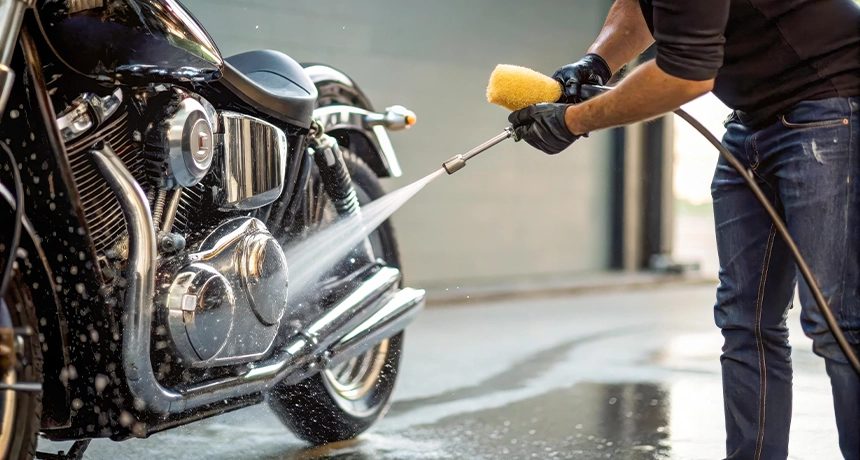
So you may be wondering now if you can use a pressure washer to wash your motorcycle safely - and the short answer is yes. Just make sure you do it carefully to avoid damaging those components I mentioned previously.
The risks of pressure washing a motorcycle
The risks of pressure washing your motorcycle include:
- Bearing and Seal Failure
- Electrical Damage
- Component and Finish Harm
- Thermal Shock
- Drive Chain Wear
Areas to avoid spraying
Avoid spraying directly onto:
- Wheel Bearings and Axles
- Swingarm and Steering Stem Bearings
- Chain and Sprockets
- Electrical Switches and Dashboard
- Radiator Fins
- Exhaust Openings
- Brake Calipers and Master Cylinders
Safer alternatives to pressure washing
A safer alternative to pressure washing is either using the trusty garden hose, or you can use the two-bucket method - one bucket with water mixed with motorcycle shampoo/cleaner and the other with clean water to rinse your sponge.
How Often Should You Clean Your Motorcycle?
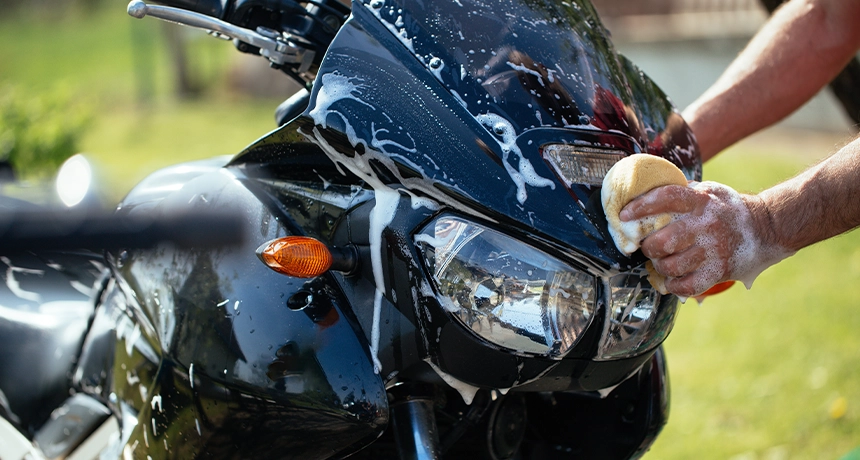
You should ideally clean your bike every one to two weeks in normal riding conditions, although as you’d probably expect, if you’ve been riding through mud, heavy rain or grit, then cleaning straight away is important.
Summer riders
For regular summer riders, the usual one to two week mark is when I’d be looking to give it a clean; however maybe if you’re a more casual weekender, then two to three weeks is about enough.
Winter riders
If you’re riding throughout the winter, you should give it a quick rinse with cold water after every ride to prevent salt buildup, and then a full wash is recommended, again, every one to two weeks.
Commuters
For commuters, it’s advised to clean your bike every one to two weeks, but as you probably guessed by now, this depends on weather and road conditions.
Delivery riders
For a daily delivery ride, make sure you clean every one to two weeks or immediately after riding in bad weather conditions.
Bikes stored outdoors
If you’re storing your motorcycle outdoors, it's advised that it be cleaned every one to two weeks during regular use, or immediately after riding in bad weather conditions.
Motorcycle Cleaning Checklist | At-a-Glance Guide
We’ve put together a quick little checklist to help you out!
Learn More About Motorcycle Care
We also have some other great maintenance articles that may be worth your time here:
- DIY Motorcycle maintenance guide for new riders
- Classic scooter DIY Maintenance Guide
- How to prep our motorbike and ride safely during winter
- Lexham's Guide to storing your motorcycle for winter
- Guide to winter motorcycle tyres
Motorcycle Cleaning FAQs

Finally, we’ve answered some frequently asked questions that you may now be asking yourself…
What is the best way to clean a motorcycle?
The best way to clean your motorcycle is to hand wash it using a specialised motorcycle cleaner/shampoo, two buckets and a gentle hose to rinse away any residue of soap.
How often should you wash a motorcycle?
It’s recommended you clean your motorcycle every one to two weeks, or after any ride in bad weather conditions, including heavy rain, mud or grit.
Should you use washing-up liquid on a motorcycle?
Avoid using washing-up liquid on your bike; it contains a degreasing agent that can strip away any protective wax and paint, leading to corrosion and wear of your bike. If you take pride in your bike, there are many specialised motorcycle cleaning products to choose from.
Should you clean a motorcycle after riding in the rain?
Yes, if you’ve been out in the rain, it is advised to clean your bike, or at least give it a quick rinse down to prevent any rust and corrosion. It might not need a full deep wash, but removing road grime is necessary.
What products should you use to clean a motorcycle?
Some essential products for cleaning your motorcycle include an all-purpose bike cleaner, chain cleaner and degreaser, and shampoo or soap/foam. You can also buy specific brushes and microfibre wash mitts and cloths.
The Last Stop!
So that rounds up this guide on how to clean your motorcycle or moped. We hope this has been of some use and you’re now ready to tackle your first motorcycle clean!
As always, if you are in need of motorcycle insurance, then you are in the right place. Make sure to get a motorcycle or scooter/moped insurance quote directly with Lexham today!