Have you just bought a motorbike this summer and are wondering how to prepare for your first winter on the road? Or maybe you’re a regular rider just looking to make sure you’re fully prepared for the colder months ahead? As summer ends, now is the perfect time to get organised and get your bike and yourself ready for winter riding.
From checking tyres and battery to preparing for colder, wetter and more challenging road conditions, a little prep doesn’t go amiss to keep you safe and confident throughout the winter months.
So, let’s get into it…
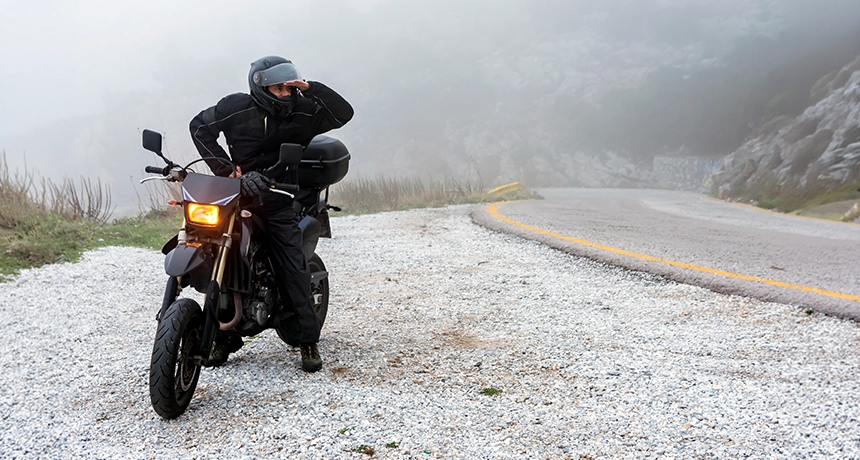
Quick Answer | How Do You Prepare a Motorbike for Winter?
Preparing your motorbike for winter means making sure it’s safe, reliable, and ready for challenging road conditions. Here is a list of things you should make sure to check:
- Check your tyres: You want to make sure you have checked the tread depth, condition, and tyre pressures, as cold and wet roads can reduce grip. We have a guide to winter motorcycle tyres you can read here.
- Test your battery: Always make sure to check your battery health, especially if your bike is going to spend a lot of time being parked in winter months.
- Inspect lights and brakes: Make sure all your lights are working for the shorter days and also check for any signs of wear and tear on your brakes; these need to be in top form for wetter and icier roads.
- Protect your bike from road salt: As you know, winter roads are constantly being gritted, which can cause corrosion to your bike. Cleaning your bike regularly, with close attention to metal components, can help significantly. You can get special anti-corrosion spray for motorbikes if you choose!
- Wear appropriate riding gear: Your gear matters; opt for waterproof, insulated gear with good visibility and make sure gloves and boots are suited to colder conditions. We’ve put together a list of our recommended winter riding gear here to help you compare your options and find the right kit.
- Plan your routes around the weather: Always think ahead and check the weather forecast before you set off on your journey; the last thing you want is getting stuck in the rain or snow!
- Avoid ice wherever possible: I should think this one may be obvious, but icy roads dramatically reduce traction. Consider postponing any journeys or keeping off your bike in these conditions.
Why Is Winter Preparation Important for Motorcyclists?
Winter preparation is incredibly important as it brings more challenging riding conditions for both you and your bike.
How cold weather can affect your motorcycle
Cold temperatures can affect your:
- Bike's battery
- tyre pressures
- Overall bike performance
- Wet and salty roads can also reduce grip & increase the risk of corrosion.
Common winter riding hazards
Winter riders may face wet or icy roads, fallen leaves, standing water, strong winds, and reduced visibility. Checking the weather and road conditions before setting off can help you prepare for these hazards.
Risks of skipping winter maintenance
Skipping basic maintenance can increase the risk of breakdowns, poor performance, and costly repairs. Regular checks can help keep your motorcycle safe, reliable, and ready for winter riding.
How Should You Prepare Your Motorcycle for Winter Riding?
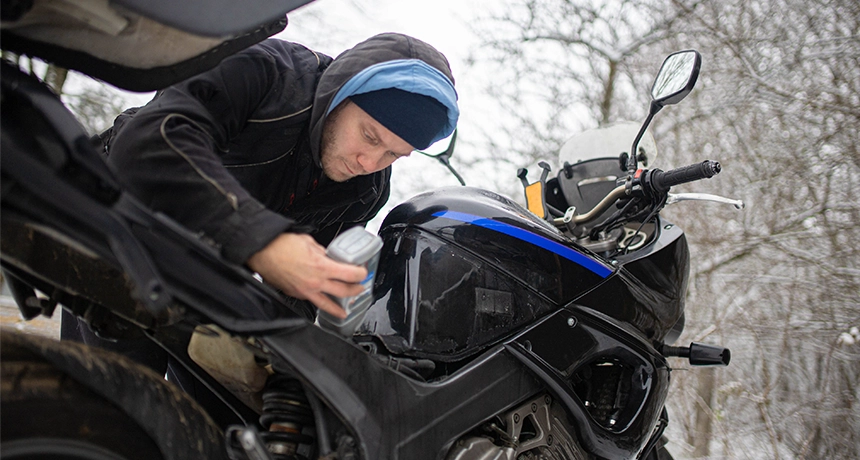
A few simple checks can help keep your motorcycle in good condition and ready to handle colder, wetter conditions.
A little preparation now can save you a much bigger headache later!
Check your tyres before temperatures drop
Cold weather can affect tyre pressure, while wet and slippery roads make good tread even more important. Check your pressures, tread depth and overall condition before heading out.
Test your battery and charging system
Again, cold weather can put extra strain on your battery. Check that it is holding charge and that the charging system is working properly, particularly if your bike has been sitting for a while.
Inspect brakes, lights and controls
Make sure your brakes, headlights and indicators are working properly. Check that the throttle, clutch and other controls move smoothly and feel as they should.
Check fluids and lubrication
Check your engine oil, coolant and brake fluid levels, and make sure your chain is clean and properly lubricated if your motorcycle has one.
Protect your motorbike from road salt and corrosion
Road salt can cause corrosion, so wash your motorcycle regularly in winter and dry it thoroughly. Keep the chain clean and lubricated to help protect it from the elements.
Carry out regular winter maintenance checks
Don't just rely on one pre-winter inspection. Check your motorcycle regularly throughout the colder months and deal with any issues before they become bigger problems.
What Should You Wear When Riding a Motorcycle in Winter?
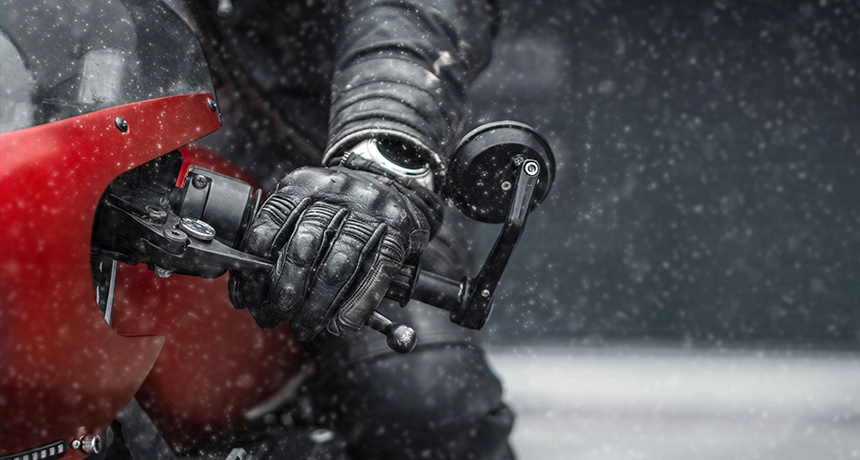
Choosing the right riding gear for winter can make a big difference to your comfort, visibility and safety.
Opt for clothing that keeps you warm and dry without restricting your movement or control of the bike. As mentioned above, you can see our list of recommended winter riding gear here to help you compare your options and find the right kit.
The importance of layering
Winter weather can be unpredictable, so layering is your best option.
Wearing a few lighter layers lets you add or remove clothing as temperatures change, without ending up too hot or too cold.
Just make sure everything fits comfortably underneath your protective riding gear and doesn’t restrict your movement.
Waterproof riding gear
No one wants to be sodding wet while riding and getting caught in the rain is far more likely during winter.
A good waterproof jacket and trousers can help keep the rain and wind out, keeping you warmer, drier and more comfortable on the road.
Winter gloves and boots
Choosing insulated, waterproof gloves and boots is essential for winter riding. We all know how miserable it is when your hands and toes are absolutely freezing!
Just make sure your winter gear still gives you enough flexibility to operate the controls comfortably and maintain a good grip.
Improve visibility with reflective clothing
Winter often means darker mornings, evenings and poorer visibility. Opting for reflective details or high-visibility clothing can help make you more noticeable to other road users.
Keeping warm without restricting movement
There’s no point being wrapped up if you can’t move properly! Bear in mind when choosing gear that keeps you warm that it doesn’t feel bulky or restrict your movement.
You should be able to comfortably control your bike and react quickly when needed.
How Do You Ride a Motorcycle Safely in Winter Conditions? | Lexham Advice
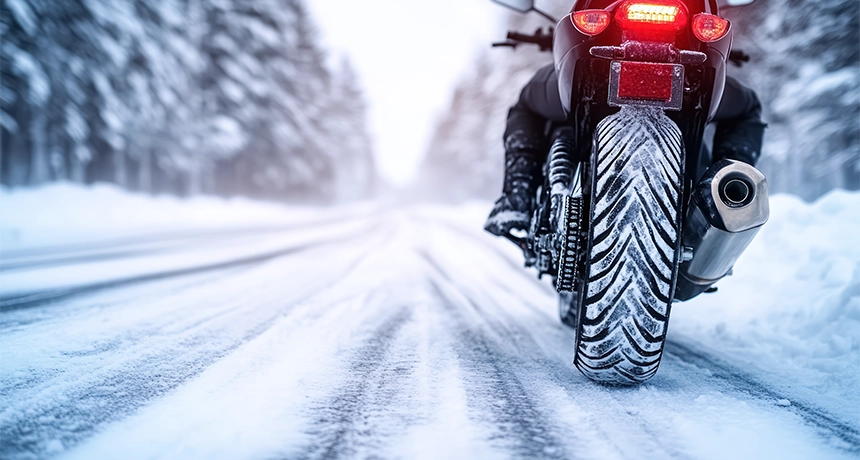
Motorcycle expert and Bikematters presenter, Alisdair, has given us some advice and precautions he takes when it comes to riding safely in winter conditions…
Riding on cold and wet roads
‘’Cold and wet roads generally mean less grip, so I’d be aiming to stay smoother with the throttle, brakes and steering.
“It’s not just about riding slower, but changing how I ride to suit the conditions, and on rural and single-track roads, I’d be watching out for mud left behind by agricultural vehicles as it can be seriously slippery and dangerous when wet.’’
Increasing braking distances
‘’Stopping distances can be much longer in cold, wet or icy conditions, so I’d leave more space and look further ahead, while also keeping an eye out for traffic, pedestrians and wildlife as there isn’t as much time to stop if something suddenly moves into the path.’’
Cornering safely in low-grip conditions
‘’I’d slow down before the corner and keep everything smooth through the bend, avoiding sudden braking or steering when the bike is leaning over, especially if the surface looks slippery.
“Wet manhole covers, road markings, mud, leaves and changes in the road surface can all catch a rider out.’’
How to handle strong winds
‘’Strong winds can really move a bike around, especially on exposed roads or when passing larger vehicles, so I’d slow down and, where possible, lean slightly into the wind to help keep the bike on the line.
“I’d also be ready for sudden gusts too, particularly when coming out from behind a building, hedge or other shelter.’’
Spotting black ice and hidden hazards
‘’Black ice is a tricky one because it might not even be visible, so if temperatures are around freezing, I’d take extra care, particularly on bridges, shaded sections and anywhere water tends to collect.
“On rural roads, I’d also keep an eye out for mud from agricultural vehicles, leaves, debris and potholes, as some of these can be difficult to spot until they’re right under the bike.
"If there’s a decent amount of ice on the roads and riding can be avoided, then I wouldn’t ride.
"I’d use public transport, get a lift or find another way of getting where needed, because ice and bikes just don’t go well together and grip can be lost very quickly even when riding carefully – trust me, I’ve been there with a bike on top of me when it was icy!’’
Adapting your riding style for winter
‘’The main thing is to give more time and space, so I’d look further ahead, leave bigger gaps and try to anticipate what might happen rather than reacting at the last second. Wildlife, pedestrians, cyclists and other traffic can all do something unexpected, and in winter it isn’t safe to rely on stopping or changing direction as quickly.
‘’Don’t rely too much on rider aids if the bike has them, as traction control, ABS and cornering ABS are great safety features, but they’re a safety net rather than something to rely on, so in poor conditions I’d ride as if they aren’t there and keep everything smooth and controlled.
‘’Darker mornings and evenings are important to be wary of as other road users can find it harder to spot you, and they can find it harder to see a rider, so I’d make sure the lights are working properly and consider high-vis or brighter clothing.
‘’Keeping warm is a safety thing as well; it’s not just about being comfortable, because cold hands can affect how well the clutch and brake controls can be used, so I’d wear decent winter gloves and suitable clothing.’’
Overall checks & maintenance
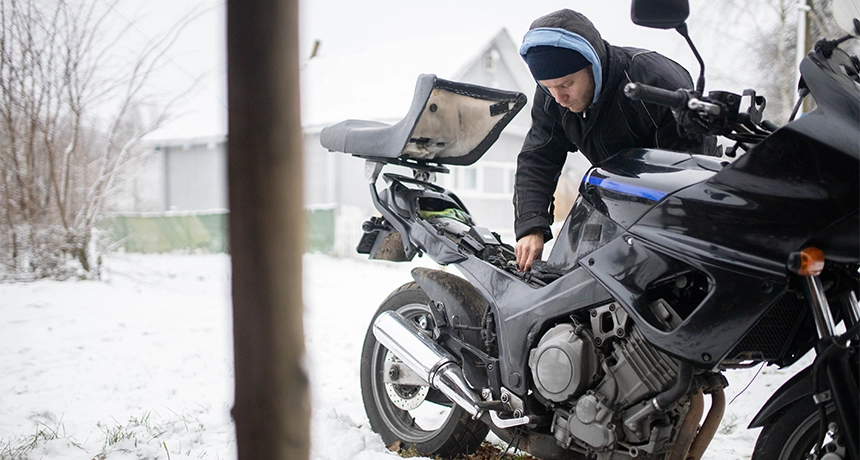
‘’The bike needs a bit of attention before winter riding too, so I’d check the tyre pressures, tread and general condition. The UK legal minimum is 1mm across the central three-quarters and around the full circumference, but I wouldn’t wait until the tyres are at the limit before replacing them, especially for winter riding.
‘’It’s also worth checking the tyre date codes, as tyres can age and harden even when they still look like they have plenty of tread, and the four-digit code shows the week and year they were made.
‘’I also make sure to regularly wash my bike thoroughly to remove heavily corrosive road salt too. It’s important to regularly wipe down your lights when finishing a ride, as it can be surprising how much road salt, spray and dirt can affect light output and visibility.
‘’Then I’d do the usual checks on the brakes, brake fluid, lights, coolant, engine oil and chain, making sure the chain is clean, lubricated, free of corrosion and tight spots, correctly adjusted and checking the tyres for cracks, damage or unusual wear. Basically, make sure the bike is in good shape before setting off rather than finding a problem halfway through a cold, wet ride.”[
When Should You Avoid Riding a Motorcycle in Winter?
As much as we love getting out on two wheels, sometimes the weather simply isn't worth the risk. Winter can throw some grim conditions at you, so if the roads look dangerous, there's no shame in leaving the bike at home and waiting for a better day.
Snow-covered roads
Snow and motorcycles aren't exactly the best combination. It can make the road seriously slippery and hide potholes, markings, and other hazards. If your route is covered in snow, we'd recommend giving the bike a miss until the roads have cleared.
Ice and freezing conditions
Ice is one of the biggest winter hazards for motorcyclists, and the annoying thing is that you can't always see it coming. Shaded roads, bridges and quieter routes can stay icy even when the rest of the road looks fine. If temperatures are below freezing, take extra care and consider whether you really need to make the journey.
Severe weather warnings
Heavy rain, strong winds, flooding and other severe weather can make riding a lot more challenging. Before heading out, check the forecast and think about whether the conditions are likely to make your journey unnecessarily risky.
When is another form of transport safer?
Sometimes, as much as we don’t like to admit it, the best riding decision is not to ride at all. If you're dealing with ice, snow, flooding, or seriously reduced visibility, consider using another form of transport instead.
How Can You Protect Your Motorcycle from Winter Damage?
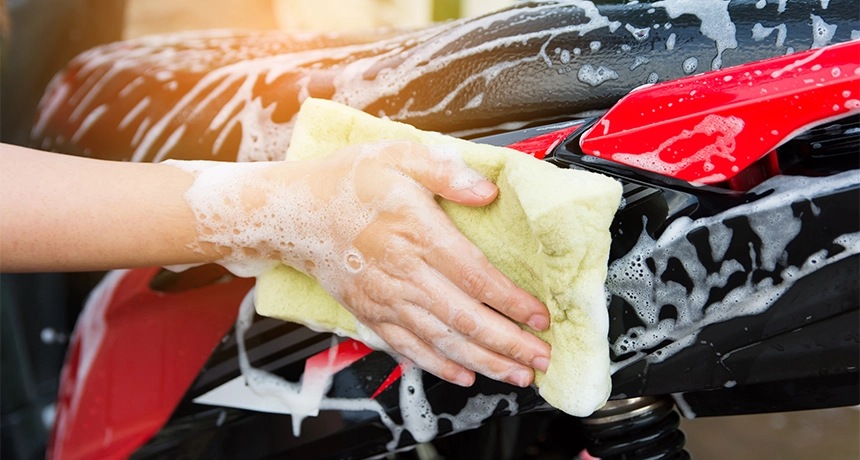
Winter can be tough on your bike, and if you take pride in keeping it looking its best, it’s not exactly your favourite time of year. All that rain, grime and road salt can really take its toll, so a little extra care can go a long way.
Removing road salt effectively
Road salt is one of those winter nuisances that can do more damage than you might realise. If it’s left sitting on your bike, it can quickly lead to corrosion, especially around exposed metal parts. Make a habit of giving your bike a regular rinse with clean water, followed by a motorcycle-safe cleaner to help shift any stubborn salt and grime.
Preventing rust and corrosion
As I mentioned earlier, a good anti-corrosion spray can be your best friend over the colder months. Give any exposed metal parts some extra attention and make sure they’re properly protected. Keeping your bike clean, dry and protected is one of the simplest ways to keep winter rust at bay and avoid any nasty surprises when the weather starts to improve.
Looking after your battery correctly
It goes without saying that cold weather can put extra strain on your battery, particularly if your bike isn’t being ridden regularly. Keeping it connected to a suitable battery charger or maintainer can help prevent it from going flat while it’s being unused. Trust me, when spring rolls around, the last thing you want is to find yourself dealing with a dead battery before you can get back out on the road.
Cleaning tips for year-round riders
If you’re one of those riders who refuses to let winter put a stop to your riding, regular cleaning is seriously important. I’m sure I sound like a broken record by now, but salt, mud and road grime can quickly build up and cause lasting damage if they’re left sitting on your bike.
Give it a thorough wash, make sure it’s properly dried afterwards, and apply protective products regularly. It might feel like a bit of a chore at the time, but trust us, your bike will thank you for it, and it’ll help keep it looking its best and ready to ride all year round.
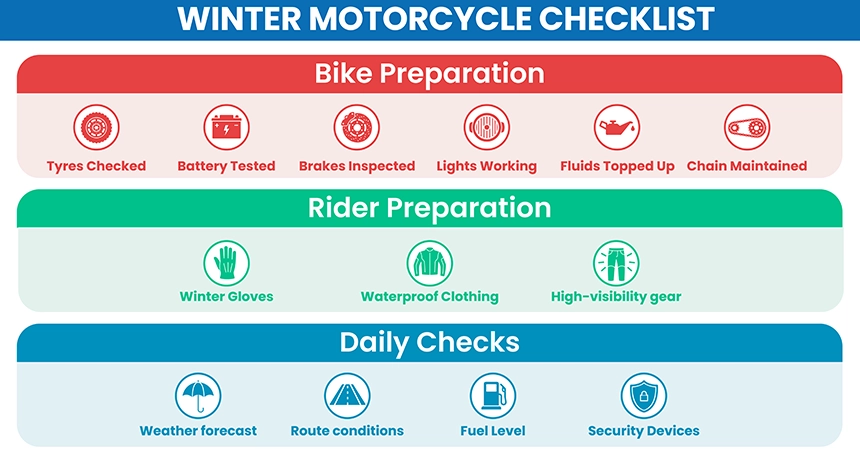
Winter Motorcycle Checklist | At-a-Glance Guide
We thought we’d make things a little easier for you, so we’ve put together a handy checklist of all the things you should be checking before heading out on a winter ride - and keeping an eye on throughout the colder months.
Frequently Asked Questions About Riding a Motorbike in Winter
So, if you’re thinking about keeping your bike on the road this winter, here are some of the most common questions riders have about staying safe, looking after their bike and dealing with the colder months…
Is it safe to ride a motorcycle in winter?
Yes, however this all depends on whether the conditions are suitable. Wet roads, cold temperatures, ice, and poor visibility can all make riding trickier, so take it steady and adjust your riding to the weather.
Should a beginner motorcyclist ride in winter?
Being totally honest, winter probably isn’t the easiest time to build confidence as a new rider. If you’re still finding your feet, stick to dry, mild days where possible and avoid riding when conditions are challenging.
What temperatures are too cold to ride a motorcycle in?
There’s no specific temperature that’s ‘too cold’, but as temperatures get close to freezing, the risk of ice increases. Check the weather and road conditions before setting off, and remember that shaded roads can remain icy even when others are clear.
Can motorcycles be ridden safely on icy roads?
It’s best to avoid riding on icy roads altogether. Ice can drastically reduce your tyres’ grip, making braking, cornering and acceleration much more difficult. If the roads are icy, sometimes the safest place for your bike is in the garage.
Is winter riding bad for my motorcycle?
Winter can be tough on your bike. Road salt, grit, and moisture can encourage corrosion and cause damage to certain components. Regular cleaning, particularly after salty or dirty rides, can help keep your motorcycle in good condition.
Should I store my motorcycle during winter?
If you’re not planning on riding through winter, storing your bike can help protect it from the weather. Give it a little TLC before putting it away, including checking the battery, tyres and fluids, so it’s ready to go when spring rolls around.
It also could be worth adding a fuel stabiliser to help keep the fuel in good condition during storage. That way, your bike should be ready to hit the road again when spring arrives.
Does riding in winter affect motorcycle insurance?
No, winter riding does not affect your motorcycle insurance.
Learn More About Winter Motorcycle Ownership
But there’s more to winter motorcycle ownership than wrapping up warm, making a few checks and heading out. We’ve got plenty more advice to help you along the way. Here is a list of articles we think you should read to best prepare.
- Guide to Storing Your Motorcycle for Winter
- Motorcycle Brake Maintenance: How to keep your brakes in good condition
- Motorcycle maintenance: Guide to checking and changing motorcycle headlight bulbs
- Breakdown cover - Breakdown cover can give you extra peace of mind if the unexpected happens.
- Motorcycle security: A guide to securing your bike - Winter can be a good time to brush up on your bike's security. Discover practical tips to help keep your motorcycle safe and secure.
The Last Stop!
So there you have it, our guide and advice on preparing and riding safely during winter! As always, if you’re looking for motorcycle insurance, make sure to get a quote online with Lexham today!