When it comes to buying yourself a used motorcycle, one of the first things we all take into consideration and check is the odometer.
A bike showing 50,000 miles can look far less appealing than one with 10,000 miles on the clock, but is this really the case?
In this guide, we’re here to help you understand how to assess motorcycle mileage in context and determine whether a used bike's mileage should concern you!
Is There Such a Thing as Too Many Miles? | Quick Answer
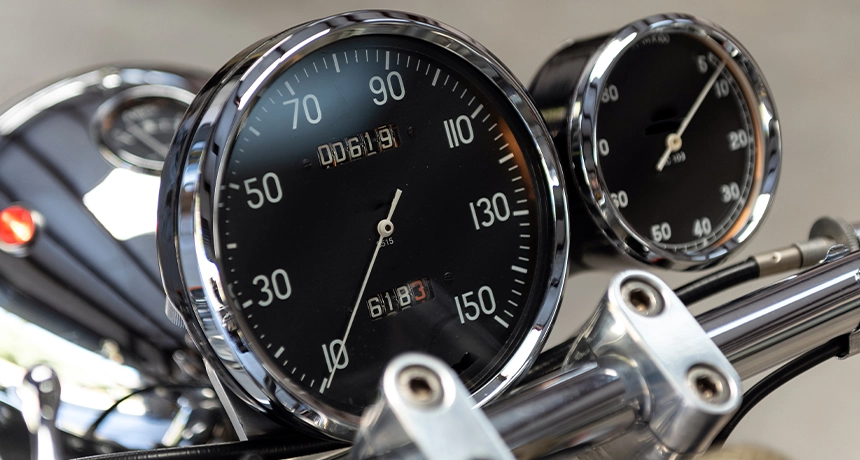
Obviously, there comes a point where a motorcycle's mileage will make most buyers think twice.
But in short, no, not necessarily.
Why Motorcycle Mileage Can Be Misleading
Mileage can be misleading because it doesn't tell you how a motorcycle has been used or cared for throughout its life. Two bikes with the same mileage can be in completely different condition depending on their servicing history, storage conditions, and riding style.
For example, a motorcycle that has regularly covered long-distance motorway journeys may experience less wear than a low-mileage bike that's spent years making short trips or sitting unused in a garage. That's why it's possible for a well-maintained bike with 50,000 miles to be a better purchase than a neglected bike with just 10,000 miles.
When deciding whether a motorcycle's mileage is too high, it's important to look beyond the number on the odometer and consider the bike's overall condition and maintenance history.
The truth about mileage
The truth about mileage isn't just about the number on the odometer; it's about how the motorcycle has been used and cared for by its previous owner. A bike with higher mileage that has been regularly serviced and maintained can often be in better condition than a low-mileage motorcycle that has been neglected or left unused for long periods.
That's why mileage should be viewed as part of the bigger picture.
When assessing whether a motorcycle's mileage is too high, factors such as service history, overall condition, and ownership habits are often far more important than the number of miles alone.
Why the condition of the bike matters more
The condition of the bike you're buying is often far more important than the mileage on the clock. Things like how it's been maintained, stored, and ridden over the years will usually tell you much more about its overall health than the odometer ever can. A well-looked-after bike with higher mileage can often be a better buy than a low-mileage machine that's been neglected.
Different bikes live different lives
Mileage only tells you part of a bike's story. Every motorcycle lives a different life, and how it's been ridden, maintained, and stored can have a huge impact on its condition.
For example, a bike with 15,000 miles in comparison to 50,000 might seem like the obvious choice, but if it's been poorly looked after and has a history of recurring faults, it may not be in the best shape.
Meanwhile, a 10-year-old bike with 50,000 miles that has been regularly serviced and cared for could be the more reliable option. That's why it's important to look beyond the mileage figure and focus on the bike's overall condition and maintenance history.
Understanding different rider habits
The way a motorcycle is ridden can have a big impact on how much wear and tear it experiences. A bike that's mainly used for long motorway journeys may rack up miles quickly, but those miles are often easier on the engine and components than constant stop-start riding around town.
Likewise, a daily commuter could easily add thousands of miles each year, while a weekend rider might only take their bike out on sunny days. Neither is necessarily better or worse, but it does show why mileage should always be viewed in context. Understanding how a bike has been used can often tell you far more than the mileage figure alone.
What Counts as Low, Average, and High Mileage?

There's no universal mileage figure that automatically makes a motorcycle a good or bad buy. What's considered low, average, or high mileage will depend on the bike's age, type, and how it's been used throughout its life.
That said, looking at annual mileage can give you a rough benchmark. A bike that's only covering a couple of thousand miles a year will generally be considered low mileage, while one regularly covering 10,000 miles or more each year is being used much more frequently.
It's also important to remember that high mileage isn't necessarily a bad thing. A motorcycle that's been ridden regularly and serviced on schedule can often be in better condition than a low-mileage bike that's spent years parked up in a garage.
| Annual Mileage | Description |
| Under 2,000 miles | Very low usage |
| 2,000-5,000 | Below average |
| 5,000-8,000 | Typical rider |
| 8,000-12,000 | Frequent rider |
| 12,000+ miles | High annual usage |
Does Mileage Matter More Than Service History
It’s kind of down to personal opinion; however, in most cases, service history is far more important than the mileage itself. While the odometer can tell you how far a motorcycle has travelled, it can't tell you whether it has been properly looked after along the way.
As mentioned earlier, a bike with 50,000 miles and a full-service history will often be a safer bet than a 15,000-mile bike with no maintenance records. And that’s all down to regular service, showing previous owners have invested time and money into keeping the motorcycle in good condition.
Service history helps answer some important questions. Has it been maintained on schedule? Have major services been carried out when required? Has the owner kept records of the work completed? These are often much stronger indicators of a bike's condition than the mileage figure alone.
Ultimately, mileage and service history should be considered together, but if you had to choose one, a comprehensive service history would usually tell you far more about the motorcycle you're buying.
Why service records are critical
Service records help tell the story that mileage alone can't. They provide evidence that the motorcycle has been maintained at the right intervals and that previous owners have taken care of it throughout its life.
A bike with higher mileage and a folder full of service receipts can often be a much safer purchase than a low-mileage bike with no maintenance history at all. Regular servicing also gives buyers confidence that major maintenance items haven't been ignored or delayed.
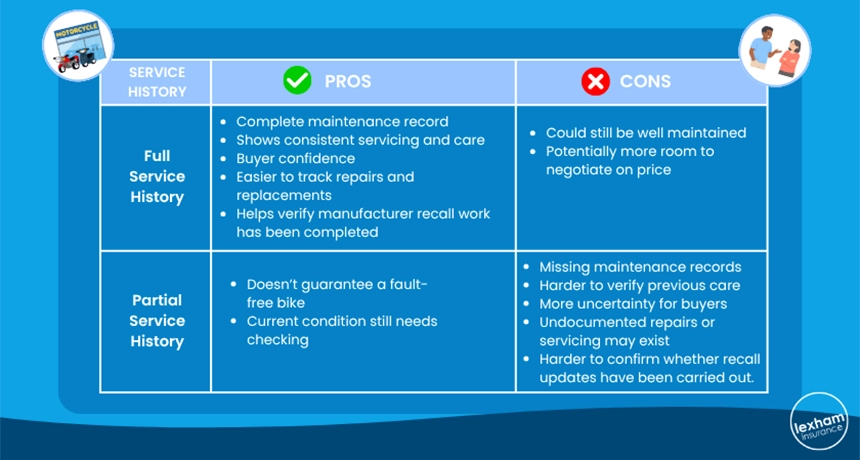
Service history can also help verify whether any manufacturer recalls have been carried out. Recalls are issued to address known safety or reliability concerns, and a well-maintained motorcycle is more likely to have had any required recall work completed. On a bike with little or no service history, it's often much harder to confirm whether these important updates have been carried out, potentially leaving unresolved issues for the next owner.
Having a full history vs partial history
A full-service history doesn't guarantee a perfect motorcycle, but it does provide far more transparency for buyers. It allows you to see what work has been carried out, when it was completed, and whether the bike has been maintained consistently.
Partial history isn't necessarily a dealbreaker, but it can leave unanswered questions. Gaps in maintenance records can make it harder to understand how well the motorcycle has been cared for over the years, especially on higher-mileage bikes.
How mileage without records should be viewed
High mileage isn't usually the problem; it's high mileage with no supporting evidence of maintenance. If a motorcycle has covered tens of thousands of miles but there's little to show how it has been looked after, it's much harder to judge its true condition.
That's why missing service records can sometimes be a bigger concern than the mileage itself. The less documentation available, the more uncertainty there is about the bike's history.
What buyers should look out for

When assessing a motorcycle's service history, look for:
- Service book stamps
- Invoices and receipts for completed work
- MOT certificates that support the mileage reading
- Evidence of major services being carried out
- Consistent maintenance throughout ownership
The more evidence a seller can provide, the easier it is to determine whether the bike's mileage should be a concern or simply viewed as proof that it has been regularly ridden and enjoyed.
Does Low-Mileage Always Mean Better?
It’s easy to assume a low-mileage motorcycle is the better buy, but that isn’t always the case. While fewer miles can mean less wear on certain components, a bike that has spent long periods unused can develop its own set of problems.
In some cases, a high-mileage bike that’s been regularly ridden and maintained may be in better condition than a low-mileage one that has spent years sitting in a garage.
Long periods sitting in storage

A motorcycle is designed to be ridden, not left standing for months or years at a time. Long periods of storage can lead to issues that aren’t immediately obvious during a quick inspection.
Batteries can fail, fuel can deteriorate, and components may begin to seize if they haven't been used regularly.
Deterioration of Seals & Fluids
Even if a bike hasn't covered many miles, its rubber seals, gaskets, and hoses will still age over time. Engine oil, brake fluid, and coolant can also degrade regardless of mileage.
This means a low-mileage bike may still require servicing and replacement fluids if maintenance has been neglected during storage.
Flat-spotting on Tyres
Tyres that remain in the same position for extended periods can develop flat spots, particularly if the bike has been stored incorrectly.
Even if plenty of tread remains, old tyres can harden, crack, or lose grip, potentially making them unsafe to ride.
Corrosion Risks
Low mileage does not guarantee that a bike has been stored properly.
Motorcycles kept in damp garages, sheds or outdoors can develop rust and corrosion on the frame, fasteners, exhaust, and electrical connections. Repairing these issues can be costly and time-consuming.
Lack of Regular Usage
A motorcycle with a lack of usage can often be more of a gamble than a high-mileage bike with a full-service history.
Whilst low mileage can be appealing, the lack of usage can sometimes be a red flag, as leaving a bike for a long period of time can cause mechanical inactivity and lead to degradation that can turn a seemingly good bike into a financial burden.
High-Mileage by Motorcycle Type
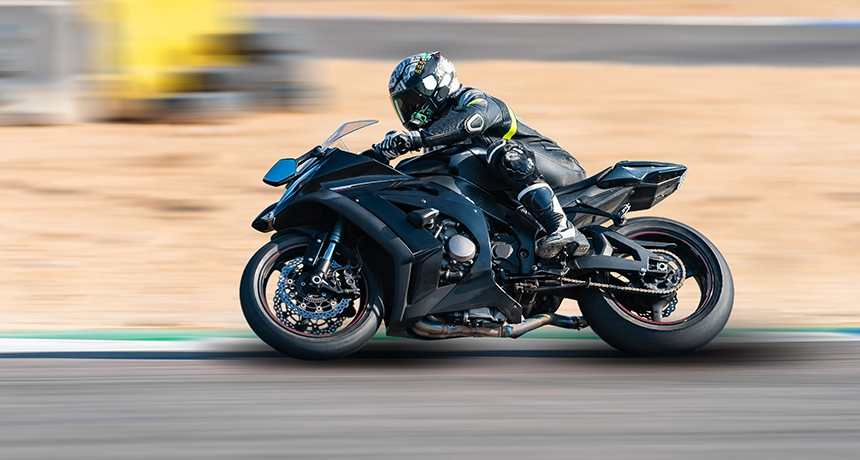
Different types of bikes can have different mileage thresholds due to the type, engine design, and how the bike is typically ridden.
For example, a sports bike having 20,000-30,000 miles can be considered high mileage, whereas a bike that's being used for adventuring and touring would likely be doing more miles and therefore can surpass 150,000-300,000 miles.
Sportsbikes
As I’ve just touched on, sports bikes with 20,000-30,000 miles can be considered high; they run at much higher RPMs, accelerate faster, and undergo heavy braking, which is why they're often perceived as worn or aggressively ridden.
Naked bikes
Naked motorcycles usually have a higher threshold of around 50,000+ miles, though reliability varies heavily depending on displacement, maintenance, and whether the bike is a middleweight commuter or a high-revving super Naked.
Touring Motorcycles
For touring, 50,000-100,000+ miles is when they start to be considered high mileage, though models like the Honda Gold Wing, a true icon in the touring world, or the BMW GS/RT series can exceed 100,000-300,000+ miles with basic maintenance.
Adventure bikes
Similar to touring motorcycles, adventure bikes are also labelled high at the 50,000-100,000 mark but typically can go above this, up to 300,000.
Scooters & Mopeds
When it comes to scooters and mopeds, a 50cc tends to have less mileage due to the small displacement engine, with high mileage being considered at around 20,000+; this is due to it having to rev and work harder. Its lighter internal components wear out faster.
For your 125cc, typically 25,000-30,000, and for 150cc to 250cc scooters, high mileage is considered at 30,000+ miles, built for daily commuting and slightly larger builds, though internal parts are still small.
Maxi scooters, 300cc to 750cc, have a higher mileage of 50,000 to 100,000+ miles with proper maintenance.
| Motorcycle Type | When Mileage is considered high |
| Sportsbikes | 20,000-30,000+ |
| Naked Bikes | 50,000+ miles |
| Touring Motorcycles | 50,000-100,000+ miles |
| Adventure Bikes | 50,000-100,000+ miles |
| 50cc Scooters & Mopeds | 20,000+ miles |
| 125cc | 25,000-30,000+ miles |
| 150cc-250cc scooters | 30,000+miles |
| Maxi scooters 300-750cc | 50,000-100,000+ miles |
Age vs Mileage: Which Matters Most?
So when it comes to age versus mileage, which one typically matters most, you may be asking…and the truth is neither.
Maintenance history and storage conditions are usually a deciding factor.
Older low-mileage bikes
Finding an older motorcycle with low mileage often feels like you’ve struck gold, but don’t get too excited, as this doesn’t necessarily mean a hassle-free ride.
You’d like to hope this means the bike has been well kept and not too worn out considering its age, but if that isn’t the case, then it could lead to an expensive ride in the long run.
Newer high-mileage bikes
A bike that’s new with high mileage usually means it's been ridden heavily and consistently in a short space of time.
Now, is this a bad thing? Not always; sometimes this can be better than bikes sitting neglected for months or years. It's definitely worth a look into.
Which scenario often represents better value?
Overall, I’d say the better scenario would be a newer bike with higher mileage if the service history and maintenance show it has been looked after and rides well. An old bike with low miles indicates that it could have been left unused for long periods of time, leading to seized components, dead electronics, and a gummed-up fuel system.
Signs that a High-Mileage Motorcycle has been well-maintained
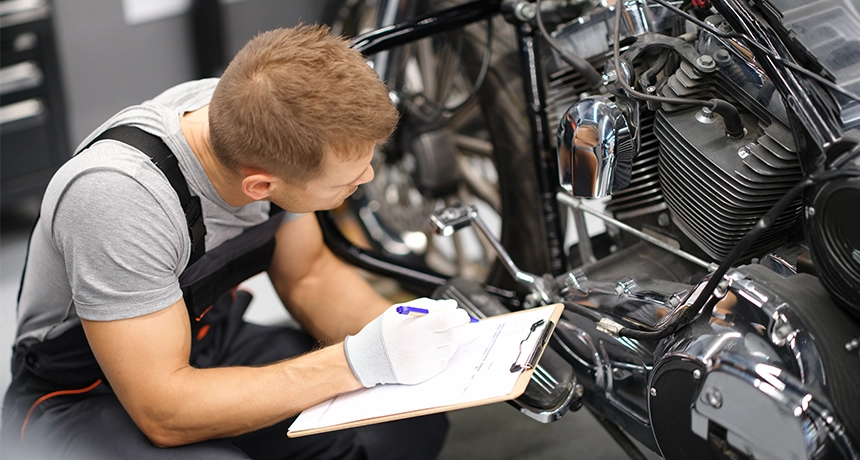
You’ll be able to tell whether or not a high-mileage motorcycle has been properly cared for if it has these things:
Consistent servicing history
A well-maintained high-mileage motorcycle will have a documented service log, showing oil changes, valve clearance checks, and spark plug replacements.
Detailed records
Organised paper trails for tyres, chain kits, and suspension rebuilds prove the owner spent money on upkeep rather than cutting corners.
Regular MOT History
A steady, linear progression in its MOT history with clean passes, steady mileage accumulation, and few or minor advisories that promptly get resolved.
Quality replacement parts
Quality replacement of parts and thoughtful upkeep show that a high-mileage motorcycle has been properly cared for. Look out for:
- Matched chain and sprockets
- Branded or OEM Wear Components
- Clean and Translucent Fluids
- Fresh Consumables Matching Mileage
- Documented Paper Trail
Long-term ownership
Clear, consistent physical, mechanical, and documentary evidence of regular care rather than deferred maintenance. A long-term owner may typically have a binder or folder of all the things listed above!
When Should High Mileage Put You Off?
High mileage on a motorcycle should put you off when it comes with missing service history and other paperwork, as well as neglected wear items indicated by the MOT history and irregular ownership history.
Missing service history
Having a missing service history means you’re going to have to take the seller's word for it, and we can’t always rely on this being accurate.
You can’t physically see how well the bike has been looked after, and therefore it’s more tempting to walk away as you simply don’t want lots of issues.
No maintenance evidence
The same goes for maintenance evidence; the seller may claim to have spent a lot on the bike’s upkeep, but if there’s no real evidence to back this up, then this is off-putting.
Increasing MOT advisories
An increasing number of MOT advisories indicates the bike is and will continue to have a lot of issues.
Whether or not you want to be forking out for these is entirely up to you, but it’s definitely off-putting as you are left questioning its reliability.
Signs of neglect
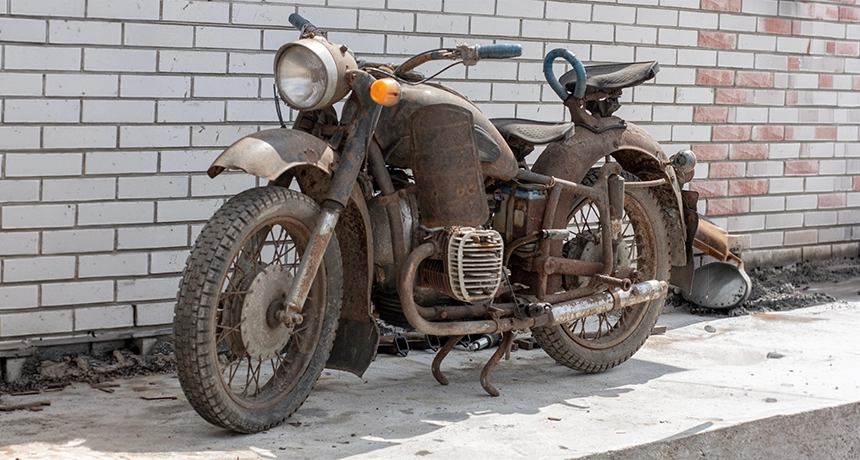
If a high-mileage bike has visible rust, worn tyres, poor chain condition, leaking fluids, damaged components, or general cosmetic wear that suggests it hasn't been cared for properly, it's worth proceeding with caution.
A well-maintained high-mileage bike will often look and feel much better than a low-mileage bike that has been neglected.
Poor ownership history
Frequent ownership changes in a short space of time can sometimes be a red flag, especially if there is little information about why it was sold on.
While multiple owners don't automatically mean there's a problem, it's worth asking questions and checking that the service records, MOT history and overall condition all match up. A bike with a clear, consistent history is usually a safer bet than one with lots of unanswered questions.
Can a Motorcycle Reach 100,000 Miles?
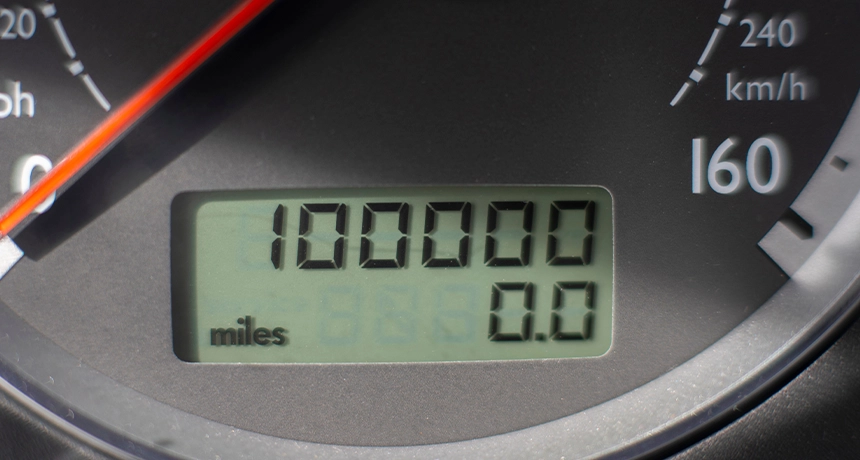
Yes, a motorcycle can reach 100,000 miles and beyond.
While many riders see this as a concern, modern motorcycles are capable of covering huge distances when they are properly maintained. In fact, many touring and commuter bikes regularly achieve well over 100,000 miles without major issues.
Examples of long-life motorcycles
Some motorcycles have built a reputation for reliability and longevity. Touring motorcycles such as the Honda Gold Wing, BMW GS range, Yamaha FJR1300, and Honda Pan European are often associated with high-mileage riding, with many owners reporting mileage well into six figures.
These bikes are designed to handle long journeys and frequent use, making them popular choices for riders who cover significant distances each year.
Factors affecting lifespan
A motorcycle's lifespan depends on much more than the mileage displayed on the clock. Factors such as servicing, riding style, storage conditions, and the quality of maintenance all play a major role. A bike that has been regularly serviced, stored correctly, and ridden responsibly is likely to last much longer than one with lower mileage that has been neglected.
Maintenance versus mileage
With the correct maintenance, a motorcycle can definitely last 100,000 miles or more. I think what we’ve learnt here is that overall maintenance is most important. The number of miles on the clock can mean different things depending on how the bike's been looked after.
Lexham’s Mileage Assessment Framework
Rather than focusing on mileage alone, we’ve created a Mileage Assessment Framework:
| Assessment | What to Look For | What It Means |
| Green Flags |
|
Mileage is unlikely to be a major concern. The bike has probably been well cared for and maintained correctly |
| Amber Flags |
|
Proceed with caution. The bike may still be a good buy, but further checks and questions are recommended. |
| Red Flags |
|
Mileage should be viewed as a concern. The lack of evidence makes it difficult to assess the bike's true condition and could lead to expensive repairs |
What Mileage is too High? Final Verdict
So the final verdict is that there isn’t a single figure where mileage becomes too high, because condition, maintenance history, and the type of bike it is matter far more than the odometer reading.
Motorcycle Mileage FAQs

Now, to wrap things up, we’ve answered some frequently asked questions…
Is 20,000 miles a lot for a motorcycle?
It completely depends on the type of motorcycle and how well it has been maintained. This could usually be a high mileage for a moped or scooter and potentially for some sports bikes; riders might start paying closer attention to service history and overall condition.
Is 30,000 miles high mileage?
Again, it all depends on the type of bike and its maintenance. For a sports bike, it could be considered high, as well as for some mopeds and scooters.
Is 50,000 miles too much for a used motorcycle?
No, it all depends on the type of bike and how well it’s been looked after. This is usually high for a sports bike.
Can motorcycles last 100,000 miles?
Yes, a motorcycle can last 100,000+ miles if it has been properly looked after.
Does mileage affect motorcycle value?
Yes, mileage can heavily affect a motorcycle's resale value, though it all depends on the bike's category, age, and maintenance history.
Is a low-mileage motorcycle always better?
No, a low-mileage motorcycle doesn’t automatically make it better.
While fewer miles could mean less mechanical wear on internal engine parts, it can also hide issues, especially if the bike has been neglected for long periods of time.
What matters more, age or mileage?
Neither. Maintenance history, storage conditions, and the type of bike are usually deciding factors.
I’m a delivery rider; should I buy a high-mileage scooter?

Buying a high-mileage scooter as a delivery rider can sometimes be a gamble, but it depends on the brand's reliability, maintenance, and whether or not you can afford to be without it if things go wrong.
The Last Stop!
And that concludes our blog on used motorcycle mileage! Now you should all be very clued up when it comes to purchasing a used motorcycle. If you are purchasing a motorcycle, don’t forget about insurance. You can get a motorcycle insurance quote with Lexham today!