If you’re aged over 50 and like scooters, you’ll have been privileged enough to have been a part of something rather special. You’ll belong to a hazy time when emissions problems were something for the future to worry about and if you wanted to buy or ride a smoky two-stroke of any capacity you still could.
Sadly, those days are well and truly over. New two-stroke scooters have been regulated out of existence, and are now only a thing of the past and the ability to ride an older one will get harder and harder as time goes on.
So, we thought we’d jog the memory banks for you older readers and show the younger ones just some of the scooters they may have missed out on from the turn of the century.
After all, we Brits have a long history and love of two-stroke scooters!
1. Piaggio Hexagon 125 | 1994-2003
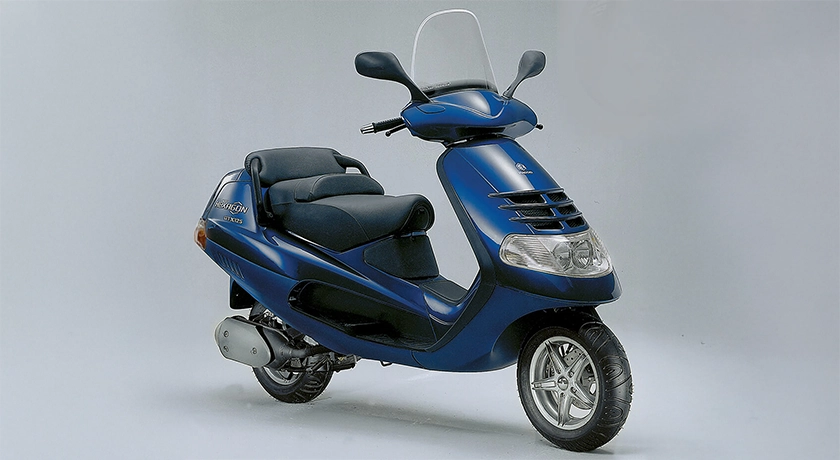
I know, I know, it’s pig ugly to look at but the Piaggio Hexagon was way ahead of its time when it arrived in 1994 (not that it would look any prettier in 2022).
This was designed by Piaggio to compete with the even uglier Honda Helix as an out-and-out commuter scooter with a big boot (later to be seen on the Piaggio X range and MP3).
However, the Italians released it with a new two-stroke, liquid-cooled lump available in 125, 150 and later 180cc forms that would later find its way into many ground-breaking scooters including the Gilera Runner.
Pros
-
Zippy Performance
-
Luggage Space
Cons
-
Small 10 Inch Wheels
-
Quirky Looks
2. Gilera Runner 180 | 1998-2002
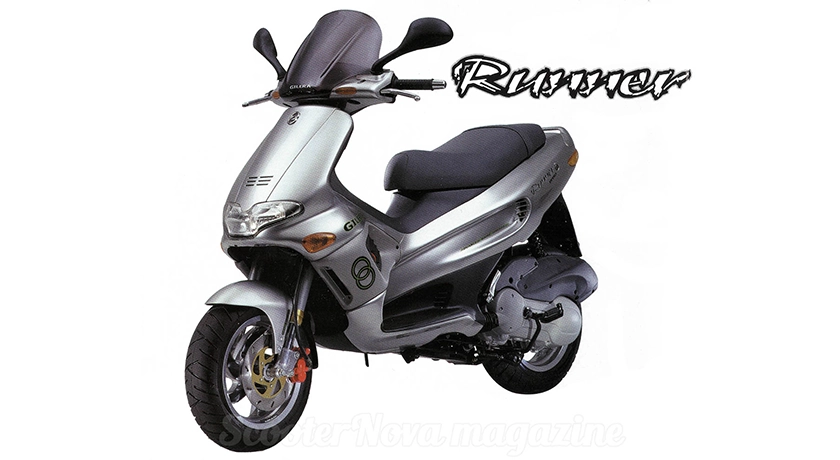
Without a doubt, the Gilera Runner 180 changed many riders' perceptions of automatic scooters.
Before the 125/180 variants arrived, autos were seen as something only ladies would ride. ‘Proper’ blokes rode a Honda C90, or a Vespa if they were cool enough and didn’t want a motorcycle. But suddenly we had a decent capacity two-stroke scooter in a sports chassis and with looks that at the time were fresher than a new Uni students first week.
The 125/180 Gilera Runner (remember that engine from the Hexagon?) was fast, and it caught on very quickly with the switched-on youth.
It also caught the attention of some older scooter fans who were happy to embrace this new-fangled tech if it meant they could go faster than they could on their vintage geared scooters. The original Runner models have started to fetch decent money over the last couple of years.
Plenty of these were trashed, crashed, and stolen back in the day, so it’s not easy to buy an unmolested one. The Runner then eventually changed over to a four stroke, meaning the original Runner is now a rare, appreciating classic.
Pros
-
Fab Performance
-
Good Handling
Cons
-
Very Rare
-
High Fuel Consumption
3. Italjet Dragster 180 | 1998-2003
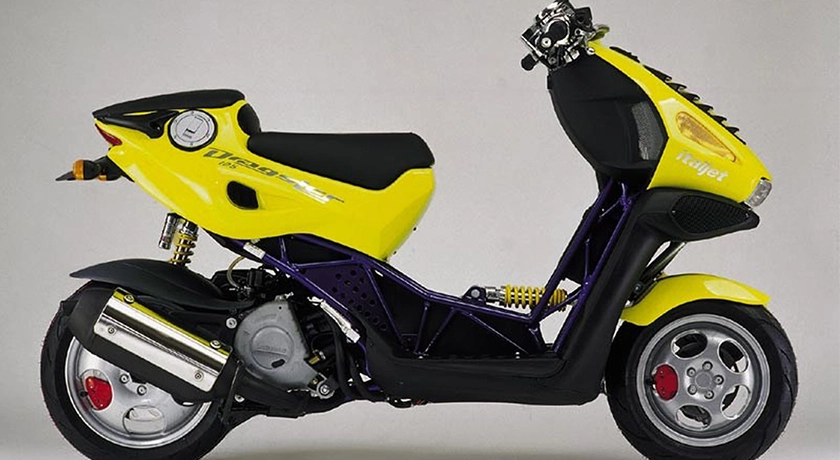
Not long after the Runner became popular, Italjet took things to the next level with the release of the iconic Italjet Dragster.
With its steel trellis frame, quirky hub centre steering, sporting a Minarelli engine in 50, and a Piaggio engine in the 125 and 180cc guise (remember that engine from the Runner and Hexagon?) . This scooter has drop-dead good looks, and turned many a hardened scooter boy towards the ‘Darkside’ of scootering.
That engine was quick in stock form, but by now, the likes of an Italian tuning house, Malossi were providing lots of go-faster kits and parts for this new breed of automatic sports scooter.
The original Dragster now has a brand new and just as iconic modern brother. It only comes with a four-stroke engine but looks stunning.
Meanwhile, the mark 1 Dragster isn’t overly expensive to buy, you can still pick one up for around £1500, but prices are starting to creep up.
Pros
-
Fabulous Styling
-
Great Performance
Cons
-
Rare
-
Expensive
4. Peugeot Speedfight 100 | 1996-2013
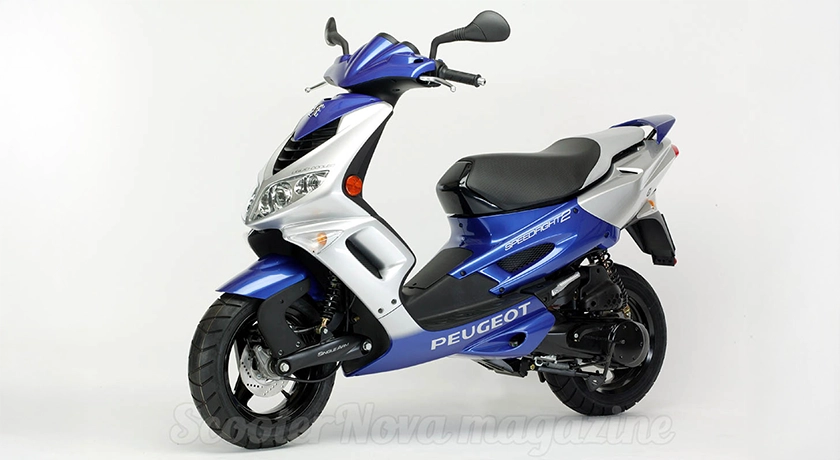
The original sports scooter was launched in 1996, and Peugeot did a good job of it, too.
The styling was bang on, and it originally came in air or liquid-cooled 50cc and 100cc forms with funky, single-sided front suspension to make it stand out from the crowd.
That was later replaced by more conventional telescopic forks. With sporty good looks, a decent finish and various special edition models it quickly grew in popularity, making it a chart-topping sales success for Peugeot.
The original was succeeded by the Speedfight 2 in 2001 with the Speedfight 3 from 2009. The 100cc two-stroke engine was nippier than the 50, but lots of 17-year-olds wanted the extra capacity of a 125. It took Peugeot until 2014 with the Speedfight 4 to make one, and by then, sadly, it had become a four-stroke...
Pros
-
The orginal sports scooter
-
Fast and fine handling
Cons
-
Only up to 100cc
-
Few survive
5. Piaggio Zip SP 50 | 2001-2016
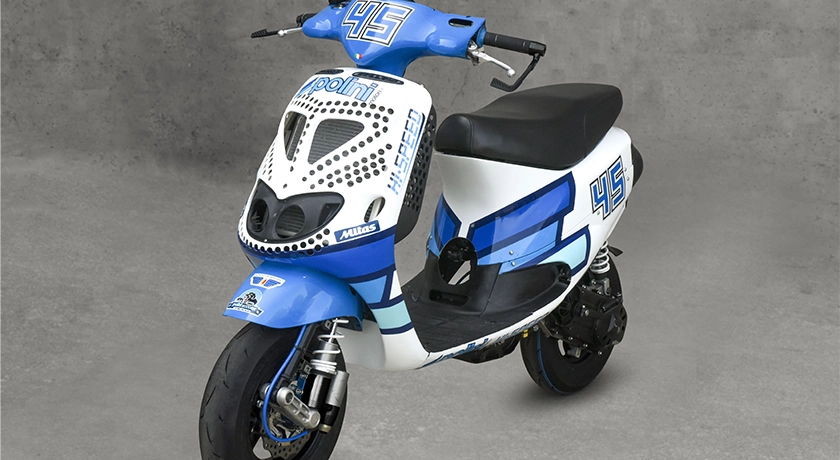
Imagine you’re sixteen years old and need some transport that won’t make you look like a geek.
What if you could buy the same moped as was being raced in the Gilera Cup by the likes of James Toseland and Leon Haslam? Yep, the liquid-cooled Piaggio Zip SP made a perfect race scooter.
The SP was derived from the standard Zip as introduced in 1992 and got a new liquid-cooled engine and monoarm front suspension. The result was light, agile and easy to tune. Again, companies like Malossi, Polini, Pinasco, and Stage 6 quickly made this moped into something to style and tune up, gaining it a cult following on and off the track.
The Zip is still one of the finest handling race scooters around, once you’ve added some fancy brakes and suspension. They’re also still popular in the UK’s BSSO scooter racing championships.
Pros
-
Impressive Performance (for a 50)
-
Popular Racing Choice
Cons
-
Still Only a 50
-
SP Version Now Rare
6. Vespa PX 125 | 1977-2017
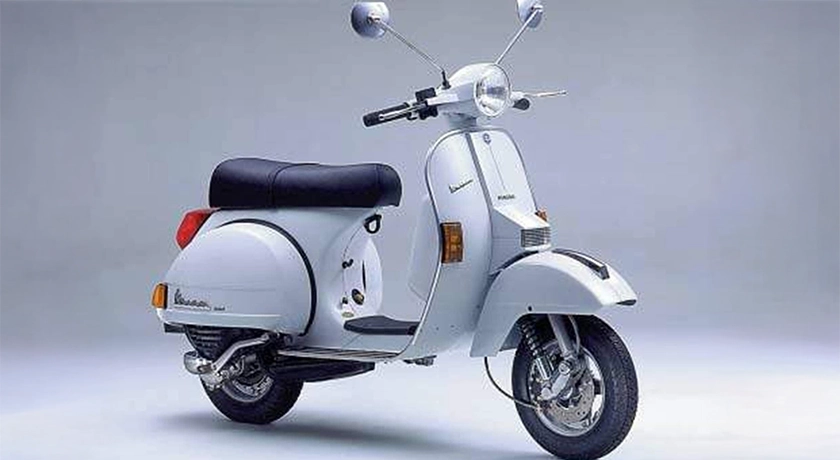
When we’re talking about legendary names, the Vespa PX is up there with the best of them. It had a 40-year production run that ended in 2017.
It became the workhorse and rally bike of choice for thousands and thousands of UK scooterists, and, of course, was massive all around the world thanks to its simplicity and metal chassis, which made it both practical and repairable.
The simple air-cooled two-stroke engine was available in 125, 150 and 200cc forms, and had the traditional twist-shift four-speed gearbox common to classic scooters since the late 1940s. Whilst its steel monocoque frame was pressed into the uber cool Vespa shape we all know and love.
It was a sad day when the final PX models rolled off the production line in Pontedera, Italy but it still lives on around the world. A Vespa PX 125 can cost you around £1500-2500, whilst a decent PX 200 is likely to be £2000 upwards.
Pros
-
Classic Style
-
Versatility
Cons
-
Not as sporty as some
-
Prices rising
The Last Stop!
So there you have it, I hope you enjoyed our rundown of the top 6 naughty two-stroke scooters.
Last but not least, if you are in need of insurance for your very own two-stroke scooter, then make sure to get a quote direct with Lexham!