Whether you’re looking to complete your CBT to start commuting, begin delivery riding, or go all the way to a full unrestricted motorcycle licence, understanding how the UK motorcycle licence system works is essential before you get started.
With multiple categories, age restrictions, power limits and test routes to consider, the process can feel confusing or daunting at first glance. But in reality, it follows a clear and structured pathway, and once you understand it, planning your next step becomes much simpler and much less stressful, although there have been proposed changes to the UK licensing system recently, so big changes could be coming…
In this guide, though, we’ll break down every current motorcycle licence category in the UK, explain the requirements for each one, and outline the exact steps you need to take from getting your provisional licence right through to full Category A!
So, with that being said, let’s get into it…
The Different Bike Licence Categories | UK Legislation
In the UK, motorcycle licences are issued in progressive stages. Your age, experience level, and the type of motorcycle you want to ride will determine which category you’re eligible for.
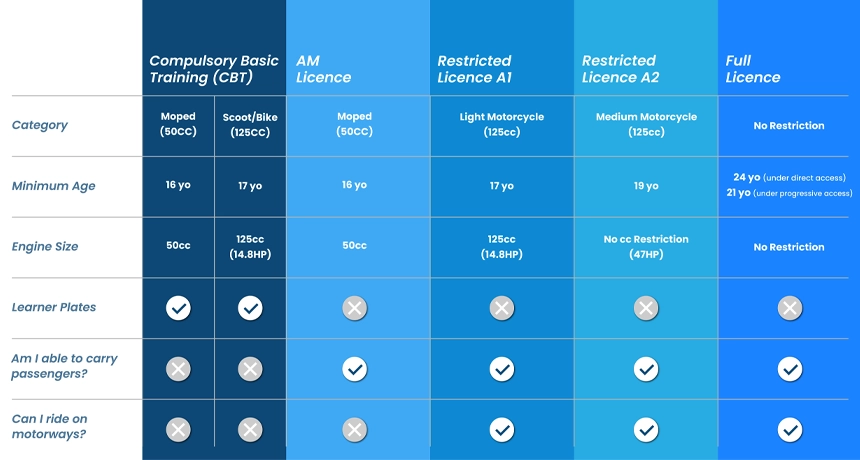
Below is a brief overview of each licence type, from getting your provisional right through to a full, unrestricted bike licence, but do note that this is just a quick snapshot; we’ll dive into each of these categories in more detail further down the guide.
Provisional Licence
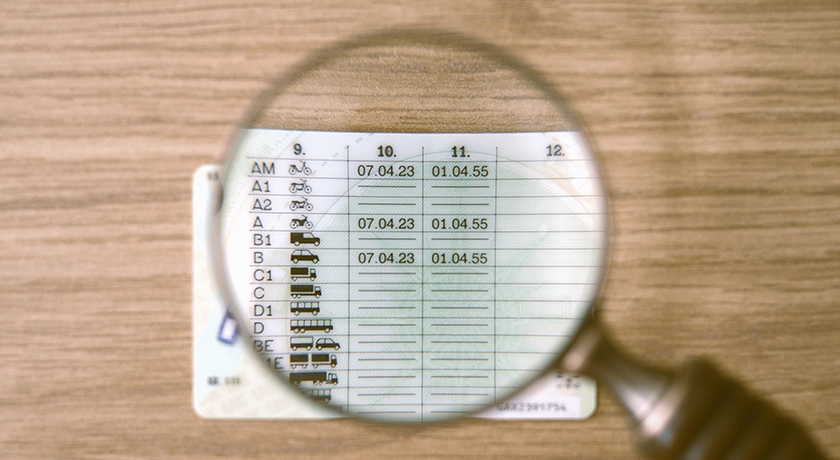
Your provisional licence is the starting point for all motorcycle riders in the UK.
You can apply for it when you reach 15 years and 9 months old, and once it arrives, you are legally allowed to book and complete your CBT.
It is important to note, however, that a provisional licence on its own does not allow you to ride on the road, as you must complete CBT first, so definitely make sure you get it booked in!
Once completed, you are allowed to ride:
- Mopeds up to 50cc with a speed limit of 28 mph (45 km/h) at age 16
- Motorcycles or scooters up to 125cc with a power limit of 11 kW (14.8 hp) at age 17 or above
- Mopeds or electric bikes within the same limits as above
Restrictions on a provisional licence:
- Must display L plates
- Cannot carry passengers
- Cannot ride on motorways
- CBT must be valid (expires after 2 years)
AM Licence
Minimum age: 16
The AM licence allows you to ride up to 50cc with a maximum speed of 28mph, but without L plates. It also allows you to carry a pillion passenger, but you cannot use motorways, although a significant benefit is that you won’t need to redo your CBT every two years.
Whilst it is quite limited, it’s still a great stepping-stone for 16-year-olds who want independence early and, at the same time, learn road skills safely, but it can be costly.
To obtain an AM licence, you must:
- Hold a provisional licence
- Complete CBT
- Pass your motorcycle theory test
- Pass Module 1 and Module 2 practical tests
A1 Licence
Minimum age: 17
The A1 licence allows you to ride a 125cc motorcycle or 125cc scooter with a maximum output of 14.8hp and a power‑to‑weight ratio capped at 0.1kW per kg, or even something electric!
Again, like the AM licence, it can be seen as quite limiting and costly too, but it offers the same core benefits with the added freedom of being able to use motorways. Despite its limits, many riders find it a sensible and confidence‑boosting next step.
To gain an A1 licence, you must:
- Hold a provisional licence
- Pass your motorcycle theory test (if you’re not upgrading from AM)
- Pass Module 1 and Module 2 practical tests
- Have completed CBT if you’re starting from scratch and not moving up from AM
A2 Licence
Minimum age: 19
The A2 licence allows you to ride a motorcycle or scooter up to 35kW (47hp) or with a maximum of 70kw (94hp) before restriction to 47hp and a power‑to‑weight ratio of no more than 0.2kW per kg. After holding it for two years, you can upgrade to a full Category A via the progressive route.
Compared to the A1 licence, it opens the door to far more capable real‑world bikes, and a lot of riders see it as the ideal middle step before moving to full‑power machines.
You must:
- Hold a provisional licence
- Pass your motorcycle theory test (if you’re not upgrading from A1)
- Pass Module 1 and Module 2 tests on an A2-compliant motorcycle
- Have completed CBT if you’re starting from scratch and not moving up from A1
A Licence / Full Bike Licence
Minimum age: 24 (Direct Access route) or 21 via progressive access after holding A2 for two years.
The full Category A licence allows you to ride any motorcycle or scooter without any engine size or power restrictions. Compared to the A2 licence, it gives you complete access to full‑power machines, and for many riders, it’s the point where motorcycling truly opens up and feels like the final goal of the whole licensing journey.
You’ll need to:
- Ride a full‑power Category A motorcycle for your tests
- Pass Module 1 and Module 2 tests
- Pass your motorcycle theory test (if you’re not upgrading from A2)
- Have completed CBT if you’re starting from scratch and not moving up from A2
How can I apply for a Motorcycle Licence | Getting Started
Getting started with your motorcycle licence in the UK is much simpler once you understand the steps. Everything begins with your provisional licence, followed by your CBT, and then the study and testing phase as you work toward the category you want.
Below is a clear breakdown of each stage.
Applying for a Provisional Bike Licence
Your journey starts by applying for a provisional driving licence through the DVLA, and according to them, “Your licence should arrive within one week if you apply online. It may take longer if DVLA need to make additional checks”. Once it arrives, you’re officially allowed to book your CBT.
Without a provisional licence, you can’t take any further steps, so this is always the first job on the list, costing between £34 and £43, depending on whether you apply online or via post.
Booking your CBT
Booking your CBT is straightforward, and the process starts with choosing a DVSA‑approved motorcycle training school.
You can start by searching for local training schools on the GOV.UK website. Once you’ve chosen a school, you’ll be able to select a date, check availability, and pay for your place.
The Study Begins
Before your CBT, it’s worth doing a bit of light preparation so you feel comfortable on the day.
Refreshing the basics of the Highway Code, understanding what the CBT involves, and familiarising yourself with motorcycle or scooter controls will help the training run much more smoothly and boost your confidence from the moment you arrive.
Completing your CBT (Certificate of Basic Training)
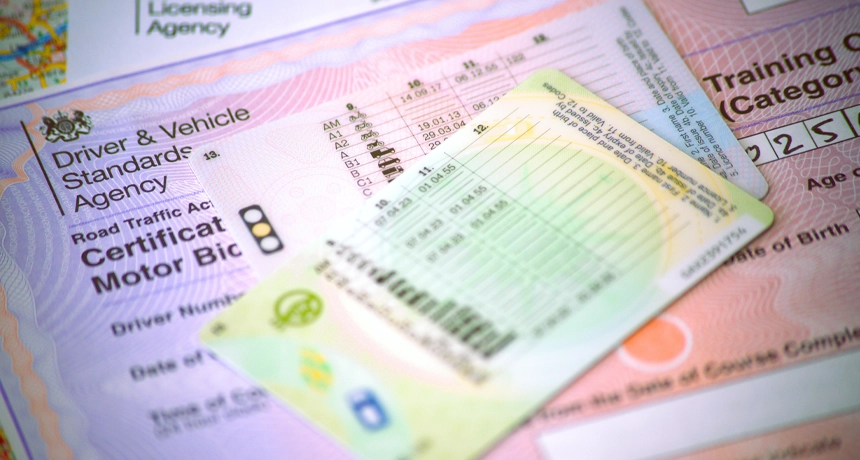
Getting on the road legally starts with your CBT (short for Compulsory Basic Training).
It’s not a test you can fail in the traditional sense, but it does make sure you can ride safely and confidently before you head out on public roads. Once you’ve finished, you’ll get a DL196 certificate, which lets you ride with L plates.
What does CBT involve?
CBT usually takes a full day, depending on your experience, but it can take longer if you need it, and it’s split into five sections. Here’s what you can expect from the day:
- Introduction and eyesight check
The day begins with a welcome briefing and a basic eyesight test, where you’ll read a number plate from 20 metres (take your glasses or contacts if you need them). Your instructor will outline the day’s plan, safety expectations, and check your licence and paperwork. You’ll also get guidance on what to wear. - On-site training
This is where you get to know your bike. You’ll learn how to use the controls, perform basic safety checks, operate the stand, and start and stop the engine correctly. You’ll also cover basic maintenance, like checking tyre pressures, oil levels, brakes, and lights, to keep the bike safe and reliable. - On-site riding
In a safe, controlled area off the road with cones, you’ll practice moving off, stopping, slow-speed control, signalling, turning, figure-of-eight manoeuvres, and both controlled and emergency braking. - On-road training
Before going onto public roads, your instructor will explain road positioning, junctions, roundabouts, and how to spot and respond to hazards, helping you prepare for real traffic conditions. - On-road riding
Finally, you’ll spend at least two hours riding on public roads under instruction. You’ll need to show you can handle traffic safely and make sensible decisions. Not ready by the end of the day? No problem! You can just continue training until you’re up to standard.
How much does CBT typically cost?
Most CBT courses cost between £130 and £200. This usually includes:
- Bike hire
- Fuel
- Insurance
- The instructor’s time
What can I ride after I pass my CBT?
What you can ride depends on your age. Here’s a quick guide:
As a learner:
- L plates must be displayed front and back
- You cannot carry a pillion
- Motorways are off-limits
- And finally, your CBT certificate only lasts two years
Re-doing your CBT
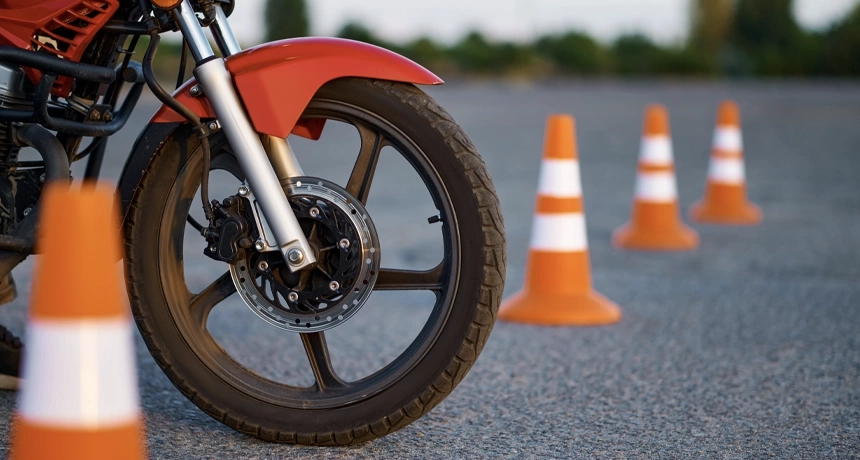
Your CBT is valid for two years. If you haven’t passed your full bike test in that time, you’ll need to retake it to ride legally as a learner.
The reasons for redoing a CBT can vary, but typically, you may need to redo your CBT if you’ve taken a break from riding, your certificate has expired, or maybe you want a skills refresher before moving to a bigger bike.
It’s important to note, though, that once it expires, you cannot ride until it’s completed again, so it’s worth keeping track of the date.
Preparing for Motorcycle Theory & Practical Tests
Once you have your CBT certificate (DL196) in hand, you are legally allowed on the road as a learner. However, if you want to ditch the L-plates, carry a pillion, or ride on motorways, you need to tackle the theory and practical tests, and this is where you transition from a learner to a qualified rider.
What does a Motorcycle Theory test involve?
Before you can book your Mod 1 or Mod 2 practical tests, you must book and pass the motorcycle theory test.
Even if you already hold a full car licence, you still need to pass the motorcycle-specific theory test because the hazards and technical knowledge required for two wheels are significantly different.
The test is split into two parts, with both taken on a computer at a DVSA test centre:
- Multiple-Choice Questions: You have 57 minutes to answer 50 multiple-choice questions based on the Highway Code and riding theory. You need to score at least 43 out of 50 to pass.
- Hazard Perception: You’ll watch 14 video clips featuring everyday road scenes. You need to click when you spot a developing hazard, but remember that one clip contains two hazards! You need to score at least 44 out of 75 to pass.
Once you pass, your theory certificate is valid for two years. You must pass both practical modules within this timeframe, or you’ll have to sit the theory test all over again, so get that training booked in!
What does a Bike Practical test include?
The practical motorcycle test is not a single event; it is split into two separate modules, and you must pass Module 1 before you can take Module 2.
Most training centres will space the bookings apart, because if you fail the Mod 1, you will likely lose the Mod 2 fee, as a 3-working-day notice is required to reschedule.
Module 1: Manoeuvres (The Off-Road Test)
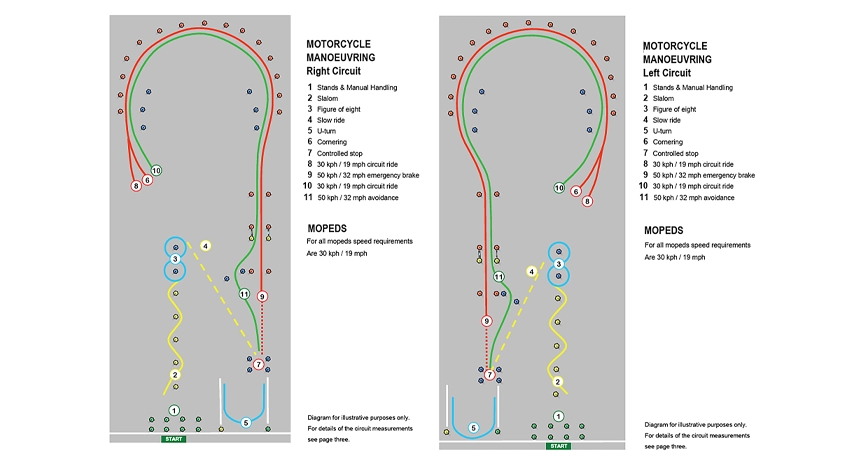
This takes place at a dedicated DVSA training pad. It usually lasts about 20 minutes and tests your bike handling skills in a controlled environment, and involves:
- Wheeling the bike and using the stand.
- Slalom and figure-of-eight.
- A slow-speed control exercise.
- A U-turn.
- Cornering and a controlled stop.
- Emergency stop at a minimum speed of 31mph (50km/h).
- Hazard avoidance, also at a minimum speed of 31mph (50km/h).
Module 2: On-Road Riding (The Road Test)
Once you’ve conquered Mod 1, you can move to Mod 2 - the final hurdle! It lasts about 40 minutes and involves:
- Eyesight check: Reading a number plate from 20 metres.
- ‘Show Me, Tell Me ‘Questions (technical questions about bike maintenance and safety).
- Road riding: An examiner will follow you (usually on another bike) and give directions via a radio. You’ll be assessed on your road positioning, observation, and ability to handle various road conditions, including junctions and roundabouts.
- Independent riding: About 10 minutes of the test involves following signs or a series of directions to show you can make safe decisions on your own.
Which is harder? Motorcycle Theory Versus Practical Test
This is a common debate among new riders, and the answer usually depends on your background.
- The Theory Test is often seen as "harder" by those who struggle with exams or haven't cracked open the Highway Code in years. It requires dedicated study; you cannot simply ‘wing it’ based on common sense alone.
- The Practical Test (specifically Mod 1) is often seen as the most nerve-wracking. The slow-speed manoeuvres and the 31mph emergency stop require precise clutch and rear brake coordination, which naturally take time to master.
In reality, the Mod 2 road test is often where riders feel most comfortable, as it is simply about demonstrating that you are a safe, predictable, and competent road user; effectively, it’s just showing off the skills you will have been practising since your CBT.
Understanding Further UK Motorcycle Licence Categories
Moving from a provisional to a 'full' licence (AM, A1, A2, or A) is the final step toward permanent riding freedom. These categories allow you to ditch the L-plates and carry a pillion without the need to retake a CBT every two years.
AM / A1 Motorcycle Licence
The AM and A1 licences are often the first taste of a 'full' qualification for younger riders.
What is required to obtain my A1/AM Licence?
To secure either licence, you must follow a set four-step process:
- Provisional Licence: A valid UK driving licence with motorcycle entitlement.
- CBT: A valid DL196 certificate.
- Theory Test: Pass the motorcycle-specific theory and hazard perception test.
- Two-Part Practical: Pass Module 1 (off-road manoeuvres) and Module 2 (on-road riding) tests on a bike matching the category.
How much does an AM/A1 Licence Cost?
The total cost usually sits between £400 and £800. This includes:
- Theory Test: £23.
- Practical Tests: £15.50 for Mod 1 and £75 for Mod 2 on a weekday, otherwise it's £88.50 on evenings, weekends and bank holidays.
- Training: Instructor time and bike hire.
What can you ride on AM & A1 Licences?
While both remove the need for L-plates, the A1 category differs by offering machines with more power and the added benefit of additional road access.
How long does it last?
Unlike the CBT, which expires every 2 years, the AM and A1 licences are valid for life.
Once you’ve passed either of them, you are a qualified rider in that category and never have to take another test unless you choose to upgrade to an A2 or Full A licence later on, where you will have to re-take your Mod 1 & Mod 2 again.
A2 Motorcycle Licence
The A2 licence is the 'middle' step for riders aged 19 and over, providing access to bikes with significantly more performance than a 125cc.
What do I need to do to get my A2 Licence?
To secure an A2 licence, you can follow one of two routes depending on your experience:
Direct Access: If you are 19 or over, you must hold a valid CBT, pass the motorcycle theory test, and then pass Mod 1 and Mod 2 on a bike at least 245cc with a power output between 20kW and 35kW (27hp-47hp).
Progressive Access: If you have held an A1 licence for at least two years, you can upgrade by passing the Mod 1 and Mod 2 practical tests on an A2-compliant bike. You generally do not need to retake the theory test or your CBT.
How much does an A2 Licence Cost?
The total cost usually sits between £500 and £1,100. This includes:
- Theory Test: £23 (if required).
- Practical Tests: £15.50 for Mod 1 and £75 for Mod 2 on a weekday, otherwise it’s £88.50 on evenings, weekends and bank holidays.
- Training: Instructor time and larger bike hire.
What can you ride on an A2 Licence?
The A2 licence allows you to ride much more capable real-world machines, including many popular naked bikes and adventure bikes, either unrestricted and naturally 47hp or under, with a power-to-weight ratio of no more than 0.2kW per kg or on a machine with 70Kw (94hp) before restriction to 47hp and again, with a power-to-weight ratio of no more than 0.2kW per kg.
How long does it last?
Much like the light categories, an A2 licence is valid for life.
Once you’ve passed, you are a qualified rider in this category. To move to a full, unrestricted Category A licence later, you can take the test via progressive access from age 21, provided you have held your A2 licence for at least two years, which allows you to skip the theory test and gain your full licence three years earlier than the standard Direct Access age of 24.
Getting your Full Bike Licence
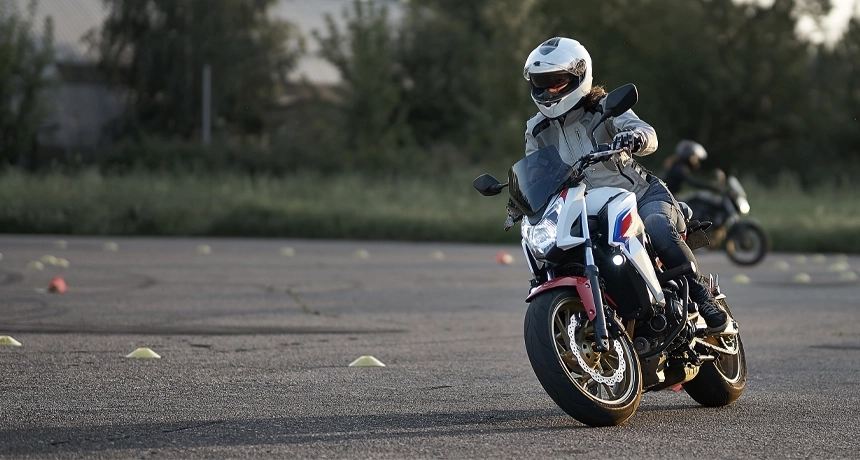
The Category A licence is the final goal, removing all power and engine size restrictions.
Direct Access (DAS)
The Direct Access Scheme (DAS) is for riders aged 24 or over who want to go straight to a full licence without spending two years on an A2 bike.
- You must hold a valid CBT and pass the motorcycle theory test before taking your practical tests.
- You must also complete your training and both practical modules (Mod 1 and Mod 2) on a large machine that produces at least 50kW (67hp) and is at least 595cc.
Progressive Route
The Progressive Route allows younger riders (aged 21+) to gain a full licence if they have already gained experience on an A2 machine for two years prior.
- You must have held an A2 licence for a minimum of two years.
- You do not need to retake your theory test or hold a valid CBT (as your A2 licence covers this). You simply need to pass the Mod 1 and Mod 2 practical tests on a full-power Category A machine.
The differences between the two routes
The main difference is age and experience.
- DAS is a 'fast-track' for slightly older riders (24+) who may have no prior riding experience but want an unrestricted licence immediately.
- Progressive Access rewards experience as it allows 21-year-olds to ride the same high-power bikes as a 24-year-old, provided they have put in the time on an A2 bike first.
How much does a Full Motorcycle Licence Cost?
The total cost usually sits between £800 and £1,200. This includes:
- Theory Test: £23 (only required for DAS).
- Practical Tests: £15.50 for Mod 1 and £75 for Mod 2 on a weekday, otherwise it’s £88.50 on evenings, weekends and bank holidays.
- Training: This is the largest portion of the cost, covering professional instructor time, fuel, and the hire of a high-capacity 595cc+ motorcycle.
How long does it last?
Your Category A licence is valid for life and marks the final stage of the UK motorcycle licensing journey. Once you have this entitlement on your photocard, you are a fully qualified rider and will never need to take another motorcycle test or redo a CBT again.
However, it is important to remember that this is subject to standard UK driving laws; you must still renew your photocard every 10 years, remain medically fit to ride, and ensure your licence is not revoked due to a court disqualification or the accumulation of penalty points.
Overall Cost Breakdown
Understanding the financial commitment is a vital part of planning your journey to two wheels.
Costs can vary significantly depending on your location, the training school you choose, and how many days of instruction you require before you feel test-ready, but despite this, the costs can be roughly estimated.
How much does it cost to get a scooter/moped licence?
If you are looking to ride a moped (up to 50cc) or a scooter (up to 125cc) as a learner, your only outgoing will be the cost of a CBT, which typically ranges from £130 to £200, making it a highly cost-effective way to get on the road.
However, if you want to gain a full AM or A1 licence to ditch your L-plates and take a pillion, the cost increases.
Most riders will also opt for at least one or two days of professional training to ensure they can pass the Mod 1 and Mod 2 tests. Total costs for these categories usually settle between £400 and £800, depending on how much training you need.
How much does it cost to get a motorcycle licence?
Obtaining a full A2 or Category A licence is a larger investment because it involves more intensive training on heavier, high-capacity bikes, but for most riders, the total price is usually between £650 and £1,300.
This total is comprised of the £23 theory test fee, the £15.50 Module 1 fee, and the £75 Module 2 fee (which increases to £88.50 for weekend or evening slots). The remaining balance goes toward a multi-day training course.
These courses are essential for mastering the 600cc+ bikes used for the test and usually include bike hire, insurance, and fuel. While it may seem like a significant upfront cost, it is a one-time investment in a qualification that lasts a lifetime.
Do You Really Need a Motorcycle Licence?
While the freedom of the open road is the main draw for many riders, it’s important to remember that a motorcycle is a motor vehicle in the eyes of the law.
Riding on public roads without the correct entitlement isn't just a minor oversight; it's a serious offence that can lead to heavy fines, points on your licence, and even the seizure of your bike.
What are the dangers of riding without a motorcycle licence?
The most immediate danger is to your safety and the safety of others, as the training required for a licence ensures you have the skills to handle a bike in emergency situations.
Legally, the consequences are equally severe. If caught riding a bike without the correct licence, such as riding a 600cc bike on a CBT, you face a fine of up to £1,000 and 3 to 6 penalty points.
For new riders or those with a car licence, these points can lead to an immediate ban under the New Drivers Act. Most importantly, riding without a valid licence almost certainly voids any insurance policy you have, leaving you personally liable for any damage or injury costs following an accident.
Can you get in trouble for riding without motorcycle insurance?
Yes, and a brief look into the UK’s Continuous Insurance Enforcement (CIE) shows just how easy it is to get caught. Unless your bike has been officially declared off the road via a SORN (Statutory Off-Road Notification), it must be insured by law, even if it's just sitting in your garage.
If you're caught riding uninsured, the police can issue a £300 fixed penalty and 6 penalty points on the spot. If the case goes to court, the fine can become unlimited, and you may be disqualified from riding altogether. The police also have the power to seize, and in some cases, destroy uninsured motorcycles, so make sure you’re insured!
Quick Cost Summary | How much does it cost to get a motorcycle licence?
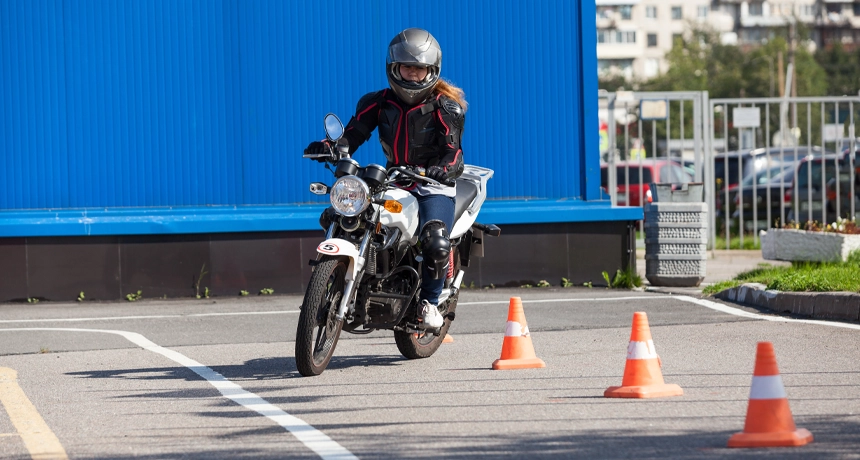
As we’ve covered throughout this guide, the cost of getting a motorcycle licence can vary depending on the route you take, the category you’re aiming for, and how much training you need before your tests.
As a quick recap, most riders typically pay around:
- £130 - £200 for a CBT (Compulsory Basic Training)
- £400 - £800 for an AM or A1 licence
- £500 - £1,100 for an A2 licence
- £800 - £1,200 for a full Category A licence through Direct Access
These figures usually include training packages with bike hire, fuel, instructor time, and test preparation, although the final price will always depend on the amount of training required before you’re ready to pass your tests.
The Last Stop!
So, that just about wraps up our guide on licence types & UK requirements. We hope it all sounds a bit clearer now and gives you an idea of the ‘levels’ within the licensing system.
As always, don’t forget about insurance. Head to Lexham Insurance to get your motorcycle insurance quote today!