For a lot of people, 125cc motorcycles are the machines that kickstart their passion for motorbikes, but they can equally be the perfect bike for riders of experience seeking something lighter, cheaper to run and easier to manage.
With so many to choose from nowadays, 125cc bikes may remain with the same capacities, but their style and size have grown significantly over the years, and many 125s can now initially appear much larger than their engine may suggest, such as the Keeway V-Cruise 125 featuring a 125cc V-twin, for example.
In this blog, we are going to be going through a guide to everything 125cc motorcycle, so whether you’re a fresh 17-year-old eager to get their first motorcycle, or perhaps someone who decided to make the switch to something smaller slightly later, this one is for you!
So, without further ado, let’s get started, shall we?
What is a 125cc motorcycle?
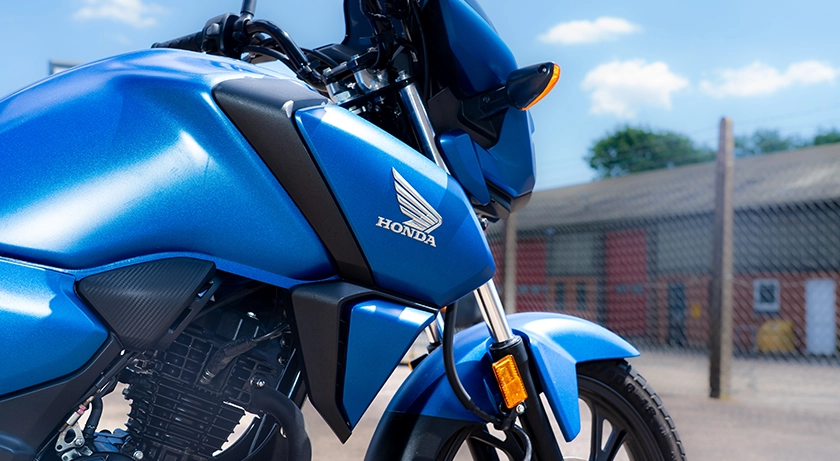
A 125cc motorcycle is a motorcycle with a 125cc engine.
Some of the more powerful 125cc models can hit speeds of 70mph or above, whilst being able to cruise at 50-60mph more than comfortably. The cc is the measurement of the engine’s capacity and can determine how powerful the bike is.
As the general rule goes, the lower the cc, the less powerful the bike is, and vice versa, but this is not always the case.
125cc Performance & Specifications Explained
If you’re coming down from larger motorcycles, you may be concerned about the power deficit, but you may also be surprised by the level of performance some 125cc capacity motorcycles have.
An example of this is the Yamaha R125, which has been reported to achieve a top speed of up to 80mph or the Honda PCX125 scooter, which Honda states will do 61mph, but in our review, we found it to achieve an indicated 70mph.
In the UK, the 125cc market is largely catered for beginners on a CBT or A1 licence who are restricted to 14.8hp, hence the sub-15hp power on most, if not all, models.
Naturally, manufacturers could probably push them a bit further for those coming down to smaller capacity bikes, but then the market for a 125cc with more than 15hp would be so small due to licensing regulations that it wouldn’t make sense, which is why the humble 125cc tends to always sit just below the 15hp figure, regardless of manufacturer or model.
Different Types of 125cc Bikes
When you first decided to move to a powered two-wheeler, you might have assumed there were just motorcycles, mopeds and scooters. However, there is a range of different styles of bikes on the market.
The most popular types of bikes you’ll see are:
Naked | What is a naked bike?
The KTM 125 Duke is a great example of a naked bike in the 125 world. Stripped back, no fairings and an upright riding position. They’re essentially modern versions of bikes from yesteryear, such as the iconic classic Triumph Bonneville of the '60s or Honda’s CB750 from the '70s, for example, while larger capacity Nakeds like BMW’s M1000R can be full-fat sports bikes trimmed down without the panels, but all the power of the fire-breathing track monster they’re based on.
Cruiser | What is a cruiser?
Think Harley Davidson or Indian, and you’re already most of the way there. Quintessentially American and designed for long highway cruising or Route 66, cruisers excel by having long wheelbases, monstrously large, lazy V-Twin engines and low seats, but in the 125 world, the Keeway RKV125C is probably as close as you’re going to get. It even has a 125cc V-Twin engine too!
Sport Bike | What is a Sport Bike?
Much like the Nakeds I spoke about above, but with fairings (big plastic panels) around it. Think naked bike but with clothes. Aerodynamic, fast and with an aggressive riding position, sport bikes are the king of track days or racing. The Suzuki GSX-R 125 is the 125cc version of this, taking inspiration from its bigger brothers like the GSX-R1000R.
Adventure | What is an Adventure Bike?
Picture a long-distance trip. Think NC500 in Scotland or the Pyrenees, you’ll want an adventure bike (or sometimes a touring or sport touring bike – that’s below). Whilst aimed at the dirt, these bikes are brilliant all-rounders. Whether you’re commuting, touring, riding off-road or just riding at the weekend, adventure bikes are the Swiss Army Knife of the bike world. Typically, though, they are too heavy for what they’re designed for, so riders tend to stay on the tarmac, but who can blame them when they’re so comfortable and offer so much wind protection. If you want a 125cc adventure bike, the newly released Benelli BKX 125 is a great example.
Touring/Sport Touring | Aren't they just Adventure Bikes with Road Tyres?
Touring or Sport Touring bikes take comfort up several notches. Big, heavy and packed with tech and features, they’re brilliant for doing the distance. Touring or even sport touring 125cc bikes rarely exist and are typically reserved for much larger capacity motorcycles, such as the Honda CB1000GT or the BMW K 1600 GT, but the closest you can get is the Lexmoto RX1 (which is still arguably more adventure).
Retro | What is a Retro Bike?
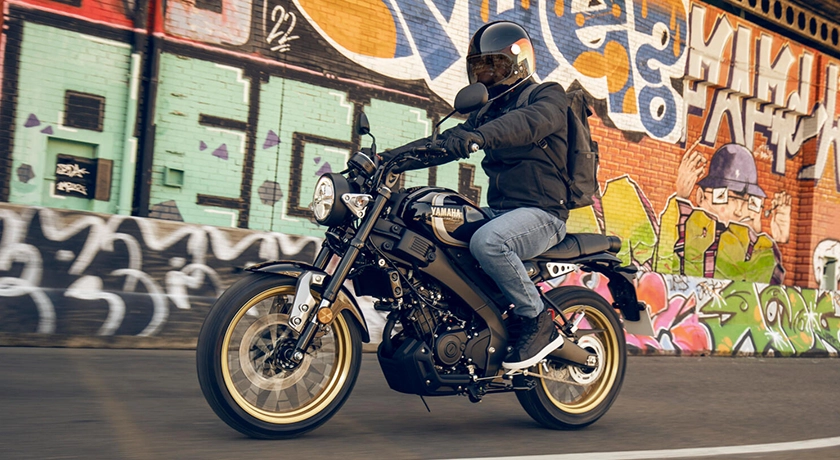
Retro bikes typically follow the suit of their elders. Round headlights, flat seats, exposed frames and air-cooled engines (or liquid-cooled with fins!). They’re effectively old-school naked bikes, but not always. Retro bikes can take many forms, not just in the style you’re likely most familiar with, as seen on the Triumph Bonneville, but even big adventure bikes like the Ducati DesertX are being modelled on retros like the Cagiva Elefant, for example. There are many retro 125cc’s but a great example is the Yamaha XSR125 Legacy.
Scooter | What is a Scooter?
This one might already be familiar to you, as it’s one of the most common sights on the roads in the suburban jungle. Scooters typically have a ‘step-through’ design, meaning they can literally be stepped through at the front, allowing them to have a footboard design, unlike a motorcycle, where you have to swing your leg over. Typically, ‘twist’n’go’ (automatic & no gears) scooters are praised for their simplicity and efficiency, proving to be a fantastic way to zip through traffic or begin your two-wheeled career. A great example of this is the Vespa Primavera 125 which proved popular with us here at BikeMatters when we had it in for review.
A 125cc Maxi-Scooter?
Despite what you may have heard about maxi-scooters being long wheelbase, large capacity, heavy twist and go’s, the humble 125 can also fit into this category. Yes, they’re not 500, 600 or even 750cc like the wildly different scooter/adventure hybrid Honda X-ADV, but they offer comfort, stability, and in some cases stacks of tech like the Yamaha XMAX 125 Tech MAX+.
If you’re an Urban Commuter, give Electric a go!
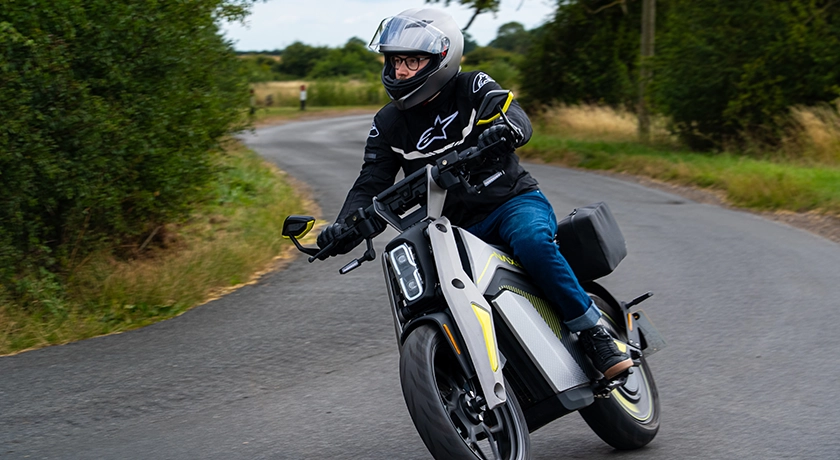
Interestingly, whilst the 11kw/14.8hp limit still applies to electric 125cc motorcycles, this is deemed on the ‘continuous power’, not the peak power.
What does this mean, you ask?
Take the Zero S, for example: a £15,825 naked bike with some trick kit on it. This produces a continuous power of 11kw or 15hp, meaning it is compatible with an A1 licence or for riders on a CBT.
The interesting part comes with the fact that it produces a peak power of 60hp with 132nm of torque (which is only 10nm short of a 2026 Kawasaki Ninja H2!) because electric motorcycles have the licence restrictions based upon the continuous power, not the peak power. At least here in the UK, anyway.
Electric motorcycles and scooters are also a fantastic choice within the urban environment, whether that’s for commuting, delivery riding, couriering or just having something to zip through tight traffic and get where you’re going in a much quicker and cleaner method, instead of taking four wheels or public transport.
If you’re bewildered by all the jargon associated with licensing regulations, electric powertrains, and what bike is right for you, then you can refer to our Top 10 Best CBT/A1 Electric Motorcycles For Beginners 2026 article to make things clearer.
Using a 125cc for Delivery Riding or Couriering
With the low weight, reduced running costs and ease of maintenance, it’s easy to see why 125cc motorcycles and scooters tend to prove the most popular for delivery riding.
Within an urban environment, a lighter-weight bike with excellent manoeuvrability is exactly what you’ll likely need, reducing the requirement for a larger bike with more weight and more power, especially when you factor in the amount of 20mph urban speed limits with associated speed cameras nowadays.
A great choice for this would be the Honda CB125F we recently reviewed, especially the 2026 model, which we couldn’t unfortunately get our hands on, as that now features stop-start technology and a very modern TFT display, not forgetting to mention its frankly ridiculous 189mpg economy, leading to a range of up to 455 miles for less than £15 according to Honda.
Another great choice here, if you prefer a scooter, would be the ever-popular Honda PCX125, which we also reviewed. It too has recently been updated and now features a TFT display, disc brakes front and rear and revised suspension.
If you are thinking of using a 125cc for delivery riding, don’t forget to get Delivery Rider Insurance!
Where should I buy my 125cc motorcycle from?
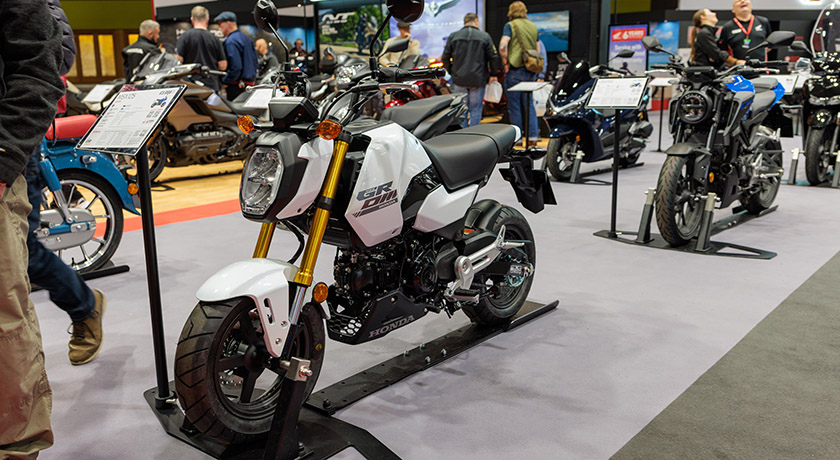
When looking where to purchase your 125cc motorbike, realistically, you have two options: you can either buy new or used from a dealer, or you can buy second-hand from a private seller.
Buying a Used 125cc
If you’re concerned about the upfront cost of your bike, private sales tend to be less expensive than buying directly from a dealer. However, you won’t receive an additional warranty or the assurance that your bike has been checked over by a professional prior to purchase.
Buying a New 125cc
On the other hand, if you opt to buy from a dealer, your motorbike will typically come with either a 3 or 6-month warranty and will likely have been professionally checked over and will likely have been recently serviced. This is usually reflected in the price, with prices at dealerships typically being higher than private sales.
What are the benefits of a small-capacity motorcycle?
There are many reasons why people opt for a 125; this may be because that is all they are permitted to ride thus far, or perhaps it may be someone's personal preference.
Other reasons include:
Cheaper second-hand than other motorcycles
Usually, 125cc motorcycles can be picked up for more affordable prices second-hand, in comparison to higher-powered machines that will commonly set you back more.
Typically, more affordable to insure
125cc motorbike insurance on some occasions, can be far cheaper in comparison to higher-powered bikes. As they don’t have much power behind them, it makes them much easier to ride, as well as reducing the risk of being on the road.
However, the cost of your insurance will also be dependent on a variety of things, such as your age, riding experience, where you intend to store it overnight, the value of the bike, and so on.
125cc is the largest capacity motorcycle that can be legally ridden at 17
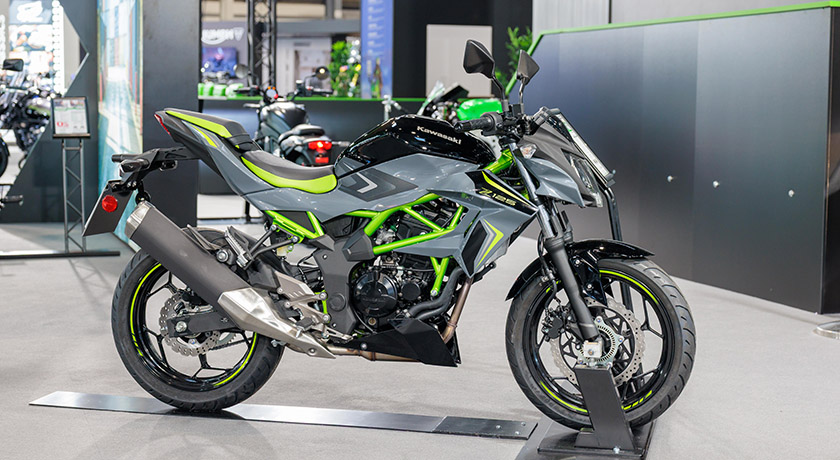
As we mentioned previously, 125cc is the maximum engine size of a motorcycle that you can ride at 17 years old in the UK with no more than 14.8hp.
Of course, you can get much faster motorcycles out there, but some 125cc motorcycles and scooters can reach 70mph or above, so whether you’re a 17-year-old getting your first motorcycle or someone older who fancies a slightly tamer machine, the 125 is a versatile bike to suit anybody's needs.
More cost-effective to run
One huge benefit of 125cc motorcycles is that they are far cheaper to run than cars. Road tax at the time of writing will cost £26 yearly for bikes up to 150cc, as well as an MOT costing a maximum of £29.65 for two-wheeled bikes without a sidecar; however, if you decide to opt for a brand new motorbike, they bikes do not need an MOT for the first 3 years (which can make your costs considerably cheaper).
Onto fuel and MPG, typically 125cc motorbikes do an average of around 75-100mpg and will cost you on average £15 to fill up per time. Again, when you compare it to a car, it sounds far more appealing.
125cc Are Simple to Maintain
Another big benefit to 125cc motorcycles is that they’re incredibly simple to maintain. If you’re handy enough and already have the correct tools, an oil and filter change can take as little as 20-30 minutes if the drain plug is easily accessible, whilst costing as little as £15 on some bikes.
For example, the Honda CB125R only takes 1.5L of oil, and a quick search brings up 5L of Motul for less than £30 at the time of writing, meaning you could get 3 oil changes for approximately £10 a time with a little bit leftover for topping up in between.
There isn’t much more you’ll need than this; some bikes require an external spin-on oil filter, but the CB125R example we’re using here has an oil strainer inside the crank case instead.
Regardless of the type of bike you have, though, always remember to replace the little crush washer on the drain plug to avoid leaks (these are only a couple of pounds) and torque the drain plug to the correct settings.
Even if you’re not confident or comfortable maintaining your bike yourself, taking it to a garage shouldn’t cost as much as larger bikes, but it will, of course, still cost more than doing it yourself, so it's worth weighing up the benefits of learning some basic maintenance skills.
What licence do you need for a 125cc motorcycle?
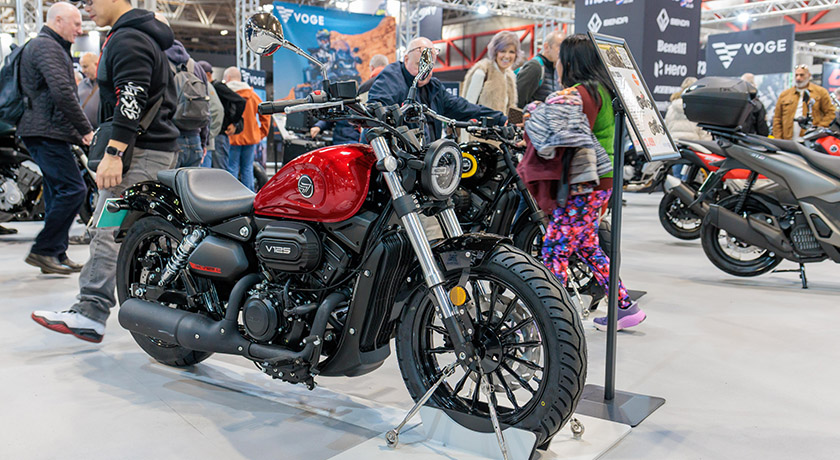
You can ride a 125cc motorcycle from the age of 17 in the UK with a valid CBT and L-Plates; however, when it comes to a licence, you'll be looking at an A1 licence, which still limits you to the same bikes with the same 14.8hp power limit as if you were on a CBT, but allows for motorway riding, carrying a pillion and removes the requirement for L-Plates.
If you are unsure of how to obtain your provisional licence and already own a full car licence, you will need to contact the DVLA to get this added to your licence. However, if you do not already hold a car licence, you will need to fill out a D1 application form, attached with a photograph, ID and £34 fee.
What restrictions are there on a provisional licence?
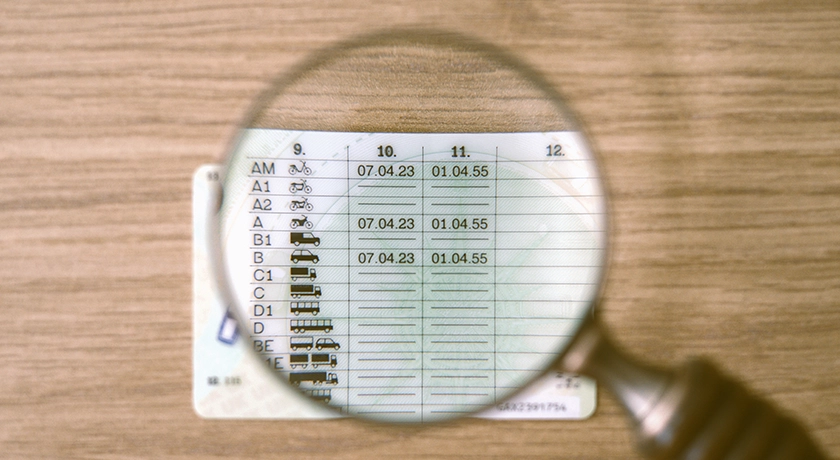
There are a few restrictions for those who ride on a provisional licence having completed CBT; these are as follows:
- You cannot ride on the motorway
- You cannot carry passengers (pillions)
- You must display L-Plates at all times
Compulsory Basic Training (CBT)
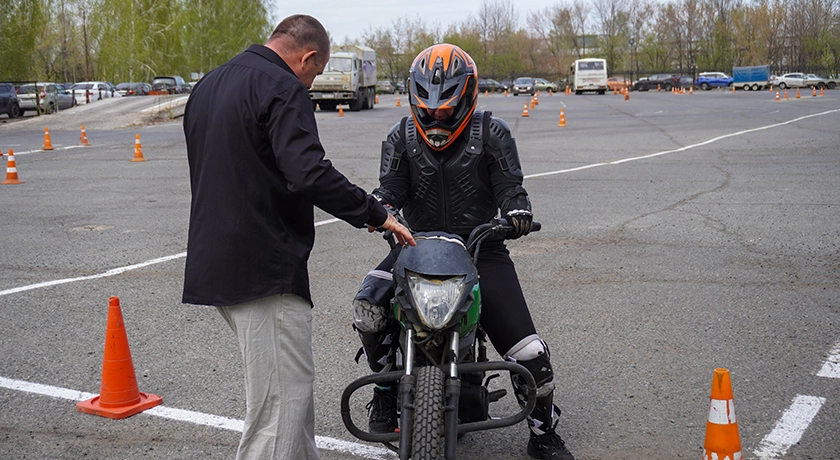
It is worth noting that Compulsory Basic Training (CBT) certificates expire after 2 years, so if you do not intend to take your full motorcycle test in the future, you will need to repeat your CBT as many times as you wish to carry on riding.
The Best 125cc Motorcycles
If you are looking for some 125cc inspiration, we have compiled a few top 10s to help you out! Make sure to take a look at:
Top 10 125cc Retro Motorcycles 2025
Top 10 125cc Bikes Best for Beginners
Top 10 Naked 125cc Motorcycles 2025
Ready to ride!
So, there you have it. I hope you enjoyed our fully comprehensive guide to everything 125…
Last but not least, if you have your very own 125cc motorcycle you need to insure, make sure to get a motorcycle insurance quote direct with Lexham!