If you’ve spent any time looking at motorcycle gear, there’s a good chance you’ll have seen CE labels mentioned.
Jackets, trousers, gloves, boots, armour inserts… they all seem to come with a mix of letters, numbers and ratings that look important, but don’t always feel very clear when you’re actually trying to buy something.
And that’s the slightly confusing bit. CE labels are genuinely important, but they can also be a bit of a faff to understand if nobody explains them properly.
One jacket might say AA in big letters, another might mention CE armour, and another might have a label inside that just looks totally confusing.
So, let’s keep it simple. In this guide, we’re looking at what CE labels actually mean, how CE certification works for motorcycle clothing, what the common ratings are, and what I’d be checking before spending my own money on new kit.
Let’s get into it!
Quick Answer: What Are CE Labels? & My Quick Buying Checklist
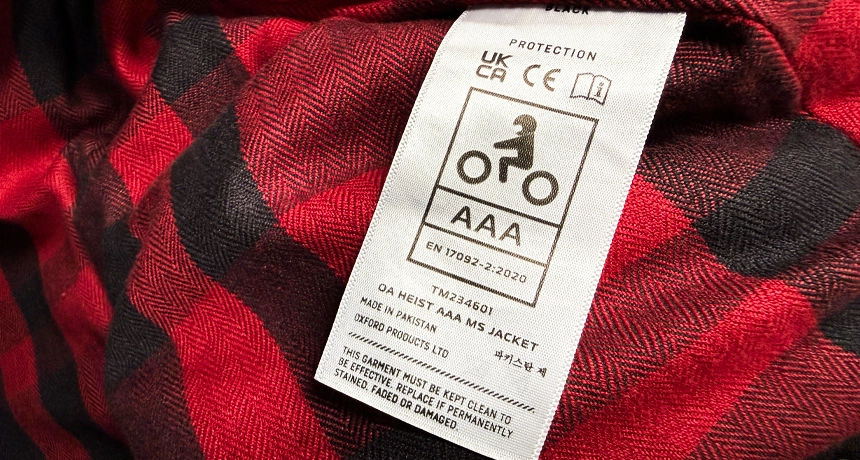
A CE marking indicates that the manufacturer declares the product meets the EU/UK Personal Protective Equipment (PPE) requirements and has gone through the required conformity assessment process.
When it comes to motorcycle clothing sold as protective riding kit, it is legally classed as PPE, not just everyday casual clothing with a few bike bits added on.
Put simply, the CE or UKCA marking shows that the product meets PPE requirements, but the EN standard is the useful bit for riders because it tells you what the kit has actually been tested against, whether that’s EN 17092 for garments, EN 1621 for armour, EN 13594 for gloves or EN 13634 for boots.
My Quick Buying Checklist
- Check the CE label rather than relying only on the product description.
- Look for the relevant standard, such as EN 17092 on jackets and trousers.
- Make sure you know whether the rating is for the garment, the armour, or both.
- Try the kit on properly and, if possible, sit in a riding position.
- Check that the armour sits on your shoulders, elbows, back, hips or knees properly.
- Think about the riding you actually do, not just the riding you do on the one perfect Sunday in July.
- Work out what CE rating level you require before you start shopping.
Why CE Certification Matters
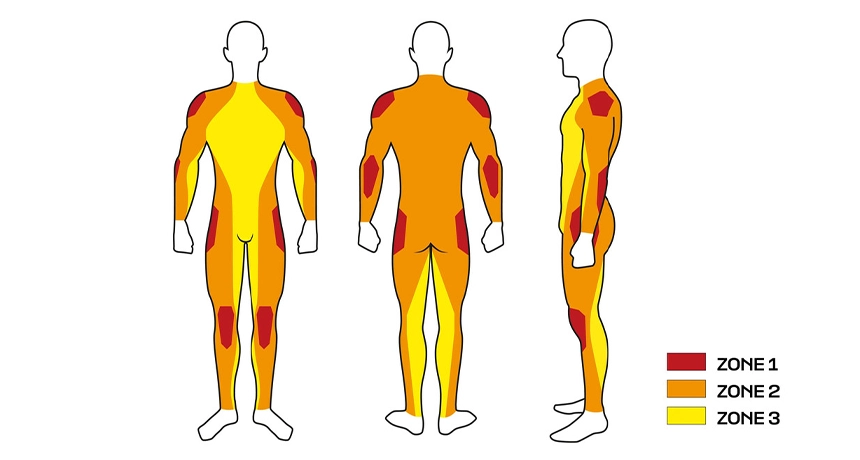
The key thing to remember is that motorcycle clothing isn’t just there to look the part. Looking at Dainese’s class risk zones for A & AA testing above, you can get an idea of where you are most vulnerable.
What this ultimately shows is that if the worst happens, your kit is one of the few things between you and the road, so it’s worth knowing whether it has been tested for abrasion, impact, tearing and seam strength.
And this is where CE-marked motorcycle PPE becomes useful - it won’t make one bit of kit perfect for every rider, but it does give you a better starting point than guessing from the price, the brand name or how durable something feels when you pick it up in a shop.
The bit I’d be careful with is assuming that 'CE armour included' means the whole jacket or pair of trousers is EN 17092-certified, as that’s not always the case.
The armour and the garment are tested separately, so it’s worth checking exactly what’s been certified.
Motorcycle Clothing Ratings Explained
For jackets, trousers and one-piece or two-piece suits, the main standard you’ll normally see is EN 17092.
In the UK, you may also see UKCA markings, although CE-marked motorcycle PPE is still very common because many products are sold across both the UK and European markets.
Either way, the important thing is that the class ratings are lab test classifications, not a promise that the kit will protect you at a particular road speed in real-world conditions.
AAA-Rated Kit
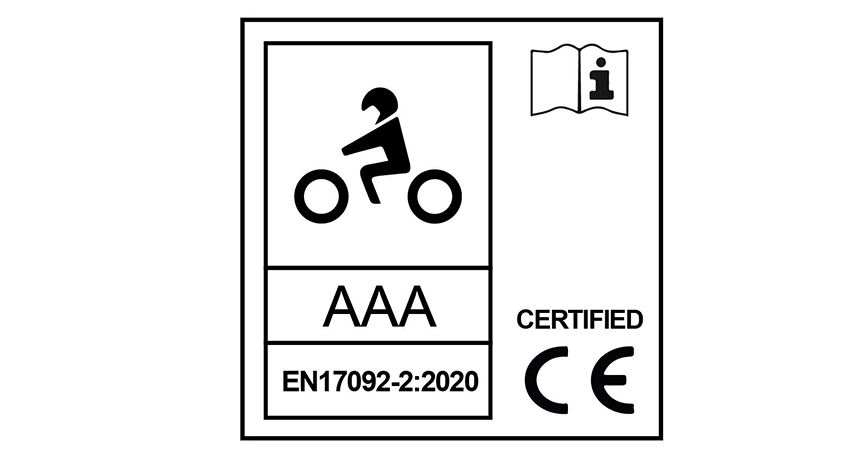
AAA is the highest garment classification under EN 17092. In simple terms, it means the garment has met the toughest set of requirements within that standard, but it still isn’t a magic ‘you’ll be fine at this speed’ label, and it doesn’t mean the garment is impact-proof or guaranteed to prevent injury.
The trade-off is that it can sometimes feel heavier, warmer or less casual than lighter kit, although modern motorcycle clothing has come a long way, as I found out when I got my Oxford Heist AAA jacket with level 2 armour.
Still, if you’re riding in summer traffic, you’ll know about it if you’ve gone too heavy, but for me, I always prioritise safe gear before anything else, and as I say, modern bike gear has certainly come a long way.
AA-Rated Kit
AA is often a good rating to see on kit you’d actually want to wear regularly on UK roads as it sits between A and AAA, so it can be a nice middle ground between protection, comfort and everyday usability, but again, it isn’t a speed rating and shouldn’t be treated like one.
If I was buying a textile jacket or trousers for regular road use, AA would be a reassuring thing to see, especially if the fit is right and the armour sits where it should when you’re on the bike.
AAA is, of course, still the higher garment classification, but the best choice still depends on how and where you ride. A comfortable AA-rated jacket that you wear is probably a better buy than an uncomfortable AAA jacket that gets left at home.
A-rated kit
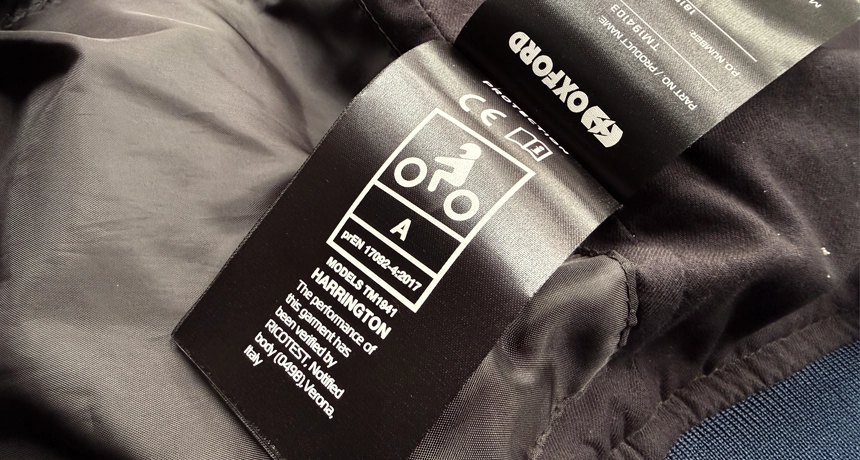
A-rated kit is usually more comfort-focused, so you’ll often see it on urban gear, casual motorcycle jeans and lighter summer jackets.
That doesn’t automatically make it bad kit, but it does mean you need to understand what the label is saying, rather than assuming it’s certified for a certain maximum road speed.
That doesn’t mean it’s useless, far from it, but it does mean you need to be honest about how you ride. A quick trip across town is a very different thing to sitting on a dual carriageway in all weathers, and the kit you choose should match that.
Class B and Class C
The lower Classes B and C are where it’s worth checking the label properly.
- Class B garments provide abrasion protection, but they are not supplied with impact protectors as part of that garment certification, so compatible armour needs to be added separately.
- Class C garments are designed mainly to hold impact protectors in place and do not provide abrasion protection themselves. They are usually designed to be worn as part of a layered protective system, either underneath or over other garments.
So, rather obviously, don’t just see a CE label and assume it all means the same thing - check what has been certified and what the item is designed to do.
Is EN 13595 still used?
EN 13595 is the older motorcycle clothing standard, mainly associated with professional-rider kit.
It used demanding test methods, but it was not widely adopted for everyday consumer motorcycle clothing and has mainly been replaced for new road kit by EN 17092, although you may still see it mentioned on older garments or in testing discussions.
Other Motorcycle PPE Standards You Might See
The CE or UKCA marking only really makes sense when you know which bit of kit the standard applies to. These are the main ones motorcyclists are likely to come across:
In other words, don’t just look for the CE mark on its own. Check the EN number as well, because that tells you whether you’re looking at a garment rating, an armour rating, a glove standard, a boot standard or a helmet approval.
CE Armour: Level 1 Vs Level 2
Armour is the other big one. The shoulder, elbow, back, hip and knee protectors in your kit are tested separately from the jacket or trousers themselves, which is why you’ll often see different markings on the armour compared with the garment label.
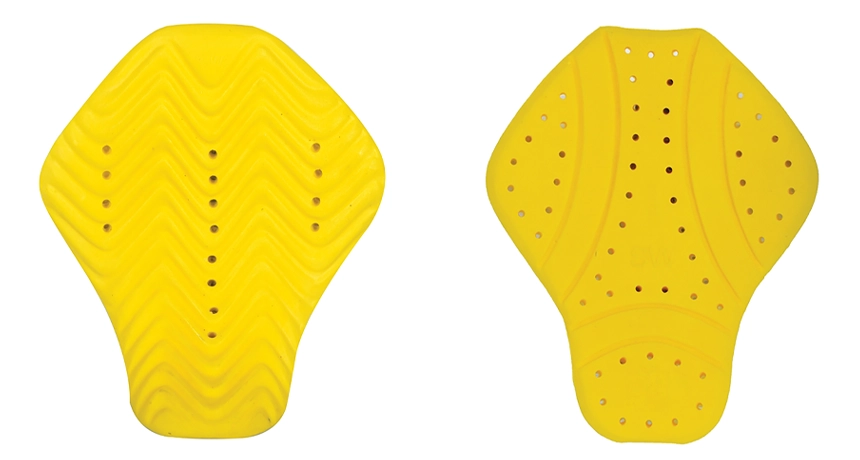
Most riders will come across Level 1 and Level 2 armour. Level 1 meets the required standard (as seen on the left in the image below), while Level 2 (on the right in the image below) must reduce impact forces more than Level 1 during testing.
Level 2 generally offers better impact performance than Level 1 because it has to transmit lower forces during testing, although the best protector is still one that fits correctly, stays in place and does not make the kit so uncomfortable that you stop wearing it.
Should You Upgrade Your Armour?
If your jacket or trousers fit well but come with basic armour, upgrading the protectors can be a sensible move.
Back protectors are the obvious one, as plenty of jackets either come with a thin foam insert or no proper back protector at all.
The only thing I’d say is to make sure the upgraded armour fits the pocket properly and sits where it should - good armour in the wrong place is not really doing the job you bought it for.
What Should You Look for on A CE Label?
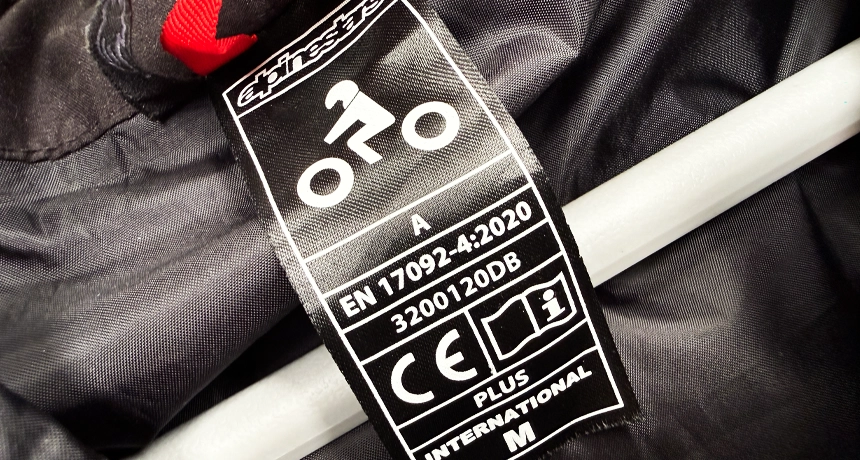
The main things to check are the CE marking, EN standard, and the protection rating.
The EN number tells you what the item has been tested for - for example, EN 17092 is the standard used for motorcycle garments such as jackets and trousers, while EN 1621-1 and EN 1621-2 relate to impact armour for areas such as shoulders, elbows, hips, knees and backs.
You’ll then usually see a class or protection level alongside it, such as EN 17092-AA for a garment or Level 1 / Level 2 for armour. Gloves and boots have their own standards, so the markings will vary depending on the type of kit.
Is CE-Certified Kit a Legal Requirement?
In the UK, the legal must-have for road riding is an approved motorcycle helmet.
Jackets, trousers, gloves and boots are different, and you’re not legally required to wear a full set of CE-marked motorcycle PPE every time you ride, although that said, legal and sensible are not always the same thing. Personally, I’d always recommend wearing proper motorcycle kit, even if you’re only nipping out locally or it’s a hot day.
Roads are still roads, and tarmac is still tarmac, whether you’re on a 125, a scooter, a commuter bike or something a bit livelier.
What To Look Out For: Gloves, Boots and Helmets
It’s not just jackets and trousers worth checking either, as gloves and boots can also be CE-marked motorcycle PPE, and I’d be wary of assuming that anything with a hard knuckle, ankle pad or chunky sole is automatically proper protective motorcycle kit.
Helmets are a slightly separate conversation because they use helmet-specific approvals rather than the same garment ratings as jackets and trousers.
ECE 22.06 is the latest UNECE approval standard and the one I’d be looking for on a new lid, although ECE 22.05-approved helmets that were already legally approved remain acceptable in many situations, including UK road use.
The important bit for UK road use is that your helmet meets an approved standard, is worn properly and fits properly.
The fanciest lid in the world is not much use if it moves around on your head or gives you a headache after 20 minutes, especially if you wear glasses like me.
Decoding Labels on Your Helmet, Gloves and Boots
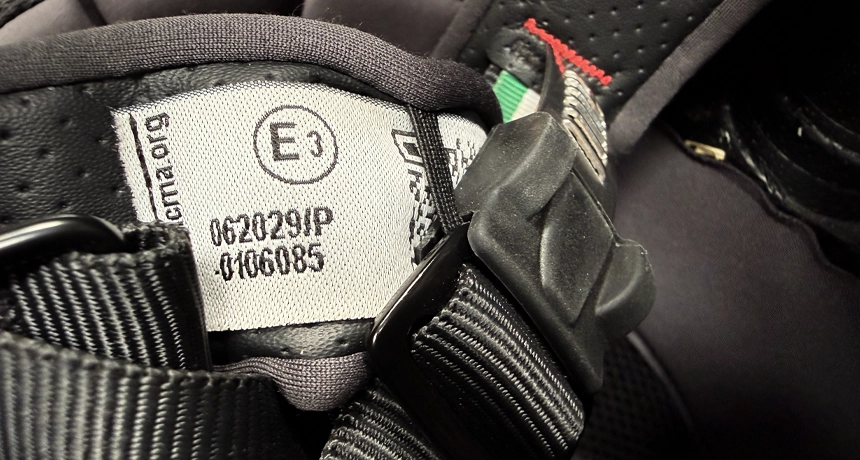
A quick way to check if your lid is 22.06 or the older 22.05 standard is to find the little white E Label. On my AGV, it shows ‘E3’ on the chin strap, which denotes the country code as Italy; but depending on where your lid was tested and approved, this number may be E11 for the UK, E1 for Germany and so on.
The important part is the first two numbers of the next code. As you can see in the above image, it says ’06’; this denotes that it meets ECE 22.06.
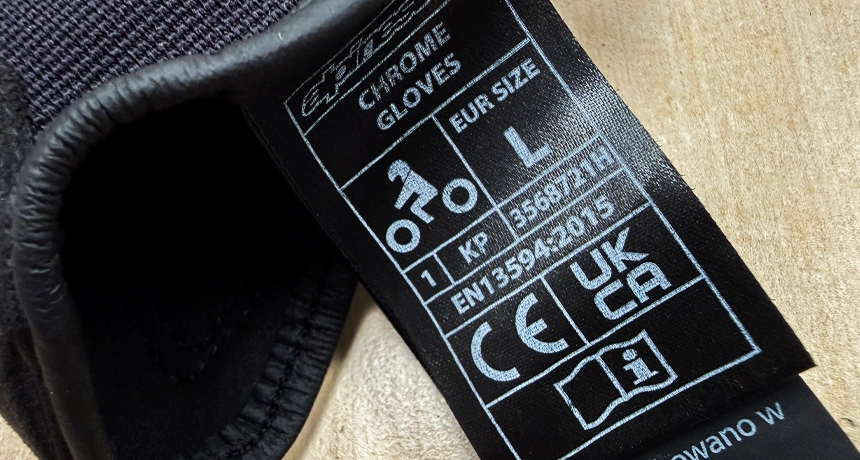
Gloves are usually marked to EN 13594 and often feature a series of numbers and letters. Looking at the label in the image above, you can see ‘1 KP’.
The 1 indicates the glove has achieved Level 1 certification, while KP shows it has been tested and approved for knuckle protection. If the glove doesn't meet the knuckle protection requirements, the KP marking won't be present, and it’ll just have a blank box.
Boots certified to EN 13634 use a similar system, as the numbers on the label refer to the protection levels achieved in different tests, such as abrasion resistance, impact protection and cut resistance.
In general, a higher number indicates better performance in that category.
Choosing The Right Rating Without Getting Too Carried Away
The right rating depends on what you ride, where you ride and how often you ride.
There isn’t much point buying something so uncomfortable that it sits in the cupboard, but equally, choosing kit purely because it looks casual and feels light is not the best plan either.
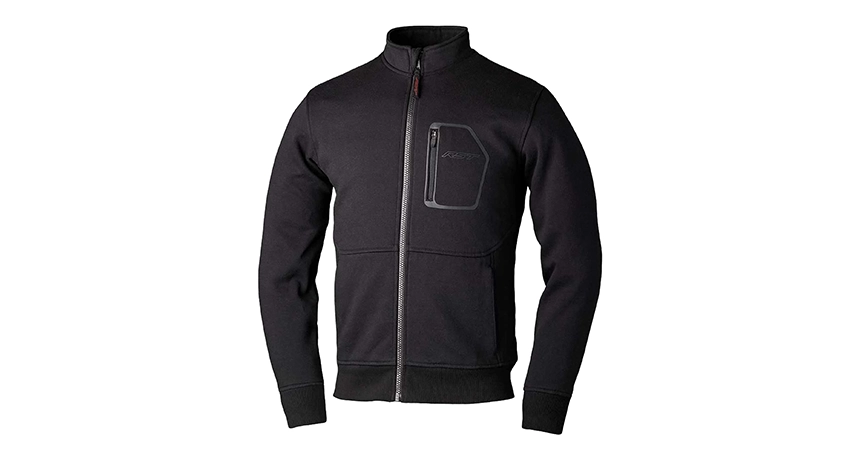
For short town rides, A-rated kit may well make sense. For regular commuting, weekend riding and touring, AA is a reassuring place to start, such as the RST jacket below. Still, if you want the highest garment class and you’re happy with any extra weight, warmth or stiffness that might come with it, then AAA is the one to look at.
It’s also important not to forget about the importance of armour either. It’s all well and good having a AAA-rated jacket, but it won’t be ideal if you then forget about the bits to go in it. Most motorcycle garments are supplied with either Level 1 or Level 2 armour.
Level 1 armour is thinner, lighter, and generally more comfortable, making it well suited to casual and urban riding gear, whereas Level 2 armour offers a higher level of impact protection but is usually thicker and more noticeable, particularly in casual-style motorcycle clothing.
Riders like me who prioritise maximum protection, spend longer periods in the saddle, or regularly ride at higher speeds may find the additional protection of Level 2 armour worthwhile.
Common CE Label Mistakes
Assuming All CE Markings Mean the Same Thing
The most common mistake is assuming all CE markings mean the same thing… as they don’t. CE-marked armour is not the same as an EN 17092-certified garment, and a Class A jacket is not offering the same rating as a AAA-rated jacket.
Ignoring Fit
The other one is ignoring fit. If the jacket rides up, the trousers twist, or the knee armour is sat halfway down your shin when you’re on the bike, the label might look great, but the kit still isn’t working as well as it should.
Speed Ratings
One thing I’d be a little wary of is any brand talking about a garment being 'rated' to a particular speed. There were early draft references around abrasion test settings being shown in kilometres per hour, but those figures were later dropped from the final wording of the standard and replaced with revolutions per minute.
In other words, it’s a repeatable lab test, not a road-speed guarantee, and it shouldn’t be treated as one.
Included… or not fitted?
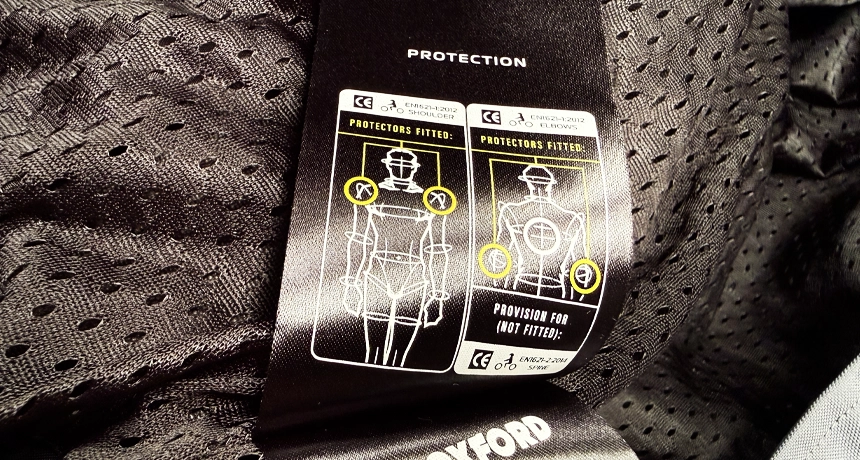
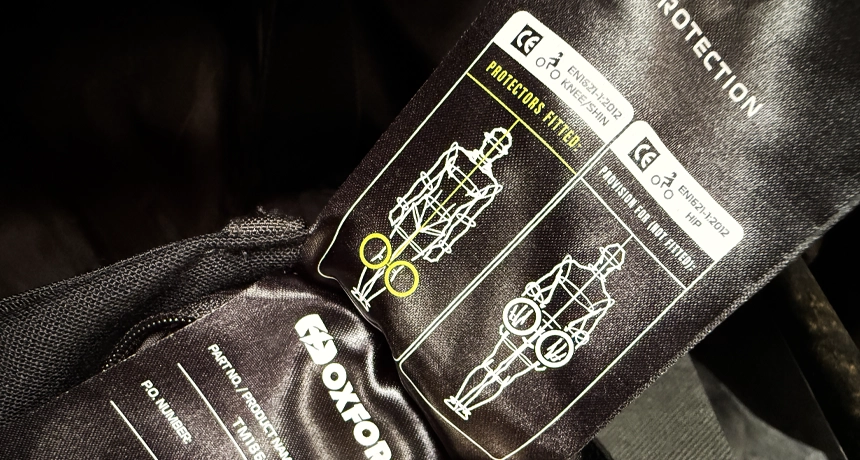
Another common mistake is assuming any armour listed on the label is included. As the image above shows, a garment may reference ‘EN 1621-1 hip armour’ but also state ‘provision for (not fitted)", meaning the armour is compatible but not supplied.
The Last Stop!
So, there we have it. Hopefully that makes CE labels and CE certification a little easier to get your head around.
The key thing is to check what the label is actually telling you. Is it the garment rating? Is it the armour rating? What standard has it been tested to? Once you know that, the whole thing becomes a lot less confusing and a lot more useful.
And as always, gear is important, but so is insurance, so be sure to get your motorcycle insurance quote with Lexham today!
Thanks for reading, ride safe, and we’ll catch you on the next one!