On the hunt for a new bike? As we all know, Facebook Marketplace is usually a hot spot when it comes to buying and selling, especially since there are loads of motorcycles on there, and every now and then you’ll spot a bargain that looks too good to miss.
But that’s also where you need to be careful. Fake adverts, stolen bikes, dodgy sellers, and requests for deposits before you’ve even seen the motorcycle are all things you might come across.
We’re not saying avoid Facebook Marketplace altogether; you just need to know what to look out for. So in this guide, we’ll run through some of the common scams, the red flags to watch for in an advert or seller’s profile, and the simple checks you can make before travelling to see a bike or handing over any money.
Quick Answer | Is Facebook Marketplace Safe for Buying Motorcycles?
Why Facebook Marketplace Has Become So Popular for Motorcycle Sales
There’s a reason so many riders turn to Facebook Marketplace when they’re looking for a motorcycle. It’s quick, easy to use, and there’s usually a huge choice of bikes to browse through.
Large number of motorcycles available
You’ll find plenty of motorcycles listed on Marketplace. New adverts can appear every day, so it’s easy to keep an eye on what’s out there.
Direct communication with sellers
Another big attraction is being able to speak directly to the person selling the bike. You can ask questions, request more photos, and arrange a viewing without having to go through a dealership.
That can make things feel much more personal, but it’s also worth remembering that you don’t necessarily know who you’re dealing with.
Potential bargains
Marketplace can sometimes have some genuinely good deals. Private sellers may be looking for a quick sale, meaning you could find a bike for less than you’d expect to pay elsewhere.
The important part is knowing the difference between a genuine bargain and a price that’s suspiciously low. If a motorcycle looks dramatically cheaper than similar bikes, it’s worth doing some investigating and working out why before getting too excited.
Why scammers are attracted to Marketplace
Unfortunately, the things that make Marketplace convenient for genuine buyers can also make it appealing to scammers. It’s a busy platform; there’s a huge audience of potential buyers, and creating a convincing-looking listing doesn’t necessarily take much effort.
That’s why it pays to do a few checks before arranging a viewing or sending any money. A little caution early on can save you a serious headache later.
How to Read a Motorcycle Advert Like a Detective
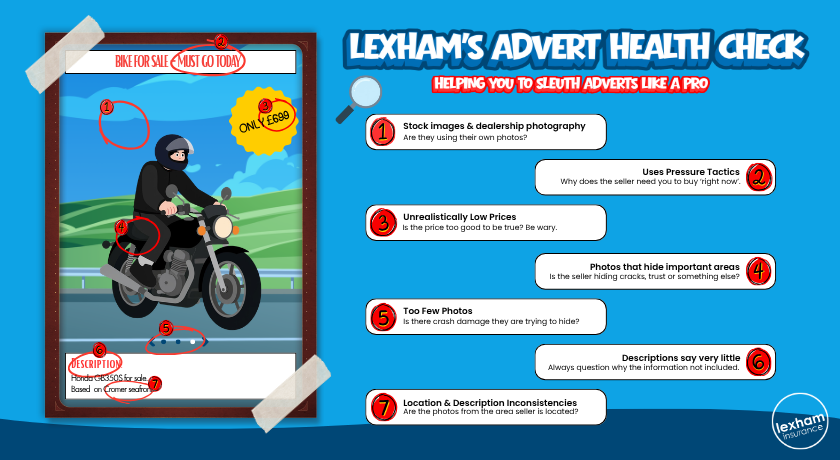
When you’re reading a motorcycle advert, it’s important to read between the lines. Instead of making impulsive decisions, this is what scammers rely on! They obviously want to put their best photos forward whilst also leaving out key information, and then get funny with you when you ask for this information.
Before arranging a viewing, take a close look at the advert. Scammers often rely on buyers rushing into a decision, so small details in the description, price, or location can be important warning signs.
Too Few Photos
A genuine seller should usually be able to provide several clear photos of the motorcycle. If there are only one or two images, particularly if they don't show the bike from different angles, be cautious.
Ask for additional photos if you're interested. If the seller repeatedly avoids providing them, consider it a red flag.
Photos that hide important areas
Look at what the photos don't show, and be cautious if important areas of the bike are consistently cropped, covered, or left out.
The bike should look consistent across the photographs, including its accessories, decals, and modifications. If something doesn't add up, ask the seller about it before arranging a viewing.
Stock images & dealership photography

Professional-looking photos aren't automatically suspicious, but just make sure to check whether they actually show the motorcycle being sold.
If the images look like dealership or manufacturer's photographs, ask the seller for recent photos of the bike. You can also try a reverse image search to see whether the same pictures appear in other adverts.
Descriptions that say very little
A vague description isn't necessarily a scam, but it should make you more cautious.
Look for basic information about the motorcycle and check that the description matches the photographs. If important details are missing, ask the seller before travelling to view it.
A genuine seller should generally be able to answer straightforward questions about their motorcycle, again without being vague in their messages.
Unrealistically low prices
An unusually cheap motorcycle can be tempting, but it’s best to compare the price with similar bikes before you get your hopes up.
There may be a genuine reason for a low price, but scammers can use bargain prices to attract buyers before requesting a deposit or payment.
‘Need Gone Today’ & Other Pressure Tactics
As much as we like to see the good in people, phrases such as “need gone today” or “first person with the money gets it” can be used to pressure buyers into acting quickly.
Genuine sellers may have legitimate reasons for wanting a fast sale, but don't let their deadline stop you from carrying out basic checks.
Take your time. If you're being pressured to send money before you've seen the motorcycle, step away.
Location and Description Inconsistencies
Check that the information in the advert makes sense, that the location matches what the seller is telling you, and also whether the photographs appear to have been taken somewhere else. Also check whether or not the description matches the motorcycle listed.
If the location suddenly changes or the seller gives excuses for why you can't view the bike in person, pause before sending any money.
One inconsistency might have an innocent explanation, but several together should be treated as a warning sign.
How to Check if a Facebook Seller Looks Genuine
The advert might look convincing, but don't forget to check the person behind it. Spending a few minutes looking at a seller's Facebook profile can help you spot signs that something isn't quite right.
Reviewing Their Facebook Profile
Have a quick look at the seller's profile. Is it an established account, or has it been recently created?
I’ve come across a lot of sellers in the past who have said their Facebook account was created that same year, and to me, that’s an instant red flag. It’s not proof that the seller is a scammer, but it’s certainly something that should make you look a little closer.
A fake-looking profile picture or a profile that doesn't appear to use a genuine name can also be warning signs.
Be cautious if the profile contains very little information, has limited activity, or doesn't appear to have a genuine history.
Checking Account History
Going off the back of what I’ve just said, look at how long the account has been active and whether there is normal activity over time.
Scroll through their previous posts and activity. Does the account look like it's been used normally over the years, or does it appear to have been created recently and used mainly for selling?
A recently created account with little or no history deserves extra caution. If the seller's profile doesn't give you much confidence, don't be afraid to walk away before you arrange a viewing or send any money.
Looking at Previous Activity
Have a quick look at the seller's previous posts and activity. Do they appear to use Facebook normally, or does the account seem to exist purely to sell items?
You don't need to investigate someone's entire online history. You're simply looking for anything that doesn't match the person they're presenting themselves as.
Reviewing Other Marketplace Listings
Check whether the seller has other motorcycles or vehicles listed on Marketplace.
Multiple listings aren't automatically suspicious, but just be cautious if you notice several very similar adverts, different locations, or photographs that appear to have been reused.
If the same motorcycle appears in multiple adverts, particularly at different prices or locations, stop and investigate before contacting the seller further.
Verifying Ownership Claims
Don't simply take the seller's word for it when they say they own the motorcycle.
Ask straightforward questions about the bike and its history, and check that their answers match the advert and documentation. If they claim to be selling on behalf of someone else, ask why and make sure you're comfortable with the explanation.
If a seller becomes evasive when you ask basic ownership questions, that's a reason to be cautious.
Questions that Easy Genuine Sellers Should Be Able to Answer
So, we’ve put together a list of questions that you should ask before you travel to view a bike. These are questions that genuine sellers should be able to answer on the spot.
- How long have you owned the bike?
- Why are you selling it?
- Do you have the V5C
- Do you have the service history
- Has it ever been damaged or involved in an accident?
- Has anything been modified?
- Can i view the motorcycle in person?
The Most Common Facebook Marketplace Motorcycle Scams
The most common Facebook Marketplace motorcycle scams include:
Deposit Scams
If the seller asks for an upfront deposit before actually seeing the bike in person, it is almost always a scam. Common scams include
- The ''Hold'' deposit
- The wholesaler shipping scam
- Fake dealership/business impersonation
Fake Delivery Services
Scammers may offer to arrange delivery through a fake courier service, then ask you to pay delivery, insurance, or other fees upfront. They may provide convincing tracking details or a fake website to make the transaction look genuine.
Red flag: The seller refuses an in-person viewing and insists on delivery. Don't pay until you've verified the seller and motorcycle.
Stolen Motorcycle Listings
A scammer may advertise a stolen motorcycle using false ownership details or paperwork. Be wary if the seller can't clearly explain their ownership or provide the relevant documents.
Check the registration and MOT details and make sure they match the motorcycle and seller before buying.
Cloned Motorcycle Ads
Scammers can copy genuine motorcycle adverts, including photographs and descriptions, then repost them at a lower price with different contact details.
Look for duplicate listings or reused photos, and consider a reverse-image search if something doesn't look right.
Fake Escrow Services
A seller may suggest using an escrow service to make the transaction seem secure. However, the website or payment service could be completely fake and designed to steal your money.
Don't use an escrow service simply because the seller recommends it. Verify it independently first.
Seller Keeps Making Excuses
Repeated excuses can be a warning sign, particularly when a seller keeps avoiding a viewing, phone call, or straightforward questions about the motorcycle.
If they continually change the meeting arrangements, claim they’re unavailable, or give reasons why you can’t see the bike, take a step back and reconsider the deal.
Payment Before Buying Requests
Be wary of anyone asking you to pay the full amount, or a large portion of it, before you’ve seen and verified the motorcycle.
A genuine seller should understand that you want to view the bike, confirm the details, and check the paperwork before paying. If they pressure you to transfer money first, consider walking away.
Questions to Ask Before You Travel to View a Motorcycle

Before travelling to see a motorcycle, ask a few key questions to help establish whether the seller and advert are genuine.
How long have you owned it?
Ask how long the seller has owned the motorcycle. A very recent purchase combined with a quick resale may be worth questioning, particularly if their explanation doesn’t add up.
Why are you selling it?
A genuine seller should generally be able to give you a straightforward reason for selling. Be cautious if their answer is vague, keeps changing or doesn’t match the advert.
Do you have the V5C (logbook) to hand?
You can ask whether the seller has the V5C and can show it when you view the bike. The details should correspond with the motorcycle and the seller’s ownership claims.
Can you provide a full service history?
Also be sure to ask whether the motorcycle has a service history and, if so, whether the relevant records or receipts are available to view. Missing documentation isn’t automatically a scam, but it’s worth treating with caution.
Has this bike ever been damaged or involved in an accident?
Ask directly whether the motorcycle has previously been damaged or involved in an accident. A seller who avoids answering or gives an unclear response should raise concerns.
Have you made any modifications to the bike?
Find out whether the motorcycle has been modified from its original specification. Ask the seller to explain what has been changed and whether they have documentation for any relevant work.
Can you cold start it for me?
Ask if the motorcycle can be started from cold when you arrive. This can help prevent a seller from warming the engine beforehand to disguise potential starting or running issues.
How to Verify a Motorcycle Before Viewing
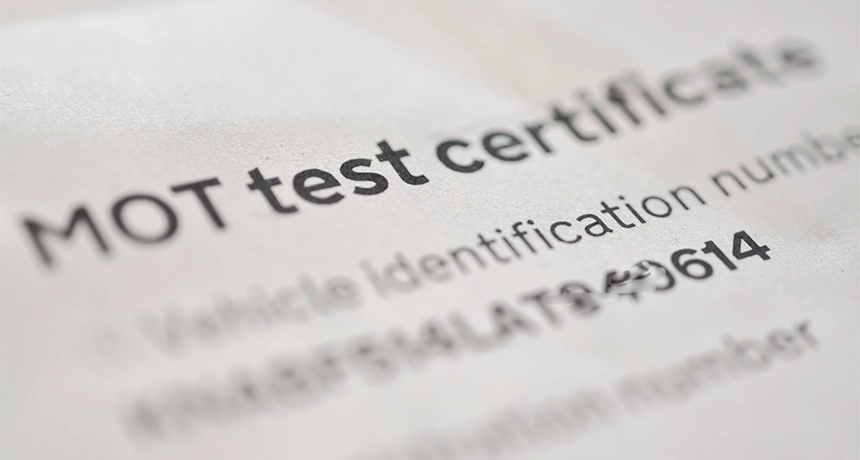
Doing a few checks before travelling can help you spot a fake advert or questionable seller before you waste time or put your money at risk.
Checking MOT Records
Check the motorcycle’s MOT history before arranging a viewing. Look for details that match the advert, including the registration, mileage, and previous MOT records. Any major inconsistencies should be investigated before you continue.
Confirming Registration Details
Make sure the registration details provided by the seller match the motorcycle being advertised. If the seller is unwilling to provide the information you need to carry out basic checks, consider this a red flag.
Looking for Listing Duplicates
Search Facebook Marketplace for the same motorcycle or similar advert. Multiple listings using the same photographs or description but different seller details could indicate a cloned or fraudulent advert.
Reverse Image Searches
If the photographs look suspiciously professional, familiar, or inconsistent with the advert, try a reverse-image search. This can reveal whether the photos have been copied from another listing or website.
Comparing Market Prices
Compare the asking price with similar motorcycles currently advertised. A price significantly below market value can be tempting, but it may also be a warning sign that the advert isn't genuine.
Spotting Reused Advert Photos
Look closely at the photographs for signs they have been taken from another advert. Different backgrounds, number plates, or bike details can suggest that the seller doesn't actually own the motorcycle pictured.
How to Stay Safe When Meeting a Seller
Even if an advert appears genuine, take sensible precautions when arranging a face-to-face meeting with someone you don't know.
Choose to Meet in Daylight
Arrange the viewing during daylight hours where possible. It's easier to properly see the motorcycle, check its condition, and assess the surroundings.
Bring a rider friend or family member
Consider taking a friend, family member, or fellow rider with you. Having someone else present can provide an extra layer of safety and a second opinion on the seller and motorcycle.
Check the address before you travel and make sure it appears to be a genuine, accessible location. Be cautious if the seller suddenly changes the meeting place or directs you somewhere unexpected.
Avoid Meeting in Car Parks & Remote Locations
Be wary of sellers who insist on meeting in isolated areas, remote locations, or unfamiliar car parks. A genuine seller should generally be comfortable arranging a sensible viewing location.
Always Trust Your Gut Feeling
If something doesn't feel right, just take a step back. You might notice inconsistencies between the advert and what the seller tells you, find that their story keeps changing, or simply feel uncomfortable about the situation.
You don't need to prove that someone is attempting to scam you before deciding not to proceed.
Knowing when to Leave
Make sure you don't let the fact that you've travelled to view the motorcycle influence your decision to buy it.
If the seller becomes aggressive or pushy, refuses to let you do reasonable checks, suddenly changes the agreed terms, asks for unexpected payments, or anything else raises concerns, leave.
A motorcycle might be a great deal, but it's not worth putting yourself at risk.
The Safest Ways to Pay for a Motorcycle

Once you've viewed the motorcycle, checked the seller's details, and decided to go ahead, the final step is paying for it. This is another point where Marketplace buyers can be vulnerable to fraud, particularly if a seller introduces unexpected payment methods or pressures you to send money quickly.
The safest approach is to avoid sending money before you've seen the motorcycle and verified that the seller has the right to sell it.
Bank Transfers
Bank transfers are a common way to pay for a privately sold motorcycle, but obviously you should be very cautious before sending any money.
As we touched on earlier, be careful when it comes to sending deposits, and definitely don’t transfer a deposit just because the seller says another buyer is interested or that it will only be held if you pay immediately. Recovering money sent to a scammer can be difficult.
Safe steps to check for before you make a bank transfer:
- Never pay before viewing
- Confirm the registration details
- Check the relevant documentation
- Establish that you're dealing with the genuine owner or seller
- Agree on the final price in terms of the sale
Cash Transactions
Cash may be used for motorcycle sales, but when carrying large sums of money, you put yourself at risk. If you agree to pay in cash, think carefully about where the transaction takes place and avoid putting yourself in a vulnerable situation. Don't allow the seller to rush you into handing over money before you've completed the necessary checks.
Always obtain a receipt confirming that payment has been made and keep it with your other records of the purchase.
Some personal safety measures:
- Meet at a secure location
- Bring a companion
- Avoid carrying excessive cash
Receipts and Proof of Payment
Whatever payment method you decide on, keep a clear record of the transaction.
Your receipt should ideally include details such as:
- The motorcycle's registration number
- The agreed purchase price
- The date of the transaction
- The name and details of the buyer and seller
- Confirmation that payment has been made
You should also retain relevant marketplace messages, emails, and payment records, as these can come as useful evidence if a dispute occurs later.
Why Friends & Family Payments Are Risky
Be cautious if a seller asks you to use a Friends & Family payment option to purchase a motorcycle, as these types of payments may not be as protected as a payment that's made through a services purchase or goods-and-services option. The seller might encourage this so it makes it a harder process if there is a need for a dispute or recovery.
Payment Methods to Avoid
Be wary of any seller who asks you to pay before you've properly verified the motorcycle and the seller.
Payments to avoid:
- Wire transfers (Western Union, MoneyGram). These are untraceable and most commonly used by scammers
- Cash in advance: Never send a deposit or full payment before inspecting the motorcycle and its physical V5C logbook in person.
- Cryptocurrency: Irreversible and anonymous, offering no legal protection or transaction recovery.
Warning signs include requests to:
- Pay a deposit before viewing the motorcycle
- Send money to reserve the bike because of ‘’other interested buyers’’
- Use an unusual or unfamiliar payment service
- Pay through an escrow or delivery service recommended by the seller
- Transfer money to an account belonging to someone other than the seller without any explanation
The Biggest Marketplace Red Flags
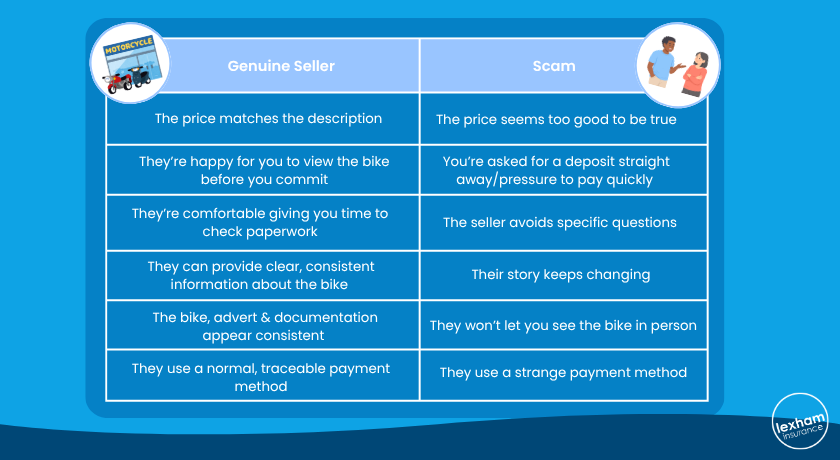
Here are some of the biggest marketplace red flags to look out for:
Lexham's Facebook Marketplace Scam Checklist
What Should You Do if You Suspect a Scam?
If something doesn’t feel quite right about a Facebook Marketplace motorcycle advert or seller, don’t ignore the signs! Whether you've spotted a suspicious listing or have already sent money, taking action quickly can help limit the potential damage.
Stop Communication
If you suspect you are dealing with a scammer, stop all communication with them immediately. Don’t reply to any new offers.
Report the Listing
Next, report the listing through Facebook Marketplace. Reporting suspicious adverts can help bring them to Facebook's attention and may prevent other buyers from falling for the same scam.
If possible, keep screenshots of the advert, photographs, seller details, and messages before the listing disappears.
Report the Seller
You can also report the seller if you believe their account is being used to facilitate a scam.
Keep a record of relevant conversations and information about the account. This could include the seller's profile, the motorcycle advert, telephone number, payment details and any other information they provided.
Don't attempt to confront or threaten the seller. Once you've identified a potential scam, it's safer to disengage and report it.
Contact Your Bank if Money Has Been Sent
If you've already sent money and now believe you've been scammed, contact your bank or payment provider as soon as possible.
Explain what happened and provide any relevant information, including payment records and communications with the seller. Acting quickly may give your bank more opportunity to investigate the transaction and advise you on the next steps.
If you've shared your banking details or other sensitive financial information, tell your bank this too.
Learn from the Experience
Being targeted by a scam can happen to anyone, particularly when a convincing advert, realistic-looking motorcycle, and persuasive seller are involved.
If you've lost money or personal information, don't let embarrassment stop you from reporting what happened. Keep records of the incident and consider what warning signs were present.
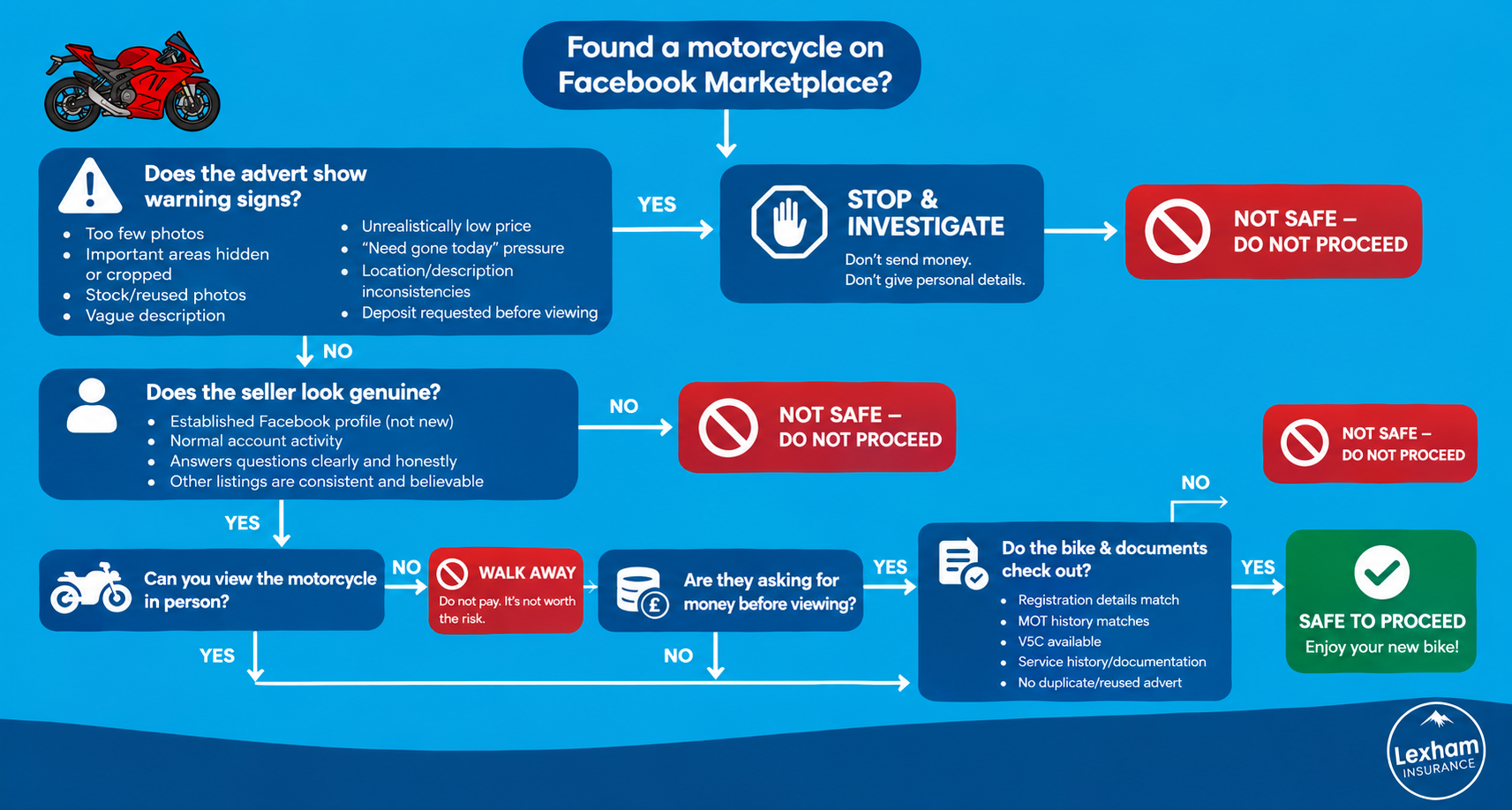
Facebook Marketplace Motorcycle FAQs

To help you spot a scam even better, we’ve answered some frequently asked motorcycle questions for you all…
Is Facebook Marketplace safe for buying motorcycles?
Facebook Marketplace can be used to find genuine motorcycles and private sellers, but buyers should remain cautious. As with any online marketplace, fraudulent adverts and sellers can appear.
Before committing to a purchase, verify the motorcycle, seller, and deal. Check the advert carefully, ask questions, review the seller's profile, confirm the motorcycle's registration and documentation, and avoid sending money before you've viewed the bike.
What is the most common motorcycle scam on Facebook Marketplace?
Upfront deposit or non-delivery scam.
Should I pay a deposit before viewing a motorcycle?
No, you should never pay a deposit before you have gone to view the bike.
How do I know if a motorcycle advert is fake?
You can usually tell if a motorcycle advert is fake if it is up for an unrealistically low price, if they’re using stolen photographs, and if sellers refuse in-person inspection or demand an upfront deposit.
Can stolen motorcycles be sold on Facebook Marketplace?
Yes, stolen motorcycles can be sold on Facebook Marketplace, and this unfortunately happens more than you probably think.
If you pay for a reputable vehicle check, they will usually provide you with the VIN (Vehicle Identification Number) digitally alongside the engine number. Only pay for these checks once you’re with the bike and happy with everything else, and then cross-reference these numbers to make sure they match the bike.
The VIN is usually (but not always) located on the headstock at the front of the bike, behind the headlight on the front of the frame, and the engine number will be on the engine casing somewhere. The last thing to be aware of is that sometimes stolen bikes will reuse the legitimate numbers by re-stamping them, so also check to see if they look like factory etchings or stampings and not an odd font or untidy numbers or markings.[
How can I verify a motorcycle seller?
You can verify a seller in the UK by checking official records using the GOV.UK Vehicle Information Service and cross-referencing their details against the physical bike and documentation.
What should I do if a seller pressures me to pay quickly?
If a seller tries to pressure you into paying quickly, stop communicating with them immediately and report the listing.
Other bits to note:
Here is a list of other articles we think you might find useful...
- How to buy a new or used bike
- Motorcycle Buying Red Flags
- What Bike Mileage is too high
- The Insurance Guides
- Security Full Guide
The Last Stop!
So that wraps up our blog on Facebook Marketplace motorcycles! Hopefully now you’re able to spot a scam from a mile off! And make sure you give some of those articles a read too! Now, if you are looking for insurance, make sure to get a quote online with Lexham!