With everything getting increasingly expensive nowadays, motorcycles have naturally taken the same path. Whether you’re planning to buy new or consider something second-hand, there are plenty of options out there.
It’s worth considering the best way to afford it if cash isn’t an option, and this article has been designed to guide you through these other routes to make sure you’re making the right decision for you and your circumstances.
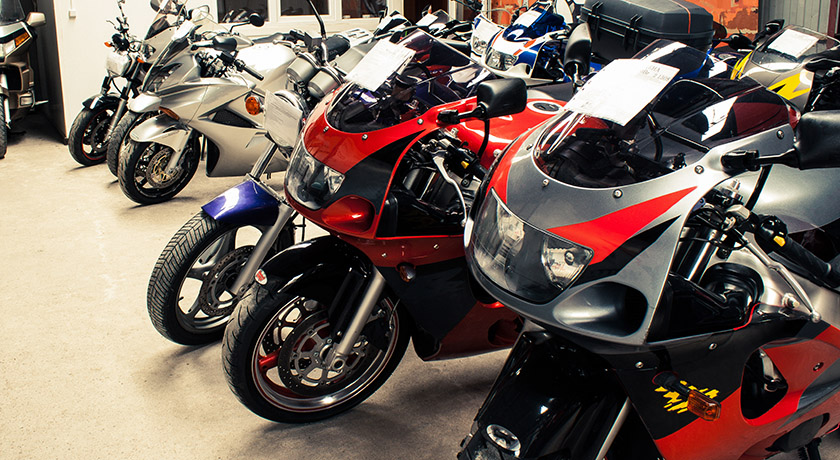
Choosing a motorcycle isn’t easy with so many to choose from and certain models, like the popular Honda GB350S, challenge this norm somewhat by being very competitively priced for a bike produced from one of the ‘big four’ at less than four grand.
But if bikes such as a brand-new R 1300 GS Adventure BMW take your fancy or even something like the Honda CB1000 Hornet, then financing might be a path for you to consider.
Is Finance for You?
Whether finance is right for you boils down to your personal preference, your current financial situation and ultimately, your choice.
Still, there are a few key finance options that are worth talking about to give you a clearer idea of whether it’s right for you and your situation.
What are the different types of finance? Simplified.
- PCP (Personal Contract Purchase)
- HP (Hire Purchase)
- Personal Loans
If you’re fortunate enough to have funds already available, then great, as this is the absolute best way to currently purchase a motorcycle by saving a considerable amount of interest, although you do lose a bit of leverage with dealers when it comes to bargaining, as they make more profit from finance.
Even if you have cash in the bank, you might prefer to keep that for a rainy day and opt for finance, but do remember that interest rates for savers are around 2.23% as of October 2025, according to Finder, whereas finance rates (although hard to predict as there are so many factors) are typically higher in the UK.
If you don’t have the cash available, however, a PCP, HP or Personal Loan deal might be a better fit for you, which is what we’ll go into next.
Buying in Cash – Pros & Cons
Pros
-
No approval required like finance
-
Cost saving on interest
-
More flexibility – not tied into any contracts
-
You own the bike outright
Cons
-
Finance is key for dealers as they tend to make more
-
Large immediate hit to your savings
-
Potential loss of bargaining ability
The Key Finance Terms
Before jumping into the finer details of finance, it is worth knowing what the key terms are and their meaning. Below is a brief list of these terms so you understand what they mean throughout this article:
The Most Common Key Finance Terms
APR (Annual Percentage Rate)
The total yearly cost of borrowing, including interest and fees.
GMFV (Guaranteed Minimum Future Value)
The pre-agreed value of the bike at the end of a PCP contract.
PCP (Personal Contract Purchase)
A finance option with low monthly payments and a large optional final payment if you want to own the bike outright.
HP (Hire Purchase)
A finance plan where you pay off the full value of the bike monthly and own it once all payments are made.
Balloon Payment
The large final payment required at the end of a PCP (and sometimes HP) if you want to keep the bike.
Deposit
The initial upfront payment that reduces how much you need to borrow.
Term
The length of the finance agreement, usually 24–48 months.
Mileage Limit / Excess Mileage
A cap on the miles you can ride under PCP; exceeding it adds extra charges.
Early Settlement Fee
A charge that may apply if you pay off your finance agreement early.
OTR (‘On The Road’ Price)
The full price of the motorcycle, including taxes, registration and delivery.
GAP Insurance
Optional cover that pays the difference between what your insurer pays out and what you still owe if the bike is written off or stolen.
What is a Personal Contract Purchase?
In short, PCP is calculated using something called Guaranteed Minimum Future Value (GMFV), which predicts the value of your motorcycle at the end of the contract. This calculation uses a range of factors, primarily focusing on expected mileage and depreciation.
If you opt for PCP, you’ll typically be paying less per month than with a Hire Purchase (HP) deal, as you don’t own the vehicle at the end unless you pay an optional ‘balloon payment’ that is calculated on a pre-agreed value before your contract begins, based on the predicted value.
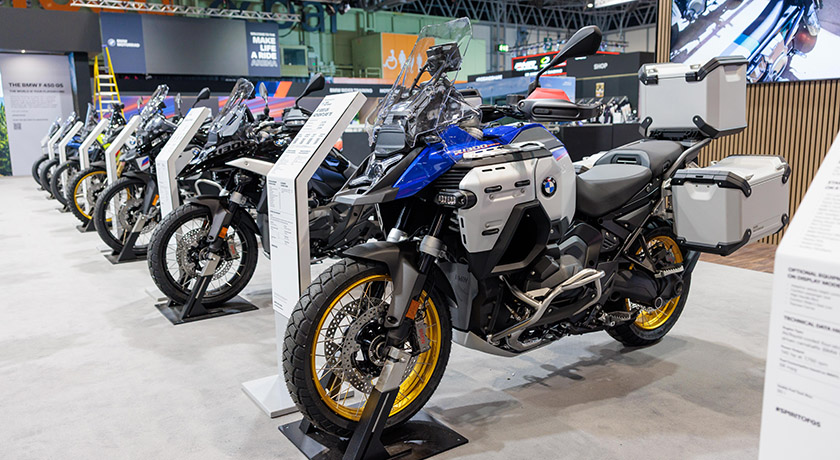
A representative example of this is the BMW R 1300 GS Adventure:
- The current OTR price is £18,780
- If you were to leave a £2,000 deposit, the total amount of credit would amount to £16,780 with 5,000 miles on the contract
- With a 3.9% representative APR, you’ll be paying 36 regular monthly payments of £222.43, which will allow you to make use of a brand-new BMW 1300 GS Adventure in your garage for 3 years!
- It is worth noting though that you won’t ever actually own the bike; however and if you would like to own the bike at the end of the term, you’ll be paying a balloon payment of £10,571.99, and you won’t get your deposit back either, as that’s part of the contract, so it’s worth weighing up if this is right for you.
If PCP doesn’t sound like something that works for you, don’t stress, as there are more ways than one to get the bike of your dreams without actually having the cash, and HP might be a better fit for you.
PCP Pros & Cons
Pros
-
Lower monthly costs
-
Lower initial deposit in comparison to HP
-
Protection from depreciation
-
You can change your bike every 2-4 years (If you prioritise this)
-
You can ride a brand-new bike without paying brand-new prices outright
Cons
-
You never own the bike unless you pay the balloon
-
Balloon payments can be high
-
You are limited to a certain mileage and typically have to pay an excess mileage rate per mile if you exceed this
-
The overall cost can be higher
-
Early termination can be pricey
-
It’s harder to modify a PCP bike, as dealers often expect a stock bike to be returned
Financing a Motorcycle or Scooter through Hire Purchase (HP)
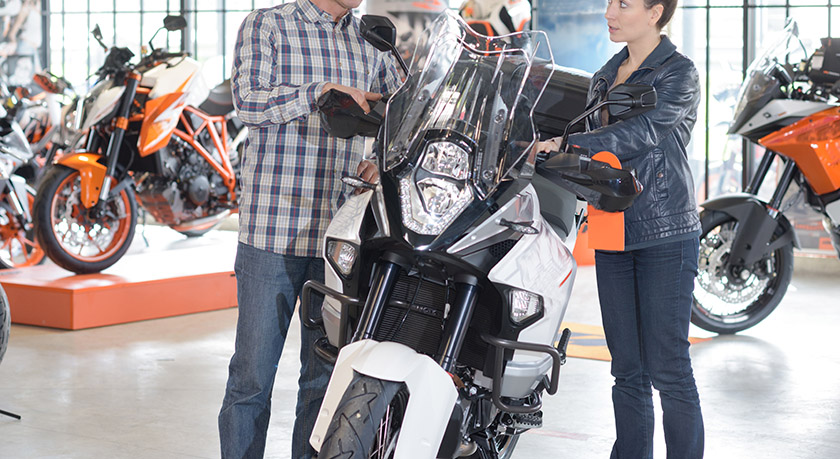
Unlike PCP, HP means you actually own the bike at the end of the term.
In a way, HP can feel like the money you’re putting down every month is actually going towards something tangible that you can call your own. It’s more like a progress tracker as opposed to PCP, which is effectively like leasing if you don’t opt for the balloon payment at the end, as you’ll never own the bike.
The downside to this is that you’ll be paying a considerably higher amount on your deposit, and not only that, but your monthly payments will also be higher over the same term as a PCP deal.
Using the same example as before, with the BMW R 1300 GS Adventure using BMW’s finance calculator, we can begin to see the differences:
Even with a £5,000 deposit, you’ll be paying 36 monthly payments of £405.79 at the same 3.9% APR. To compare that to PCP, even with £3,000 more down on a deposit, your monthly payments are still going to be over £183 more per month.
Of course, these figures can be customised to your circumstances or choice with regard to the deposit and term, with BMW allowing a range of zero deposit options up to a maximum of £7,512 with a term ranging from 24 months to 48 months on the R 1300 GS Adventure, as an example.
Whilst it costs more, there are benefits to HP other than owning the vehicle at the end, such as there typically being no mileage limit or final balloon payment. Every payment you make comes off the total credit amount towards a bike in your possession, and to go back to our BMW example, the total amount payable using the same deposit for both PCP & HP over the same 36-month term amounts to over £571 less.
HP Pros & Cons
Pros
-
You own the bike at the end of the term
-
The payments are predictable without worry of mileage restrictions or excess payments at the end
-
Since the bike is destined to be yours, you can modify it how you like (within legal and insurance limitations, of course)
-
Typically, lower cost overall than PCP
Cons
-
Although you own the bike at the end, until you’ve paid everything off, the bike is never truly yours
-
Early settlement fees can apply
-
It’s harder to change bikes frequently, as there’s no GMFV (guaranteed minimum future value)
-
Although the overall cost can be lower than PCP, the monthly payments are typically a lot higher, and so is the initial deposit
Buying with a Personal Loan
If HP & PCP don’t feel like the right course for you, then another popular choice of owning a new bike is through a personal loan.
These are great if you want to own the bike straight away, and technically mean you are paying ‘cash’ to the dealer, so you can gain similar benefits to cash, like having more flexibility by not being tied into any finance contracts, being able to modify your bike how you like (within your insurance requirements and legal legislation) and keeping the finance side of things personal and not with a dealer.
It does come with some downsides, though. Because you’re financing the entire cost of the motorcycle rather than just its depreciation, your monthly payments are usually higher. And as you’re paying ‘cash’ to the dealer, you may lose leverage on accessories, discounts or possibly lower prices as you’re not financing through them directly.
In addition to this, the requirements are very similar to those when signing up for PCP or HP financing contracts. These requirements* can include:
- Being at least 18 years old (some require you to be at least 21)
- Holding valid identification, i.e. a Passport or a Driving Licence
- Being a UK Resident
- Providing bank statements or proof of income
- Having a good credit score
*Please note that the guidelines will vary between different banks and loan companies, so it is always worth checking what you’ll need for the exact loan you’re applying for.
Personal Loan Pros & Cons
Pros
-
You immediately own the bike outright
-
Predictable payments with no mileage or condition restrictions
-
You can modify it how you like (within your insurance requirements and legal limitations, of course)
-
No balloon payments
-
You can freely change your bike as much as you like (within the value of the loan, unless you borrow more)
Cons
-
As you’re financing the entire cost of the motorcycle rather than just its depreciation, your monthly payments are usually higher
-
You may lose leverage in negotiations with the dealer as you are technically paying ‘cash’
-
The depreciation risk is down to you. If the bike dramatically loses value, you still have the loan to pay
-
If the bike gets written off or stolen, you still have the loan to pay
Insurance Requirements for Financed Bikes
If you intend to finance a motorcycle, most dealerships and finance companies will require you to have comprehensive insurance. Others will accept TPFT (third-party, fire and theft) insurance; however, this will vary between dealerships, so it is always worth checking first to ensure that you choose the right coverage.
If you do go down the PCP route, you could consider purchasing an additional GAP (guaranteed asset protection) insurance policy that would pay off any outstanding finance on the bike and/or the original deposit put down in the event of a claim.
I’ve taken out finance, but who is regarded as the owner for my insurance?
This is a common question, and it varies among different insurers, so it is well worth checking before you take out a policy. Here at Lexham Insurance, though, our underwriter states:
"In today's society, finance is becoming an ever increasingly popular way to purchase vehicles, and motorcycles are no exception. You, as the policyholder, should consider yourself the owner of the vehicle on your insurance application, irrespective of finance type (PCP or HP)."
"In the event of a claim, our dedicated claims team will settle the finance for you, provided the insured value figure covers the cost. This is also where having GAP insurance can be useful in the event of a claim to bridge any deficit between the vehicle value and the finance settlement figure."
The Last Stop
So, there we have it. We hope you’ve found our guide to financing helpful, and we hope you now have a clearer idea of what route is right for you. If you’re thinking of purchasing a motorcycle, don’t forget to head to Lexham to get your Motorcycle Insurance quote today!