Big changes could be coming to how British bikers get on two wheels following the Government’s announcement that it is to launch a consultation on potential updates to moped and motorcycle training, testing, and licensing.
And it could result in the biggest changes in over 30 years to things like Compulsory Basic Training (CBT) and practical tests.
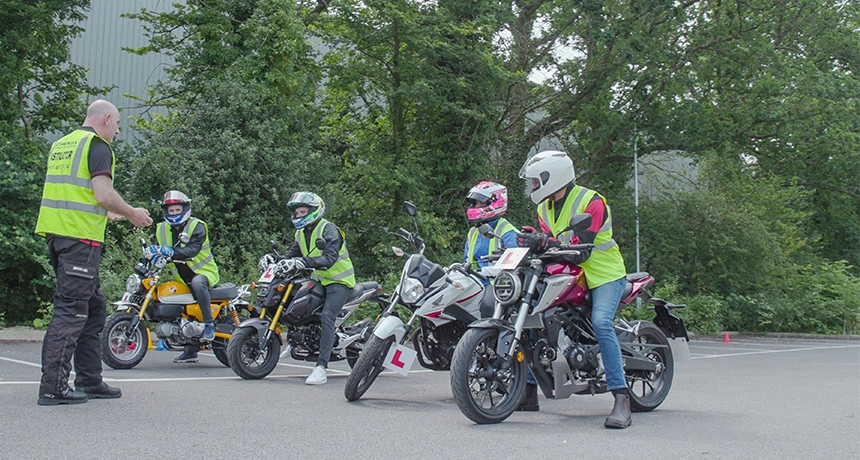
DVSA Calls for Improved Bike Training, Licencing & Testing
On January 7, following years of dissatisfaction including calls for change from the likes of the MCIA (Motor Cycle Industry Association), the Government body responsible for motoring standards, the Driver and Vehicle Standards Agency (DVSA), in association with the Department for Transport, announced it had opened a new consultation titled ‘Improving moped and motorcycle training, testing and licensing’.
The purpose of the consultation is to gather suggestions and feedback on a range of possible new changes to moped and motorcycle training, testing,, and licensing with the overall goal, the DSA says, to ‘improve road safety and simplify people's access to motorcycling’.
The consultation closes at 11:59pm on 31 March 2026 after which ministers will debate and decide any possible legislative changes.
Licencing MUST Be Made Simpler, Safer & More Affordable
The move has been welcomed by the MCIA with CEO, Tony Campbell, commenting: “This is a hugely significant moment for the motorcycle sector and a massive campaign win for MCIA.
For several years, through our A Licence to Net Zero campaign, we have been calling for a full review of motorcycle licensing, training and testing - and today the Government has formally committed to doing exactly that.”
However, with some of the already suggested changes, including: ‘Restricting learner riders to automatic machines if they complete compulsory basic training (CBT) on one’ and ‘Changing how long CBT certificates are valid for’, some motorcycling bodies are also urging caution.
The MCIA, for example, has also warned that any reforms must make licensing simpler, more affordable, and safer – not more restrictive.
The Issues Will Need to be Carefully Considered
While Mark Jaffe, owner and Chief Examiner for Phoenix Motorcycle Training, said that although he agrees with the broad aims of the strategy and many of the individual proposals within it, he expressed concern about proposals to cap the number of times a learner can renew their CBT, saying “not all learners are able to take the formal theory tests, and because of this, renewing CBT is their only opportunity to keep riding.”
He added that if these issues are not carefully considered, there is a risk that some riders could be pushed away from legal training and towards unlicensed or uninsured riding, undermining the safety benefits the reforms are intended to deliver.
Another of the proposals mentioned in the consultation document is adding a theory test element to CBT, which has been unchanged in 36 years, to which Mark commented:
“While the introduction of a theory test to the CBT syllabus is welcomed, it’s important to consider how this is delivered while keeping CBT inclusive.
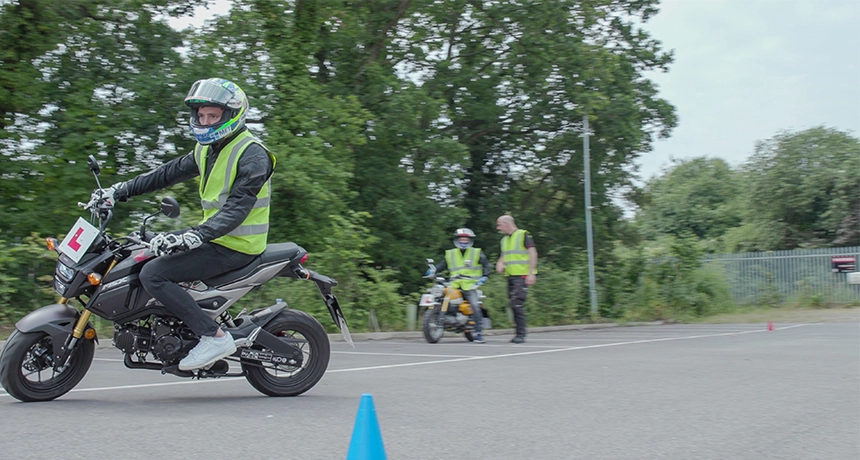
Phoenix Motorcycle Training recommends a 'DVSA-approved Online Theoretical Course'
To strike the perfect balance, Phoenix recommends the implementation of a DVSA-approved online theoretical course rather than using the official Theory and Hazard Perception Test.”
“The benefit of the DVSA course would be that it could be delivered at the training organisations, where the learners could be properly coached to be ready for the test. The official Theory and Hazard Perception Test is currently not suitable for many learners who struggle with language, SEN, or anxiety about a test in an isolated environment away from the training organisation.
Using a DVSA-approved online course would lead to better learning, more inclusivity, and a gentler road into motorcycling.”
Change Starts Now!
Mr Campbell concluded: “This is a monumental opportunity to support motorcycling as a safe, sustainable and practical transport mode that can help deliver the Government’s ambitions on road safety, net zero, and growth. We must not waste it.”
He added that the MCIA will now engage with members, training providers, safety and rider organisations, and the Government to shape the forthcoming consultation and ensure the sector speaks with a strong, unified voice.
Bike Matters will report back on any further developments, proposals, and, ultimately, legislative changes as the process unfolds.